Western Disturbances: The Winter Storms That Water North India’s Wheat
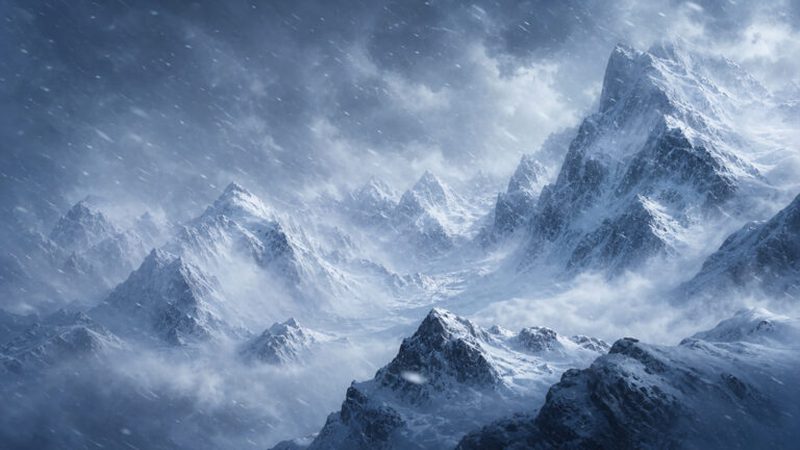
Every winter, between December and March, a procession of storms born over the Mediterranean Sea travels 5,000 kilometres eastward, over Iran and Afghanistan, to break upon the mountains of northwest India. These are western disturbances, extratropical weather systems that deliver the winter rain and snow sustaining North India’s rabi crops, recharging Himalayan glaciers and filling the rivers of spring. Without them, the wheat bowl of Punjab, Haryana and western Uttar Pradesh, which the monsoon largely bypasses in winter, would wither. Though less celebrated than the monsoon, western disturbances are equally vital to Indian food security, and their behaviour is changing in ways that worry meteorologists. Here is the science of winter’s travelling storms.
Anatomy of a western disturbance
Western disturbances are low-pressure systems embedded in the subtropical westerly jet stream, the high-altitude river of air circling the globe. They form when cold polar air meets warmer subtropical air over the Mediterranean and Caspian region, generating the instability that spins up cyclonic storms. Steered by the jet stream, they migrate eastward at a stately pace, drawing moisture from the Mediterranean, Black, Caspian and Arabian seas. When they reach the Indian subcontinent, the Himalayas force the moist air upward, squeezing out precipitation: rain over the plains of Punjab and Haryana, heavy snow over Jammu and Kashmir, Himachal Pradesh and Uttarakhand. A typical winter sees 5 to 7 strong disturbances, each lasting 2 to 4 days and delivering the bulk of the season’s precipitation. The India Meteorological Department tracks them closely, because their timing relative to the wheat crop’s growth stages determines whether they are a blessing or a curse: gentle rain in January boosts yields, but hailstorms or heavy rain in March, near harvest, can flatten ripe wheat and devastate farmers.
Why they matter so much
The numbers tell the story. Western disturbances contribute about 30 per cent of annual precipitation to the northwestern Himalayas and are the primary winter moisture source for the entire Indus basin. The snow they deposit builds the glaciers and snowpack that feed the Indus, Jhelum, Chenab, Ravi, Beas and Sutlej through the dry summer, water on which millions depend in India and Pakistan. For the rabi crop, sown after the monsoon and harvested in spring, winter rain reduces irrigation needs at the critical crown-root initiation and flowering stages; agricultural economists estimate that good western disturbance seasons measurably lift wheat yields across the northwest. They also cleanse winter air: the rain washes out the particulate pollution that chokes Delhi each winter, and the winds ventilate the stagnant smog. In the mountains, they sustain the winter tourism economy of Gulmarg and Manali while also triggering avalanches that the army and border roads organisations monitor. A single weather system type thus links geopolitics, agriculture, hydrology and public health.
A changing winter
Climate change is altering western disturbances in complex ways. Warmer air carries more moisture, so individual storms can dump heavier precipitation, raising flood and avalanche risks; the devastating 2013 Uttarakhand floods and recent Himachal disasters involved intense western disturbance rainfall. But the jet stream itself is shifting: Arctic amplification is weakening the temperature gradient that drives it, making its path wavier and less predictable, which may change how many disturbances reach India and where they strike. Some research suggests a declining trend in winter precipitation over the western Himalayas, threatening the snowpack that feeds summer rivers, while other studies find intensification of extremes. Forecasting has improved with better models, but predicting a disturbance’s exact track and snowfall amounts beyond a few days remains challenging in the complex Himalayan terrain. For water managers, the stakes are existential: the Indus basin’s summer flows depend on winter snow, and any sustained decline would ripple through agriculture, hydropower and diplomacy. Winter’s storms, long taken for granted, deserve the same scientific attention lavished on the monsoon.
- Western disturbances travel about 5,000 km from the Mediterranean to northwest India.
- A typical winter brings 5 to 7 strong disturbances, each lasting 2 to 4 days.
- They provide about 30 per cent of annual precipitation in the northwestern Himalayas.
- Their snowpack feeds the Indus river system through the dry summer months.
- March hailstorms from disturbances can devastate ripe wheat ready for harvest.
FAQs
Why are they called western disturbances? Because they approach India from the west, disturbing the settled winter weather, a term coined by colonial-era meteorologists.
Do western disturbances affect South India? Rarely directly, but their interaction with easterly winds can trigger winter rain in Tamil Nadu and Andhra Pradesh.
Are they getting stronger? Individual storms may carry more moisture in a warmer world, but trends in frequency and total winter precipitation remain an active research question.
Born over distant seas, steered by a river of air, broken on the Himalayas: western disturbances are the winter half of India’s water story, and the wheat in your chapati likely drank their rain.
Compiled by the Khabar 24h Editorial Desk from publicly available sources.

Khabar 24h Editorial Desk — our explainers are prepared by the Khabar 24h editorial team using AI-assisted research tools, and every piece is reviewed by a human editor before publishing. We do not claim original reporting: our work is turning complex topics into simple, accurate summaries. Spotted an error? Write to contact@khabar24h.com — our corrections policy aims for same-day review.
More from this author →