How Field Hockey Tournaments Work: FIH Pro League and World Cup Format Explained
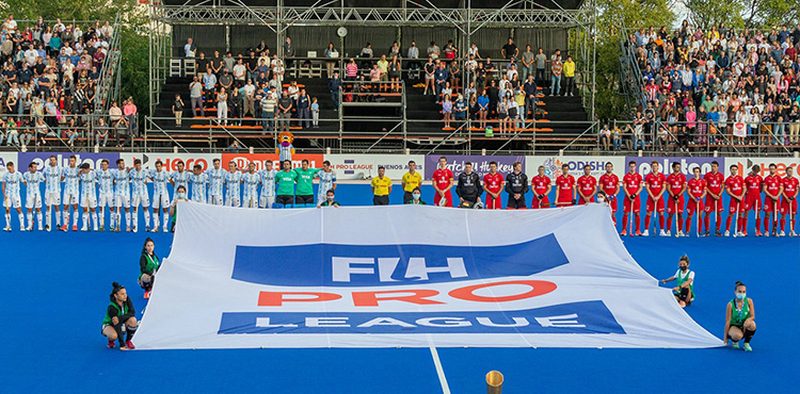
International field hockey’s calendar is built around two flagship competitions: the FIH Pro League, the sport’s innovative global league, and the Hockey World Cup, the quadrennial championship that crowns the world’s best. Between them, they provide the structure, the ranking points and the drama that define the international game. This guide explains how both tournaments work: their formats, their stakes and their place in hockey’s ecosystem.
The FIH Pro League: hockey’s global league
Launched in 2019, the FIH Pro League was a radical idea: a home-and-away international league in which the world’s best teams play each other regularly, replacing the old model of sporadic test series and one-off tournaments. Nine men’s and nine women’s teams compete in a season that spans several months, with matches staged in mini-tournaments and home legs across the globe. Each team plays every other team, earning three points for a win, with drawn matches decided by shoot-outs for a bonus point. The team finishing top of the table wins the league title. The Pro League guarantees elite teams regular high-quality fixtures, which was its founding purpose: too many top nations previously went months without meaningful matches. It also serves as a qualification pathway, with strong performances feeding into World Cup and Olympic qualification.
How the Pro League season unfolds
A Pro League season is a logistical marathon. Teams travel across continents for concentrated blocks of fixtures, playing double-headers and mini-tournaments that test squad depth as much as skill. The home-and-away concept brings international hockey to local fans, with packed stadiums in traditional strongholds creating memorable atmospheres. The points system rewards winning in regulation most, but the shoot-out bonus point keeps drawn matches meaningful to the final whistle. Seasons have produced dramatic title races decided in the final rounds, and the league’s intensity, every match against top-ten opposition, has raised the sport’s overall standard. Critics note the travel burden and costs, particularly for teams outside the traditional powers, but the Pro League has undeniably given hockey the regular elite competition it long lacked.
The Hockey World Cup: format and history
The FIH Hockey World Cup, held every four years, remains the sport’s ultimate prize alongside the Olympics. The men’s tournament began in 1971 and the women’s in 1974, and both now feature 16 teams. Qualification runs through continental championships and qualifying tournaments, ensuring global representation. The finals follow the classic format: four groups of four teams in the pool stage, with the top teams advancing to the quarter-finals, then semi-finals and the final. The knockout stages are single-elimination, producing the winner-takes-all drama that defines World Cups. Recent editions have been staged as combined men’s and women’s events, a festival of hockey. Winning the World Cup requires navigating the pool stage and then three consecutive knockout victories against the world’s best, a test of quality, nerve and squad management.
How the tournaments fit together
The Pro League and World Cup are designed as complementary pillars. The Pro League provides the regular-season narrative: rankings movement, form lines, and the rivalries that build across months. The World Cup provides the pinnacle: the concentrated, high-stakes tournament where legacies are made. Around them sit the continental championships, the Olympics, and the Hockey Series events that give developing nations their pathway. For teams like India, the calendar logic is clear: use the Pro League to build combinations and test young players, peak for the World Cup and Olympics, and manage workloads across the cycle. Together, the two competitions give international hockey something it never had before: a coherent, year-round story.
- FIH Pro League: nine top teams per gender in a home-and-away league season.
- Three points for a win; shoot-outs decide bonus points in drawn matches.
- Hockey World Cup: 16 teams, held every four years, with pool stage then knockouts.
- Both competitions feed rankings and qualification for each other and the Olympics.
FAQs
How often is the Hockey World Cup held? Every four years, with separate men’s and women’s tournaments, sometimes staged together.
How many teams play in the Pro League? Nine men’s and nine women’s teams, the world’s top-ranked nations.
Does the Pro League affect World Cup qualification? Yes. Pro League performance contributes to rankings and can feed into qualification pathways.
The Pro League and the World Cup give hockey its rhythm: the league for the journey, the World Cup for the destination. Together, they are the spine of the international game.
Compiled by the Khabar 24h Editorial Desk from publicly available sources.

Khabar 24h Editorial Desk — our explainers are prepared by the Khabar 24h editorial team using AI-assisted research tools, and every piece is reviewed by a human editor before publishing. We do not claim original reporting: our work is turning complex topics into simple, accurate summaries. Spotted an error? Write to contact@khabar24h.com — our corrections policy aims for same-day review.
More from this author →