The Science of Sound: From Vibrations to Music
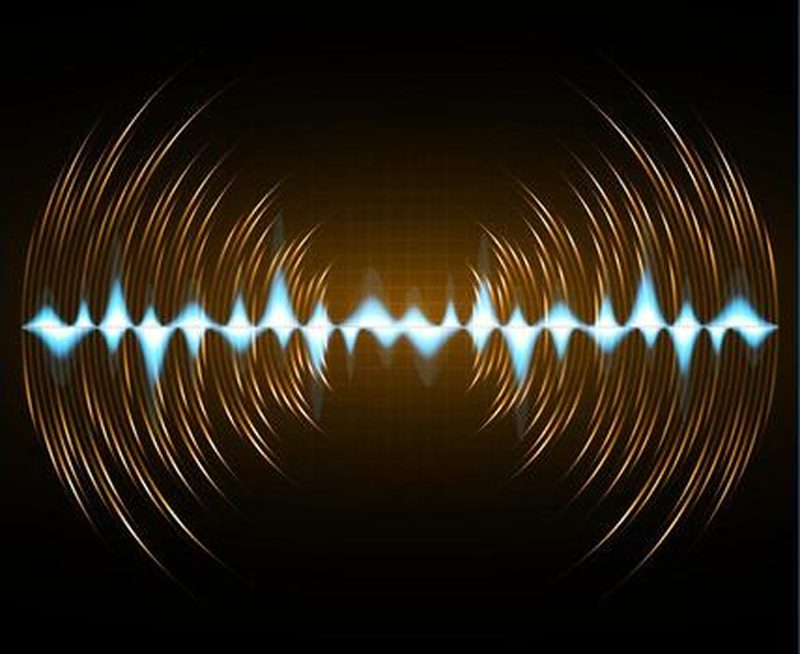
Sound begins with something shaking. A vocal cord, a guitar string, a loudspeaker cone or a thunderclap disturbs the air, and that disturbance travels outward as a wave of compressions and rarefactions, arriving at your ear a fraction of a second later. Everything you have ever heard, from a whispered secret to a symphony, is this same phenomenon: vibrations in a medium, decoded by one of the most exquisite sensors in nature. The science of sound, or acoustics, spans physics, biology, engineering and art. It explains why a small violin can fill a concert hall, why your voice sounds strange on a recording, how bats navigate in darkness, and why noise pollution is now recognised as a public health issue. To understand sound is to understand a hidden architecture of waves that shapes human experience.
What sound waves are made of
Sound is a mechanical wave, meaning it needs a medium, air, water, or solid material, and cannot travel through a vacuum, which is why explosions in space movies are scientifically silent. Three properties define any sound: frequency, the number of vibrations per second measured in hertz, which we perceive as pitch; amplitude, the size of the vibrations, which we perceive as loudness; and timbre, the complex blend of overtones that lets us tell a flute from a violin playing the same note. Human hearing spans roughly 20 to 20,000 hertz, though the upper limit falls with age, which is why mosquito ringtones audible to teenagers are silent to their teachers. Loudness is measured in decibels on a logarithmic scale: a whisper is about 30 decibels, normal conversation 60, and a jet engine 140, where each 10-decibel increase represents ten times the intensity. Sound travels at about 343 metres per second in air, which is why you see lightning before you hear thunder, and nearly five times faster in water, which is why whales can communicate across entire ocean basins.
How your ears turn air into electricity
The ear is a three-stage instrument of remarkable engineering. The outer ear funnels sound to the eardrum, a membrane that vibrates in sympathy. Three tiny bones in the middle ear, the smallest bones in the human body, amplify these vibrations and pass them to the cochlea, a fluid-filled spiral in the inner ear. Inside the cochlea, thousands of hair cells bend with the fluid’s motion, and their bending opens ion channels that convert mechanical movement into electrical signals for the auditory nerve. Different frequencies excite different positions along the spiral, creating a biological frequency analyser. The system is astonishingly sensitive: at its best, the ear can detect eardrum movements smaller than the diameter of a hydrogen atom. It is also fragile. Those hair cells do not regenerate, and exposure to loud sound, from headphones at full volume to industrial noise, kills them permanently, which is why hearing loss is one of the most common and most preventable disabilities. India’s cities, with traffic noise routinely exceeding 80 decibels, are a growing concern for audiologists.
Why music moves us
Music is organised sound, but its power over the brain is disproportionate to its physics. Consonant intervals like the octave and perfect fifth correspond to simple frequency ratios, 2:1 and 3:2, which produce overlapping overtones the auditory system processes easily; dissonance comes from complex ratios that create roughness the brain finds tense. Rhythm entrains the brain’s own oscillations, which is why a beat can compel movement before conscious thought. Brain imaging shows that pleasurable music triggers dopamine release in the same reward circuits activated by food, and that musical chills, the shiver down the spine, correspond to measurable surges in the brain’s emotion centres. Musical training physically reshapes the brain, enlarging auditory and motor areas, and is associated with improved language processing. Culture tunes the details: Indian classical music’s ragas exploit microtones and elaborate ornamentation unfamiliar to Western ears, yet the underlying neural machinery is universal. Music may be the clearest evidence that the brain is, among other things, a pattern-detecting engine that finds meaning in waves.
- Sound travels at about 343 metres per second in air and nearly 1,500 metres per second in water.
- Human hearing spans roughly 20 to 20,000 hertz; dogs hear up to about 45,000 hertz.
- The three middle-ear bones are the smallest bones in the human body.
- Inner-ear hair cells do not regenerate, making noise-induced hearing loss permanent.
- Bats navigate using echolocation at frequencies far above human hearing.
The sounds we cannot hear, and the noise we cannot escape
Human hearing is a narrow slice of a vast acoustic world. Elephants communicate in infrasound below 20 hertz, sending rumbles through the ground over kilometres; bats and dolphins use ultrasound above our range to echolocate with precision that engineers envy. Technology extends our ears: ultrasound imaging peers inside the body, sonar maps the ocean floor, and acoustic sensors monitor bridges for cracking concrete. The flip side is noise pollution, now recognised by the World Health Organization as a serious health risk. Chronic exposure to traffic and industrial noise is linked to hypertension, heart disease, sleep disruption and impaired learning in children. Indian cities regularly breach prescribed noise limits, especially during festivals and wedding seasons, prompting courts to restrict loudspeakers and firecrackers. Sound is invisible infrastructure, and managing it is becoming as important as managing air or water.
FAQs
Why does my voice sound different on recordings? You normally hear your voice partly through bone conduction in your skull, which adds bass; a recording captures only the airborne sound others hear.
Can sound travel in space? No. Sound needs a medium, and space is nearly a perfect vacuum, so there is nothing to carry the vibrations.
From a vibrating string to a symphony to the rumble of an elephant’s greeting, sound is the universe made audible. We live immersed in waves we rarely notice, decoded by ears of extraordinary subtlety.
Compiled by the Khabar 24h Editorial Desk from publicly available sources.

Khabar 24h Editorial Desk — our explainers are prepared by the Khabar 24h editorial team using AI-assisted research tools, and every piece is reviewed by a human editor before publishing. We do not claim original reporting: our work is turning complex topics into simple, accurate summaries. Spotted an error? Write to contact@khabar24h.com — our corrections policy aims for same-day review.
More from this author →