What Is eSIM? How to Set Up a Digital SIM in India
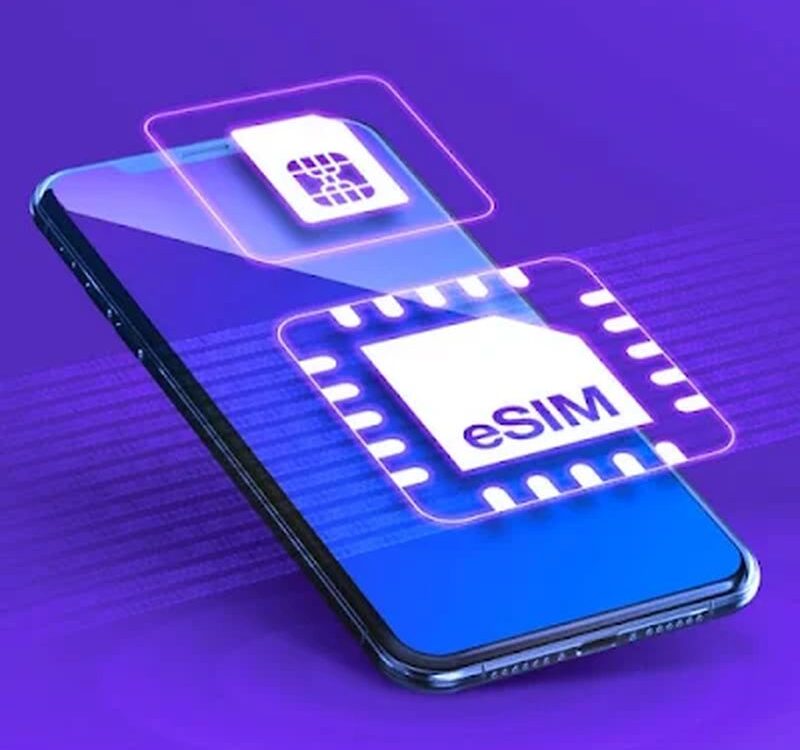
The tiny plastic SIM card has survived three decades of mobile revolution, shrinking from credit-card size to the nano-SIM while the phones around it transformed completely. Its replacement is already here: the eSIM, a digital SIM built into the phone itself, now supported by Jio, Airtel and Vi across India. No more hunting for a paperclip to open the SIM tray, no more losing the little plastic chip. This guide explains what an eSIM is, how it compares to a physical SIM, and exactly how to set one up in India.
What an eSIM actually is
An eSIM, embedded SIM, is a rewritable chip soldered into the phone during manufacturing that performs the same job as a physical SIM: it securely stores your operator profile and authenticates you to the mobile network. Instead of swapping plastic, you install a carrier profile digitally, usually by scanning a QR code or using the operator’s app. The phone can hold multiple eSIM profiles at once, typically five to eight, with one or two active at a time depending on the model. Switching between them takes seconds in settings. The technology is standardised by the GSMA, the same body behind physical SIMs, and is now supported by most phones launched in the last few years, from iPhones to mid-range Android devices.
eSIM versus physical SIM
Each has genuine advantages.
- Convenience: no SIM tray, no ejector tool, no tiny card to lose; activation happens from your couch.
- Dual SIM flexibility: use an eSIM alongside a physical SIM, or two eSIMs, ideal for separating work and personal numbers.
- Travel: buy and install a local data eSIM before your flight lands, skipping airport SIM queues and roaming charges.
- Durability and design: one fewer opening means better water resistance and more internal space.
- Security: a thief cannot pop out your eSIM to defeat tracking the way a physical SIM can be removed.
The downsides: moving an eSIM to a new phone requires a reissue process rather than a simple card swap, not all budget phones support it yet, and some users find the digital process less intuitive than popping in a card.
How to get an eSIM in India
All three major operators support eSIM for prepaid and postpaid users. The general process is similar across Jio, Airtel and Vi. First, confirm your phone supports eSIM; check the manufacturer’s specifications. Then request an eSIM: Jio users SMS or use the MyJio app, Airtel users email or use the Thanks app, Vi users visit a store or request through the app. You will receive a QR code by email. On iPhone, go to Settings, Mobile Data, Add eSIM and scan the code. On Android, the path is usually Settings, Network, SIMs, Add eSIM. Keep the phone on Wi-Fi during activation, and do not delete the eSIM profile until the new one is working. The whole process typically completes within a couple of hours.
Using dual SIMs and travelling with eSIM
The eSIM shines in dual-SIM setups. A common Indian configuration is a physical SIM for the primary number plus an eSIM for a second number or a data plan, letting you compare or combine plans. For international travel, eSIM is transformative: services sell affordable local data eSIMs for hundreds of countries, installable before departure, so you land connected without roaming fees or hunting for local SIM shops. Your Indian number can stay active on the physical SIM for OTPs while data runs on the travel eSIM. Just check that your phone supports dual active eSIMs if you plan to drop the physical SIM entirely.
What to watch out for
A few practical cautions. If your phone is lost or damaged, recovering the number requires contacting the operator for a new eSIM issue, which takes longer than moving a physical SIM to a spare phone, so keep the operator’s customer care details accessible elsewhere. When selling or resetting a phone, delete eSIM profiles or transfer them first. Some older eSIM implementations had clunky transfer flows, though Apple and Google have both improved phone-to-phone eSIM migration recently. And if you frequently swap SIMs between multiple devices, the physical card remains more convenient. For most people with one primary phone, though, the eSIM is simply better.
FAQs
Is eSIM free in India? Jio, Airtel and Vi generally issue eSIMs free for conversion from physical SIM, though policies vary; check with your operator.
Can I convert back to a physical SIM? Yes. Operators allow switching between eSIM and physical SIM on request.
Does eSIM work on all phones? No. It needs hardware support, common in mid-range and premium phones from the last few years but often absent in budget models. Check your phone’s specifications.
The eSIM will not change your mobile bill or your network speed, but it removes one of the last physical frictions in mobile life. Set it up once, and the little plastic card, along with the paperclip ritual, becomes a memory.
Source: GSMA

Khabar 24h Editorial Desk — our explainers are prepared by the Khabar 24h editorial team using AI-assisted research tools, and every piece is reviewed by a human editor before publishing. We do not claim original reporting: our work is turning complex topics into simple, accurate summaries. Spotted an error? Write to contact@khabar24h.com — our corrections policy aims for same-day review.
More from this author →