Plasma: The Fourth State of Matter, From Stars to Neon Signs
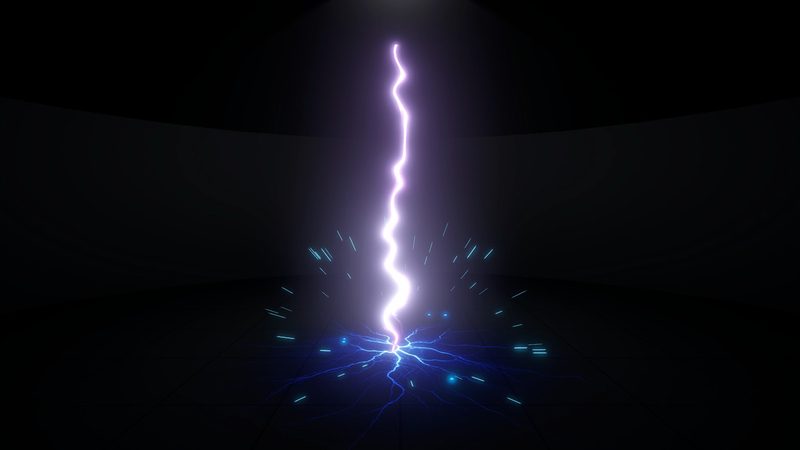
Ask someone to name the states of matter and you will hear three: solid, liquid and gas. But there is a fourth, and it is by far the most abundant in the universe. Plasma is a hot, electrically charged gas in which atoms have been stripped of some or all of their electrons, leaving a roiling soup of ions and free electrons that conducts electricity, responds to magnetic fields and glows. Stars are plasma. Lightning is plasma. The aurora borealis, neon signs, welding arcs and the fleeting trails of meteors are all plasma. Though rare in everyday life on Earth’s cool surface, plasma dominates the cosmos: by most estimates, over 99 per cent of the visible matter in the universe exists in the plasma state. Understanding plasma means understanding what most of the universe is actually made of.
What turns a gas into plasma
Heat a solid and it melts; heat a liquid and it boils; heat a gas enough and its atoms begin to collide so violently that electrons are knocked clean off, a process called ionisation. The result is no longer a neutral gas but a mixture of positively charged ions and negatively charged electrons moving independently. Because its particles carry charge, plasma behaves utterly unlike ordinary gas: it conducts electricity, generates and responds to magnetic fields, and can be confined, shaped and accelerated by magnets. Plasma also glows, because when freed electrons recombine with ions or drop between energy levels, they emit light, which is why neon signs shine red-orange and lightning flashes blue-white. The transition is gradual rather than sharp; a weakly ionised gas like a candle flame is barely plasma, while the Sun’s core, at 15 million degrees, is plasma in its most extreme form. Physicists sometimes speak of plasma as the state matter assumes when energy overwhelms the atomic bonds that define chemistry.
Plasma across the universe
Nearly everything that shines in the night sky is plasma. Stars are vast balls of plasma held together by gravity, with nuclear fusion in their cores converting hydrogen into helium and releasing the energy that makes them glow. The space between stars is filled with tenuous interstellar plasma, and the Sun continuously exhales a supersonic plasma wind that streams past Earth, sculpting the tails of comets and triggering auroras when it slams into our magnetic field. Closer to home, lightning bolts are channels of plasma heated to 30,000 degrees Celsius, five times hotter than the Sun’s surface, and the ionosphere, the layer of Earth’s upper atmosphere that reflects radio waves, is a cold plasma created by solar ultraviolet light. Even fire is weakly ionised. The practical consequence is that plasma physics is really astrophysics: to understand stars, galaxies and the space weather that can knock out power grids and satellites, you must understand plasma.
Taming plasma on Earth
Humanity’s most ambitious encounter with plasma is the quest for fusion power. Devices called tokamaks use powerful magnetic fields to confine plasma hotter than the Sun’s core, squeezing hydrogen isotopes until they fuse and release energy. The physics is proven: the NIF laser facility in America has demonstrated net energy gain from fusion reactions, while the JET reactor in Britain set fusion energy output records but never achieved net energy gain, and the giant ITER tokamak under construction in France aims to produce ten times more fusion power than it consumes. Plasma is already industrial: plasma torches cut steel, plasma etching carves the microscopic circuits of computer chips, and plasma thrusters, which accelerate ionised gas with electric fields, propel deep-space probes with extraordinary efficiency. Neon signs and fluorescent tubes are the humble ancestors of this technology, glass tubes of low-pressure plasma glowing in advertising colours. Medicine is exploring cold plasma to sterilise wounds and kill cancer cells without damaging healthy tissue. The fourth state of matter, once a laboratory curiosity, is becoming an engineering material.
- Over 99 per cent of the visible matter in the universe is plasma, including all stars.
- Lightning channels reach about 30,000 degrees Celsius, hotter than the surface of the Sun.
- The Sun’s core, at 15 million degrees, fuses 600 million tonnes of hydrogen every second.
- Neon signs glow because excited neon atoms in plasma emit red-orange light as electrons resettle.
- ITER, the world’s largest fusion experiment, aims to produce 500 megawatts of fusion power in France.
Why plasma is hard to handle
Plasma’s defining traits are also what make it difficult. Because it conducts electricity and responds to magnetic fields, plasma is prone to instabilities: kink, ripple and tear itself apart in ways that have frustrated fusion researchers for seventy years. Containing a plasma at a hundred million degrees means it can never touch a material wall, which would melt instantly and contaminate the plasma, so confinement must be entirely magnetic or inertial, a fiendish control problem. In space, plasma’s interaction with magnetic fields produces space weather: coronal mass ejections, billion-tonne plasma clouds hurled from the Sun, can induce currents that black out power grids, as happened in Quebec in 1989, and damage satellites. Predicting these outbursts is now a practical science, with agencies like ISRO and NASA monitoring the Sun continuously. Plasma is the universe’s default state of matter, but it is a wild one, and learning to live with it, from fusion reactors to satellite shielding, is one of the great engineering challenges of this century.
FAQs
Is fire a plasma? Mostly no. Ordinary flames are hot gases with only slight ionisation, so physicists generally do not count fire as true plasma, though very hot flames approach it.
Can plasma exist at low temperatures? Yes. Cold or non-thermal plasmas, used in chip manufacturing and experimental medicine, have hot electrons but relatively cool ions and neutral gas.
From the core of the Sun to the glow of a street sign, plasma is the state matter takes when energy runs free. It lights the universe, and if fusion succeeds, it may one day light our cities too.
Compiled by the Khabar 24h Editorial Desk from publicly available sources.

Khabar 24h Editorial Desk — our explainers are prepared by the Khabar 24h editorial team using AI-assisted research tools, and every piece is reviewed by a human editor before publishing. We do not claim original reporting: our work is turning complex topics into simple, accurate summaries. Spotted an error? Write to contact@khabar24h.com — our corrections policy aims for same-day review.
More from this author →