Chandrayaan-3’s Legacy: What Vikram and Pragyan Found at the Lunar South Pole
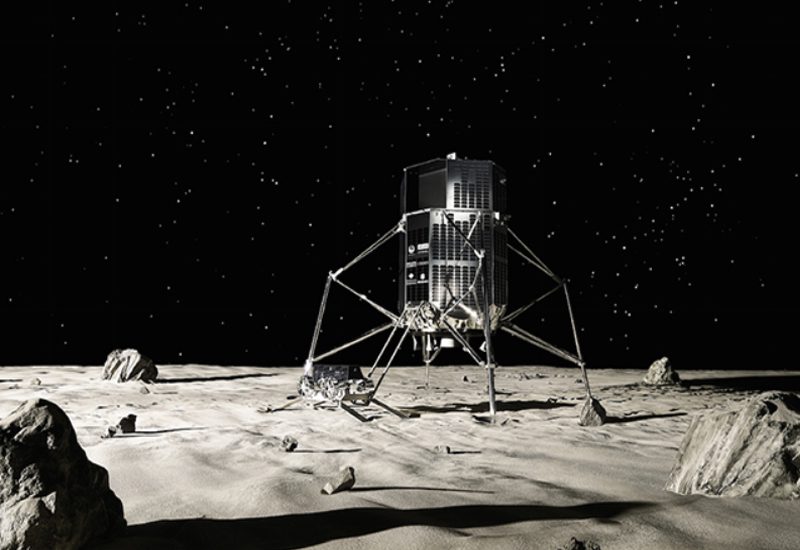
On 23 August 2023, a four-legged lander named Vikram touched down in the Moon’s southern highlands, and India became the first nation in history to achieve a soft landing near the lunar south pole. The six-wheeled rover Pragyan rolled out, and for one lunar day, about fourteen Earth days, the pair worked as robotic field geologists on terrain no spacecraft had ever explored. Their findings rewrote parts of the lunar science textbooks and proved that frugal engineering could beat billion-dollar budgets.
Why the south pole was the prize
The lunar south pole had been the most coveted unexplored real estate in the solar system for two decades. Its permanently shadowed craters, untouched by sunlight for billions of years, are cold traps that may hold millions of tonnes of water ice, a potential source of drinking water, air and rocket fuel for future explorers. Landing there is brutally difficult: the terrain is rugged, communication with Earth is awkward, and the low sun angle creates long, confusing shadows. Earlier missions had only observed the region from orbit. Chandrayaan-3 went there in person.
Pragyan’s chemical fingerprinting
The rover’s alpha particle X-ray spectrometer analysed the lunar soil, or regolith, at multiple stops along its traverse. It confirmed the expected elements, silicon, oxygen, aluminium, calcium and iron, but also detected sulphur, a first for in-situ measurements at the south pole, along with traces of chromium, titanium, manganese and nickel. The sulphur detection was a genuine surprise, forcing scientists to rethink how volatiles are distributed in the lunar crust. Each measurement was made by bombarding the soil with radiation and reading the characteristic X-rays kicked back out, like a cosmic barcode scanner. The rover covered a total traverse of just over a hundred metres, stopping at multiple points to repeat its measurements and build confidence that the readings were representative of the region rather than a single unusual rock.
Measuring the Moon’s temperature
Vikram carried an instrument called ChaSTE, a probe that drove itself ten centimetres into the lunar soil and measured how temperature changes with depth. Near the surface it recorded dramatic swings, but the data revealed something unexpected: the soil conducts heat differently than models predicted, suggesting the south polar regolith is fluffier and less compacted than expected. This matters for future missions, because how the soil handles heat determines how water ice survives underground, and how hard it will be to dig.
The hop that made history
Perhaps the mission’s most audacious moment came after the science was done. With the lunar night approaching, ISRO commanded Vikram to fire its engines, lift off, hop a short distance into the air, and land again a little way off. It was a brief, almost playful manoeuvre with a serious purpose: demonstrating the technology for a future sample-return mission that would need to launch off the lunar surface. Few space agencies have ever deliberately re-launched a lander from another world.
What the mission proved beyond science
Chandrayaan-3’s legacy extends well past its data. Its achievements include:
- Frugal engineering at scale, with the entire mission costing roughly 615 crore rupees, less than many Hollywood films.
- Redemption after Chandrayaan-2, whose lander was lost in 2019; the lessons from that failure were engineered directly into the new design.
- A template for the world, showing that ambitious deep-space science does not require superpower budgets.
FAQs
Did Chandrayaan-3 find water on the Moon? The lander and rover studied soil composition and temperature relevant to water ice, but the mission did not directly detect ice; orbiters continue that search.
Why did the mission last only 14 days? The lander and rover were solar-powered and not designed to survive the minus 200-degree lunar night, so they shut down at sunset as planned.
What is next after Chandrayaan-3? ISRO is working toward Chandrayaan-4, a far more complex sample-return mission, alongside Japan’s LUPEX rover mission.
Vikram and Pragyan worked for a single lunar day and then slept forever in the cold. But in those two weeks they gave India its proudest space moment, gave science its first ground truth from the lunar south pole, and gave the world proof that the Moon’s most forbidding frontier is open for business. Future missions will build directly on their data, from the planned sample-return flight to the international Artemis programme’s own designs on the south pole’s shadowed craters.
Source: ISRO

Khabar 24h Editorial Desk — our explainers are prepared by the Khabar 24h editorial team using AI-assisted research tools, and every piece is reviewed by a human editor before publishing. We do not claim original reporting: our work is turning complex topics into simple, accurate summaries. Spotted an error? Write to contact@khabar24h.com — our corrections policy aims for same-day review.
More from this author →