How the Periodic Table Was Built: Mendeleev’s Great Organisation of Elements
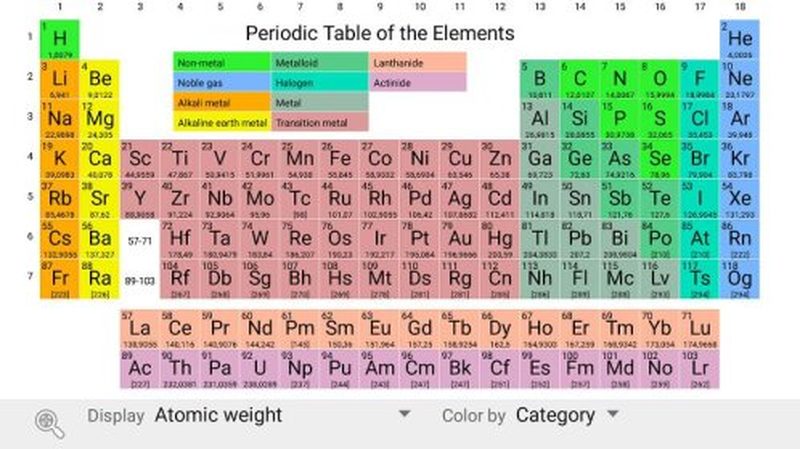
The periodic table hangs in every chemistry classroom on Earth, its 118 elements arranged in neat rows and columns that encode the deep structure of matter. But in 1869, when the Russian chemist Dmitri Mendeleev published his first version, only 63 elements were known, and chemistry was a jumble of isolated facts: this metal reacts with that acid, this gas weighs so much. Mendeleev’s genius was to see that the elements were not a random collection but a system, with properties repeating periodically when the elements were ordered by atomic weight. He left gaps where the pattern demanded missing elements and predicted their properties with astonishing accuracy. When those elements were discovered, matching his predictions almost exactly, the periodic table was transformed from a clever arrangement into a fundamental law of nature.
The chaos before the table
By the mid-nineteenth century, chemists knew dozens of elements but had no organising principle. Several tried: in 1829 Johann Dobereiner noticed triads of similar elements like chlorine, bromine and iodine; in 1864 John Newlands proposed the law of octaves, noting that every eighth element resembled the first, and was mocked for comparing chemistry to music; others arranged elements in spirals and cylinders. The problem was incomplete data: atomic weights were uncertain, and several elements were misplaced or missing entirely. Mendeleev, a professor in St Petersburg writing a textbook, needed a logical order for his chapters. He wrote each element’s properties on a separate card and, as the story goes, arranged them like patience, the card game, until the pattern emerged. Whether or not the card-game legend is literally true, his methodical comparison of atomic weights against chemical behaviour was the breakthrough: he saw that lithium, sodium and potassium behaved alike, as did fluorine, chlorine and bromine, and that these families recurred at regular intervals.
Gaps, predictions and triumph
Mendeleev’s boldest move was trusting the pattern over the data. Where no known element fit, he left a gap and predicted the missing element’s properties in detail. He described eka-aluminium, the element below aluminium, as a metal with density around 5.9 grams per cubic centimetre and a low melting point; when gallium was discovered in 1875, its density measured 5.96 and it melted in the hand, just as predicted. He did the same for eka-silicon, germanium, discovered in 1886 with properties matching his forecast almost exactly, and eka-boron, scandium. He even corrected accepted atomic weights when they broke the pattern, insisting that tellurium must be heavier than reported or the table would fail; he was right about the ordering, though the reason, isotopes, was unknown. Each successful prediction converted sceptics. By the 1880s, the periodic table was the central organising principle of chemistry, and Mendeleev, who never won the Nobel Prize despite his achievement, became a scientific legend.
What the table really encodes
The modern periodic table is ordered not by atomic weight but by atomic number, the count of protons, a refinement made by Henry Moseley in 1913 using X-ray spectra. But the underlying reason the pattern exists was revealed only by quantum mechanics in the 1920s: elements in the same column share the same arrangement of outer electrons, and chemistry is the behaviour of those outer electrons. The rows, or periods, correspond to electron shells filling up; the columns, or groups, to matching outer-shell configurations, which is why alkali metals are all violently reactive and noble gases all aloof. The table’s shape even predicted the existence of entire families: the noble gases, unknown to Mendeleev, slotted into a new column when discovered in the 1890s, and the lanthanides and actinides were eventually pulled out below. In 2016 the table was completed to 118 elements with the naming of nihonium, moscovium, tennessine and oganesson, though elements beyond 118 may yet be synthesised. Every entry is a place held by quantum law.
- Mendeleev published his first periodic table in 1869, ordering 63 known elements by atomic weight.
- He predicted gallium and germanium years before their discovery, forecasting their densities and melting points.
- Henry Moseley reordered the table by atomic number in 1913, fixing inconsistencies like tellurium and iodine.
- The noble gases were unknown to Mendeleev but slotted perfectly into the table when discovered in the 1890s.
- The table was completed to 118 elements in 2016; heavier elements decay within milliseconds of creation.
Why Mendeleev’s table still matters
The periodic table remains chemistry’s most powerful predictive tool. Materials scientists designing batteries, solar cells and superconductors start from its trends: electronegativity, atomic radius and ionisation energy all vary systematically across it. The search for new elements continues at laboratories in Russia, Japan and Germany, where atoms of superheavy elements are made one at a time by smashing lighter nuclei together. There are even proposals for an island of stability, superheavy elements that theory suggests might live far longer than their neighbours, which would extend the table into new territory. For students, the table’s greatest gift is compression: instead of memorising the behaviour of 118 substances, you learn the logic of electron shells and derive the rest. Mendeleev set out to organise a textbook chapter and ended up discovering the architecture of matter, a reminder that the deepest patterns are often hiding in plain sight, waiting for someone to lay out the cards.
FAQs
Did Mendeleev discover any elements himself? No. His achievement was organisational and predictive: he arranged the known elements and forecast unknown ones, which others then discovered.
Why is the table called periodic? Because elemental properties repeat periodically: elements with similar chemistry recur at regular intervals when ordered by atomic number.
Are there elements beyond 118? Possibly. Physicists are trying to synthesise elements 119 and 120, which would begin an eighth row, but no atoms have yet been confirmed.
From 63 cards on a professor’s desk to the blueprint of matter itself, the periodic table shows what a single clear idea can do: Mendeleev did not just organise chemistry, he revealed that nature rhymes.
Compiled by the Khabar 24h Editorial Desk from publicly available sources.

Khabar 24h Editorial Desk — our explainers are prepared by the Khabar 24h editorial team using AI-assisted research tools, and every piece is reviewed by a human editor before publishing. We do not claim original reporting: our work is turning complex topics into simple, accurate summaries. Spotted an error? Write to contact@khabar24h.com — our corrections policy aims for same-day review.
More from this author →