Evolution by Natural Selection: Darwin’s Idea Explained With Indian Examples
In 1859, Charles Darwin published On the Origin of Species and quietly detonated the greatest intellectual revolution in biology. His idea, evolution by natural selection, is disarmingly simple: individuals vary, some variations help their bearers survive and reproduce, and those helpful variations are inherited, so over generations populations change. From these humble premises flow the diversity of all life, from bacteria to banyan trees to humans. Darwin knew nothing of genes or DNA, yet his mechanism predicted genetics before genetics existed. In India, evolution is not an abstract Victorian theory but a living process visible in hospital wards, farm fields and forests: in the rise of drug-resistant tuberculosis, in the pesticide-resistant bollworms of cotton country, and in the spectacular adaptations of the subcontinent’s wildlife. This is Darwin’s idea, explained through Indian eyes.
The mechanism in plain language
Natural selection needs only three ingredients. First, variation: no two individuals are identical, whether in the beak size of finches or the height of humans. Second, selection: the environment favours some variants, so a slightly thicker-coated mammal survives a cold snap, or a slightly more drought-tolerant rice plant sets seed in a dry year. Third, inheritance: the survivors pass their traits to offspring. Repeat for thousands of generations, and small differences accumulate into new species. Darwin’s evidence came from pigeons, barnacles, fossils and the famous Galapagos finches, but the logic is universal. Crucially, natural selection has no foresight; it is not progress toward perfection but adaptation to current conditions, which is why evolution produces marvels like the eye alongside apparent absurdities like the peacock’s tail, which is a glorious handicap that survives because peahens prefer it. The mathematics was later formalised in population genetics, and the discovery of DNA provided the physical mechanism of inheritance Darwin lacked, completing rather than replacing his theory.
Evolution in India’s hospitals and fields
Some of the clearest demonstrations of natural selection are also the most urgent. India’s battle with drug-resistant tuberculosis is evolution in real time: when antibiotics kill susceptible bacteria but treatment is incomplete, the resistant mutants survive and multiply, which is why directly observed treatment and complete drug courses are medically vital. The same logic governs pesticide resistance in the American bollworm, which devastated Bt cotton’s early promise in parts of India as resistant insects survived and spread, forcing constant innovation in pest management. Hospital-acquired superbugs like drug-resistant Klebsiella evolve under the selective pressure of antibiotic overuse. Agriculture offers positive examples too: the wheat varieties of the Green Revolution were products of artificial selection, humans playing the role of nature, and modern breeders use the same principles accelerated by genomics. When doctors insist you finish your antibiotic course, they are giving you applied Darwinism: deny the bacteria the selective window in which resistance evolves.
India’s wildlife as evolution’s showcase
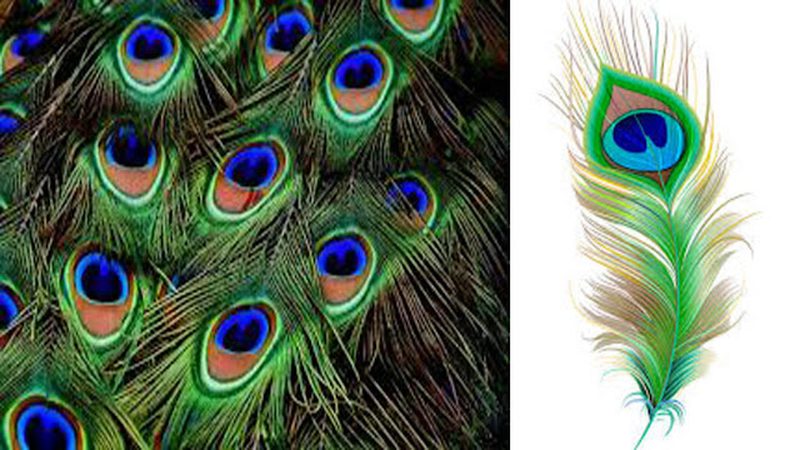
The subcontinent’s fauna illustrates every chapter of evolutionary theory. The peacock’s extravagant tail is the textbook example of sexual selection, Darwin’s second great idea: traits that reduce survival can evolve if they increase mating success, because evolution counts grandchildren, not comfort. The mimicry of Indian butterflies, like the common crow butterfly mimicked by the harmless common mime, shows natural selection crafting deception. The Western Ghats, isolated for millions of years, are a laboratory of speciation, harbouring hundreds of frog and caecilian species found nowhere else, each the product of populations diverging in isolation. Even the Asiatic lion’s small mane and belly fold, distinguishing it from African lions, record the separate evolutionary path of a population isolated in India for millennia. And human evolution left its own Indian chapter: the Narmada hominin fossil and Stone Age tools across the subcontinent show archaic humans lived and evolved here long before modern humans arrived.
- Drug-resistant TB evolves when incomplete treatment selects for resistant bacterial mutants.
- The peacock’s tail is a classic example of sexual selection: costly for survival, priceless for mating.
- The Western Ghats host hundreds of endemic amphibians, products of millions of years of isolated evolution.
- Bt cotton’s bollworm resistance in India demonstrates pesticide-driven natural selection in agriculture.
- Darwin published On the Origin of Species in 1859 without knowing about genes or DNA.
What evolution is not
Misconceptions about evolution are as persistent as the theory is well supported. Evolution is not a ladder with humans at the top; it is a branching bush, and every living species is equally evolved for its own niche. Humans did not evolve from modern monkeys; both share common ancestors millions of years back. Natural selection is not the only evolutionary force: genetic drift, the random fluctuation of gene variants, matters greatly in small populations, which is relevant to endangered species like the cheetah, extinct in India and reintroduced from Africa. And evolution does not mean life is meaningless or morality baseless, questions Darwin himself wrestled with; it is a description of how life changes, not a prescription for how to live. The evidence, from the fossil record to the DNA nested in every cell, which lets us read the relatedness of all life like a family archive, is among the strongest in all of science. India’s own research institutions, from the National Centre for Biological Sciences to the Wildlife Institute of India, contribute to it daily.
FAQs
Is evolution just a theory? In science, a theory is a well-substantiated explanation, not a guess. Evolution is supported by genetics, fossils, observed speciation and experimental evidence, as firmly as the theory of gravity.
Why don’t we see new species evolving? We do: new bacterial strains, pesticide-resistant insects and even new plant species have been observed. Large animals evolve new species over timescales far longer than human observation.
Does evolution conflict with Indian traditions? Many Indian philosophical traditions accommodate deep time and transformation; the conflict narrative comes largely from specific Western religious debates, not Indian ones.
From a hospital in Mumbai to a frog in the Western Ghats, Darwin’s dangerous idea keeps proving itself. Variation, selection, inheritance: three simple rules, and all of life’s diversity follows.
Compiled by the Khabar 24h Editorial Desk from publicly available sources.

Khabar 24h Editorial Desk — our explainers are prepared by the Khabar 24h editorial team using AI-assisted research tools, and every piece is reviewed by a human editor before publishing. We do not claim original reporting: our work is turning complex topics into simple, accurate summaries. Spotted an error? Write to contact@khabar24h.com — our corrections policy aims for same-day review.
More from this author →