Chandrayaan-1 data reveals ghost of Moon’s possibly oldest impact basin
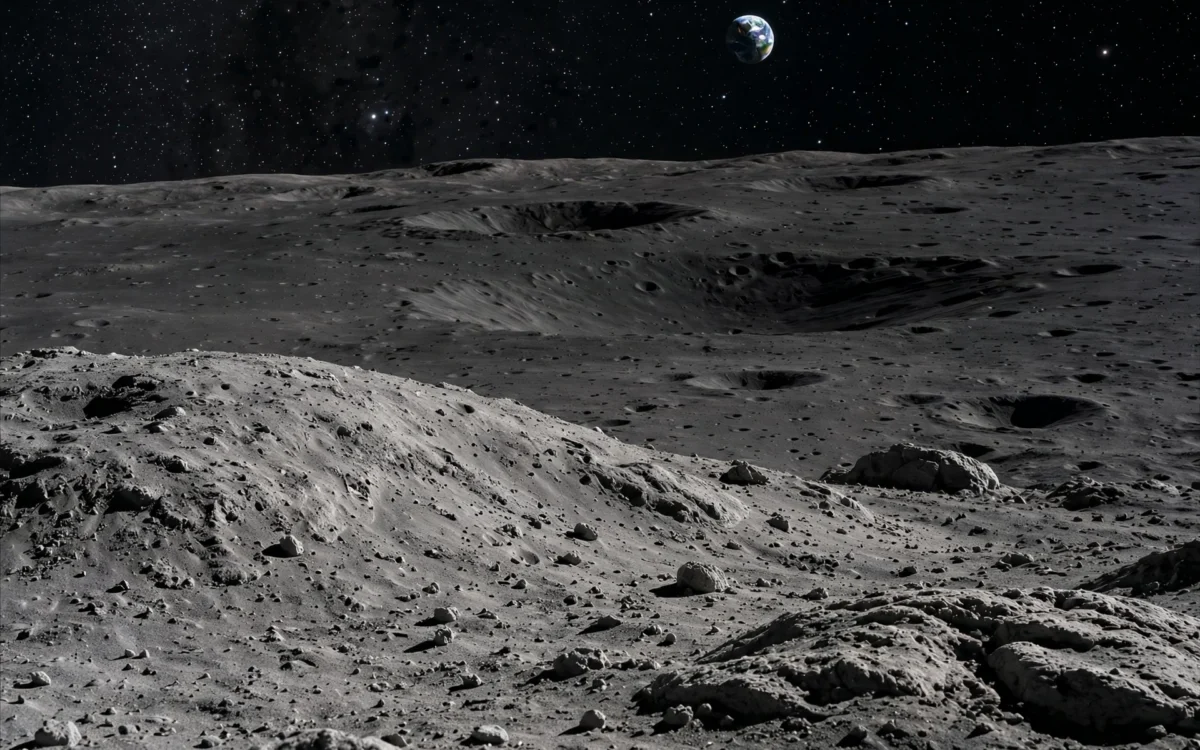
Researchers at Ahmedabad’s Physical Research Laboratory have identified a hidden impact basin on the Moon, possibly older than the South Pole-Aitken basin. They used archived data from Chandrayaan-1’s Moon Mineralogy Mapper (M3), an imaging spectrometer.
The basin, called Australe, lies around the Mare Australe area. A circular spread of orthopyroxene and low-calcium, magnesium-rich basalts gave it away. The team also found 248 small basalt ponds.
The rim had almost vanished after billions of years of erosion, sedimentation and volcanic activity. The researchers used forensic mineralogical techniques to detect it, according to the reports. The study was published in The Planetary Science Journal.
Scientists estimate the Moon has about 300 impact basins, of which only 74 have been catalogued so far. The South Pole-Aitken basin is the Moon’s oldest and largest known impact crater.
Why it matters: the finding rewrites the timeline of the Moon’s early history and could guide exactly where future missions should land.
Related stories
View all →
ESA, ISRO Extend Space Cooperation Deal to 2032 in Paris
ESA and ISRO extended their space cooperation deal to January 2032 in Paris, formally adding human and robotic exploration, space weather and…

ISRO’s GSLV-F17 Puts EOS-05 in Orbit, First Success of 2026
ISRO's GSLV-F17 placed the EOS-05 imaging satellite into orbit on September 4, the agency's first successful launch of 2026 after the PSLV-C62…

Webb finds ammonia, strange chill on giant planet HATS-6b
Webb found ammonia and signs of unexpected coolness in the atmosphere of HATS-6b, a Jupiter-sized planet 500 light-years away.

Khabar 24h Editorial Desk — our explainers are prepared by the Khabar 24h editorial team using AI-assisted research tools, and every piece is reviewed by a human editor before publishing. We do not claim original reporting: our work is turning complex topics into simple, accurate summaries. Spotted an error? Write to contact@khabar24h.com — our corrections policy aims for same-day review.
More from this author →
Leave a Reply