PM Surya Ghar Explained: How Rooftop Solar Subsidies Work for Households
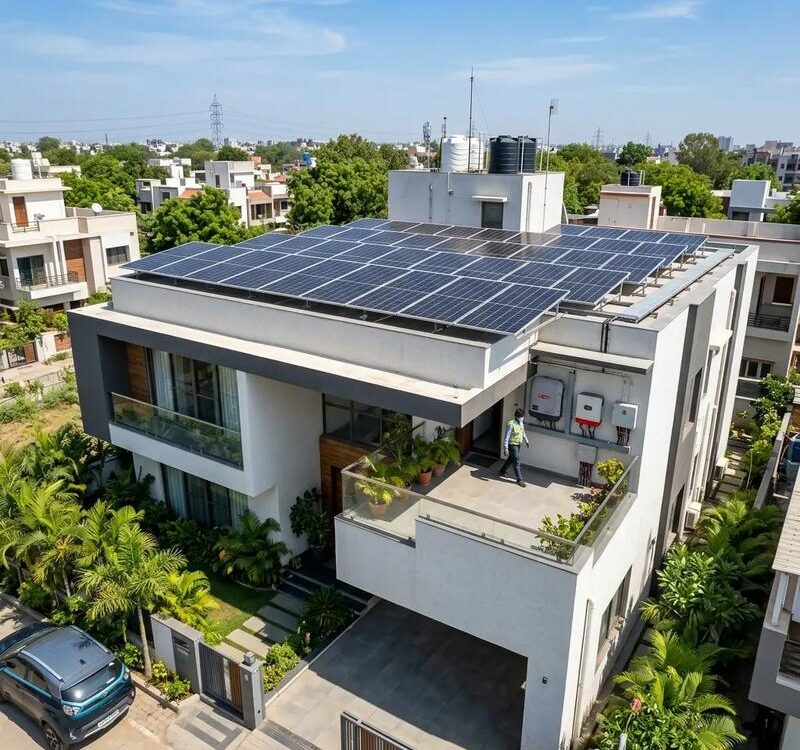
India’s rooftops are an untapped power plant: millions of homes with sun-drenched roofs and some of the world’s highest electricity tariffs for the consumption they represent. The PM Surya Ghar Muft Bijli Yojana, launched in 2024, aims to convert that potential into reality with an ambitious target: rooftop solar for one crore households, backed by subsidies of up to 78,000 rupees per installation. The scheme promises free electricity, lower bills and a role for ordinary families in the energy transition. But rooftop solar in India has historically grown slowly despite years of subsidies. This explainer looks at how Surya Ghar works, what it really costs a family, and whether the economics add up.
How the subsidy works
The scheme offers a central subsidy of 30,000 rupees for a 1 kW system, 60,000 for 2 kW, and 78,000 for 3 kW and above, credited directly to the beneficiary’s bank account after installation and inspection. Households apply through a national online portal, choose from registered vendors, get the system installed, and then apply for net metering with their distribution company. The subsidy is deliberately front-loaded and simple, a break from earlier schemes where subsidies flowed through vendors and distribution companies with long delays. Loans at low interest rates are available through partner banks for the remaining cost, with the subsidy effectively reducing the loan burden.
What it costs a household
A typical 2-3 kW rooftop system costs between 1.2 and 1.8 lakh rupees before subsidy, depending on the state, vendor and equipment quality. After the 60,000 to 78,000 rupee subsidy, the family’s out-of-pocket cost falls to roughly 60,000 to 1 lakh rupees, which can be financed through a low-interest loan. A 3 kW system in most of India generates 12 to 15 units of electricity a day, enough to zero out the bill of a typical urban household consuming 300 to 400 units a month. Payback periods, after subsidy, work out to roughly four to six years, after which the electricity is effectively free for the system’s 20-plus-year life. Maintenance is minimal: occasional panel cleaning and an inverter replacement after a decade.
Why rooftop solar lagged before
India’s earlier rooftop programmes consistently missed targets, and the reasons are instructive. Distribution companies resisted rooftop solar because every unit a household generates is a unit of high-tariff sales the discom loses, and many discoms slow-walked net-metering approvals. Awareness was low, vendors were uneven in quality, and the subsidy process was cumbersome. Surya Ghar tries to fix each of these: the portal standardises the process, subsidies go directly to households, and the central government has pushed states to streamline net metering. Whether discom resistance truly fades remains the open question, because the underlying incentive problem has not changed.
Net metering: the crucial fine print
Net metering is what makes rooftop solar economics work: surplus electricity exported to the grid during the day offsets the electricity drawn at night, with the meter effectively running backwards. But state policies vary widely. Some states offer full net metering, others have moved to gross metering or net billing, where exported power is bought at lower rates, which stretches payback periods. Some states cap the system size relative to the sanctioned load. Households must check their state’s net-metering regulations before investing, because the same 3 kW system can have very different economics in Maharashtra versus, say, a state with restrictive export terms.
Can it reach one crore homes?
The target is ambitious: one crore installations would multiply India’s residential rooftop base several-fold. Progress has been rapid by historical standards, with lakhs of applications and installations in the scheme’s first years, but sustaining the pace requires vendors, trained installers and discom cooperation at unprecedented scale. The scheme’s design, direct subsidy, simple portal, low-interest loans, addresses the demand side well. The supply side, the capacity of the ecosystem to install quality systems at volume, and the regulatory side, discom behaviour on net metering, will decide whether Surya Ghar becomes a genuine rooftop revolution or another missed target.
FAQs
How much subsidy does PM Surya Ghar offer? Rs 30,000 for 1 kW, Rs 60,000 for 2 kW, and Rs 78,000 for 3 kW or larger systems, paid directly to the beneficiary’s bank account.
How do I apply? Through the national PM Surya Ghar portal: register, choose a registered vendor, install the system, get it inspected, and apply for net metering with your discom.
How long is the payback period? Typically four to six years after subsidy for a household with moderate consumption, after which the power is effectively free.
PM Surya Ghar’s bet is that the rooftop revolution was always waiting on simplicity: simple subsidies, simple applications, simple economics. If a crore households agree, India’s power map will never look the same.
Source: Press Information Bureau

Khabar 24h Editorial Desk — our explainers are prepared by the Khabar 24h editorial team using AI-assisted research tools, and every piece is reviewed by a human editor before publishing. We do not claim original reporting: our work is turning complex topics into simple, accurate summaries. Spotted an error? Write to contact@khabar24h.com — our corrections policy aims for same-day review.
More from this author →