How Film Schools Train India’s Next Generation of Directors
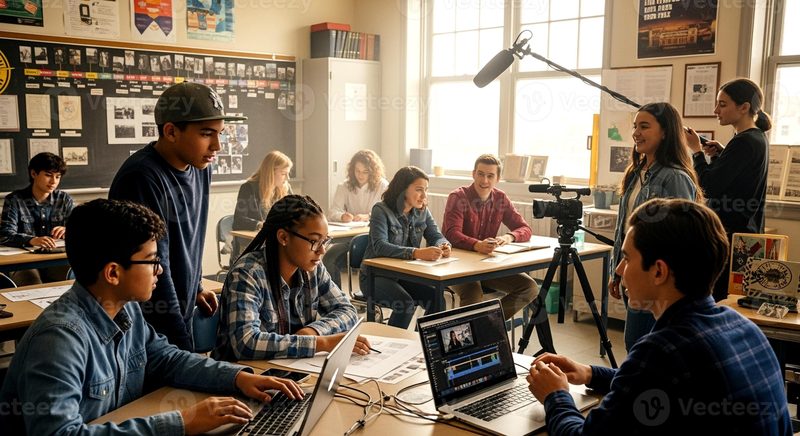
Every year, thousands of young Indians arrive at film schools carrying the same dream: to direct. What they find is rarely what they expected. India’s film schools do not teach a formula for hits; they teach a way of seeing, through years of watching, shooting, failing and reshooting. How film schools train the next generation of directors is a story of legendary institutes, evolving curricula and an ongoing debate about whether filmmaking can be taught at all.
The institutes that shaped Indian cinema
The Film and Television Institute of India in Pune and the Satyajit Ray Film and Television Institute in Kolkata stand as the twin pillars of formal film education in the country. FTII, founded in 1960, trained generations of directors, cinematographers and editors who defined parallel cinema and then mainstream filmmaking. SRFTI, established later, built its own distinguished tradition. Their alumni lists read like a history of Indian cinema’s most adventurous decades.
Around them has grown a constellation of private institutes, university programmes and specialised schools offering everything from one-year diplomas to intensive short courses. The expansion reflects demand: as the industry has grown across films, streaming, advertising and digital content, so has the appetite for trained crew. But the prestige hierarchy remains steep, and admission to the top government institutes is fiercely competitive.
What directing students actually learn
The curriculum moves from theory to practice in deliberate stages. Students begin with film history and analysis, learning to read films the way literature students read novels: shot by shot, cut by cut. They study the grammar of visual storytelling, the history of world cinema, and the technical foundations of camera, sound and editing. Classroom learning is only the scaffolding; the real education happens when students start shooting.
Exercises escalate in complexity: silent shorts, dialogue scenes, documentary portraits, and finally diploma films made with real budgets, crews and deadlines. Students rotate through crew roles, learning cinematography, sound and editing firsthand, because a director who has never held a boom pole cannot sensibly ask a sound recordist for the impossible. Critique sessions, where finished exercises are dissected by faculty and peers, teach the hardest lesson of all: how to hear that your work is not working, and fix it.
The mentorship model
- Faculty filmmakers: working directors and technicians who teach craft as practitioners, not just theorists.
- Masterclasses: visits from established filmmakers who share working methods and career lessons.
- Peer learning: crews formed from fellow students, creating collaborations that often last entire careers.
- Festival exposure: student films sent to festivals, where young directors meet the wider industry.
The peer network may be the most valuable thing a film school provides. Classmates become each other’s cinematographers, editors and producers, and those bonds persist into professional life. Many of Indian cinema’s notable creative partnerships began as student collaborations.
Film school vs the industry route
The eternal debate: is film school worth it, or should aspirants simply start assisting on sets? The industry route offers immediate practical experience and contacts; many successful directors learned entirely as assistants, climbing from clapper boy to director over years. Film school offers something different: time and permission to experiment, access to equipment, a structured understanding of the art form, and the freedom to fail without commercial consequences.
The streaming era has complicated the calculation. With platforms hungry for content and new voices, the paths into directing have multiplied: short films online, assistant directing, writing rooms, independent features. Film schools have responded by updating curricula toward series storytelling, digital workflows and the business realities of pitching to platforms. The fundamentals, though, have not changed: tell a true story, tell it visually, and learn to lead a crew.
FAQs
Do you need film school to become a director in India? No. Many successful directors never attended film school, learning as assistants. But school provides structured craft training, equipment access and a peer network that the industry route cannot easily replicate.
What are India’s most prestigious film schools? FTII Pune and SRFTI Kolkata are the most established government institutes, joined by a range of respected private and university programmes.
How competitive is admission? Extremely, at the top institutes, with thousands of applicants for a few dozen seats across disciplines, selected through written tests, interviews and practical assessments.
Film schools cannot manufacture talent, but they can refine it: the next generation of Indian directors is learning, right now, that the camera is both a tool and a way of thinking.
Compiled by the Khabar 24h Editorial Desk from publicly available sources.
Related stories
View all →
Ramayana Makers Unveil Yash’s Ravana Poster After MrBeast Event
The makers of Ramayana have unveiled a new official poster of Yash as Ravana, following a special promotional event in Mumbai attended…

Dhanush Postpones OM for Rajinikanth’s Jailer 2
Dhanush has postponed his film OM to avoid clashing with Rajinikanth's Jailer 2, saying big films should respect each other.

The Paradise Review: Nani Shines, Tropes Tire
The Paradise review: Nani delivers a standout performance in Srikanth Odela's film, but the story leans on tired, familiar tropes.

Khabar 24h Editorial Desk — our explainers are prepared by the Khabar 24h editorial team using AI-assisted research tools, and every piece is reviewed by a human editor before publishing. We do not claim original reporting: our work is turning complex topics into simple, accurate summaries. Spotted an error? Write to contact@khabar24h.com — our corrections policy aims for same-day review.
More from this author →