Photosynthesis: How Plants Turn Sunlight Into Food
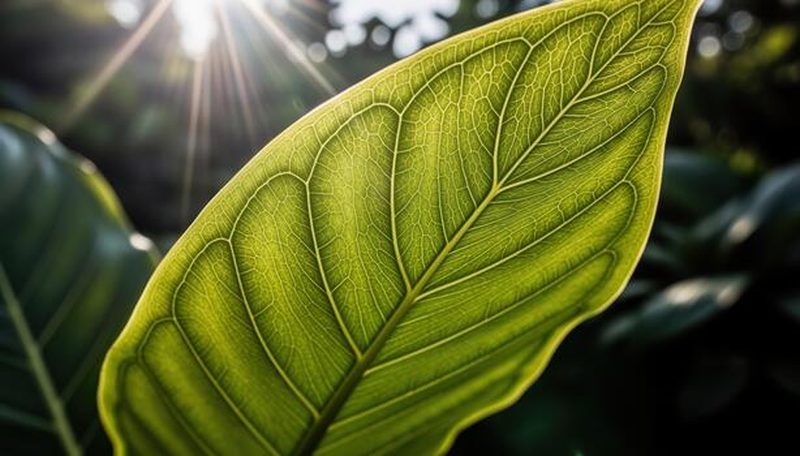
Nearly every meal you have ever eaten, every breath you have taken, and the fossil fuels that powered the industrial revolution all trace back to a single biochemical trick: photosynthesis, the conversion of sunlight, water and carbon dioxide into sugar and oxygen. Plants, algae and cyanobacteria perform this energy transduction on a planetary scale, capturing about 120 billion tonnes of carbon yearly and producing the oxygen that makes animal life possible. The machinery is astonishing: molecular antennas that funnel light energy with quantum coherence, water-splitting chemistry that engineers cannot replicate, and carbon-fixing enzymes that are both essential and embarrassingly inefficient. Photosynthesis is the foundation of the biosphere, the regulator of Earth’s climate, and increasingly, the template for technologies from artificial leaves to supercharged crops. Here is the science of how plants eat sunlight.
Capturing light: the quantum front end
It starts in the chloroplast, in stacked membranes called thylakoids studded with photosystems, protein complexes holding chlorophyll pigments. When a photon strikes chlorophyll, it excites an electron to a higher energy state; antenna pigments pass this excitation from molecule to molecule until it reaches the reaction centre, where the energy is converted to chemical form by splitting water, releasing oxygen as a byproduct and generating energy carriers. The efficiency and speed are extraordinary: energy transfer through the antenna approaches 100 per cent quantum efficiency, and recent evidence suggests quantum coherence, wavelike energy sharing, helps find the fastest path. Splitting water is the hard part: it requires yanking four electrons from two water molecules, chemistry so demanding that artificial catalysts still cannot match the natural manganese-cluster catalyst that does it effortlessly at room temperature. The light reactions produce ATP and NADPH, the cell’s energy currencies, which then power the second stage.
The Calvin cycle: building sugar from air
The light reactions’ energy feeds the Calvin cycle, a loop of enzymatic reactions in the chloroplast stroma that fixes carbon dioxide into sugar. Its key enzyme, RuBisCO, is probably the most abundant protein on Earth, and also one of the worst: it is agonisingly slow, processing only a few molecules per second, and it frequently mistakes oxygen for carbon dioxide, wasting energy in photorespiration. Plants compensate by making enormous quantities of it; up to half the protein in a leaf can be RuBisCO. This inefficiency is evolution’s legacy, RuBisCO evolved when the atmosphere had little oxygen, and it is now a prime target for crop engineers: speeding it up or installing carbon-concentrating mechanisms from algae could boost yields dramatically. C4 plants like maize, sugarcane and sorghum evolved a clever workaround, concentrating CO2 around RuBisCO to suppress photorespiration, which is why they thrive in hot climates. The RIPE project and others are now engineering these tricks into rice, potentially the biggest yield advance since the Green Revolution.
Photosynthesis and the planet
Photosynthesis is Earth’s climate engine. By fixing CO2, it built the oxygen atmosphere over two billion years ago in the Great Oxidation Event, and today it absorbs roughly a third of human CO2 emissions, though deforestation and warming are weakening this sink. Understanding its limits matters for climate models: will CO2 fertilisation keep boosting plant growth, or will heat, drought and nutrient limits cancel the gains? Evidence increasingly points to limits, with tropical forests already showing declining carbon uptake. Technologists are copying the trick: artificial photosynthesis aims to do what leaves do, converting sunlight, water and CO2 into fuels, and while lab devices work, matching a leaf’s cost and durability remains distant. For India, photosynthesis research is food security: improving the efficiency of rice and wheat photosynthesis could raise yields without more land, fertiliser or water. The leaf, perfected over three billion years, remains both our life-support system and our best teacher.
- Photosynthesis captures about 120 billion tonnes of carbon globally each year.
- Light harvesting in antenna complexes approaches 100 per cent quantum efficiency.
- RuBisCO is likely Earth’s most abundant protein, and one of its slowest enzymes.
- C4 plants like maize and sugarcane concentrate CO2 to boost efficiency in heat.
- Plants and oceans absorb roughly half of humanity’s CO2 emissions.
FAQs
Do plants photosynthesise at night? No. The light reactions need photons, though respiration continues; at night plants consume oxygen and release CO2 like animals.
Why are most plants green? Chlorophyll absorbs red and blue light most strongly and reflects green; the green is the leftover light the plant discards.
Could we improve photosynthesis? Yes, potentially a lot. Engineering faster RuBisCO or C4 mechanisms into rice could raise yields substantially; field trials are underway.
Sunlight in, sugar and oxygen out: the most important chemical reaction on Earth runs silently in every leaf, and civilisation is built on its surplus.
Compiled by the Khabar 24h Editorial Desk from publicly available sources.

Khabar 24h Editorial Desk — our explainers are prepared by the Khabar 24h editorial team using AI-assisted research tools, and every piece is reviewed by a human editor before publishing. We do not claim original reporting: our work is turning complex topics into simple, accurate summaries. Spotted an error? Write to contact@khabar24h.com — our corrections policy aims for same-day review.
More from this author →