Wind Turbines: The Aerodynamics Behind the Blades
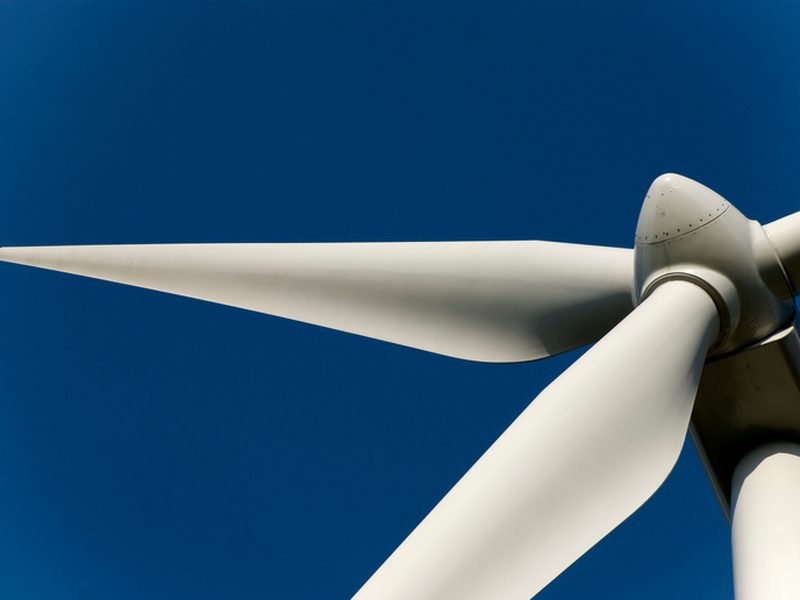
A wind turbine looks simple, three blades turning lazily against the sky, but each blade is a precision aircraft wing stood on end, and the physics it exploits is subtler than it appears. Turbines do not work like pinwheels pushed by the wind; they work like aeroplane wings, generating lift that pulls the blades around. That aerodynamic sophistication is why modern turbines harvest energy so efficiently, and why their blades have grown to the length of football fields. The aerodynamics behind the blades is a masterclass in turning moving air into electricity.
Lift, not drag
Early windmills used drag: the wind simply pushed flat blades around, like a hand pushing a door. Modern turbines use lift, and the difference is transformative. Each blade is shaped as an airfoil, curved on one side and flatter on the other, exactly like an aircraft wing. As wind flows over it, the air moves faster over the curved surface, creating lower pressure above the blade than below. The resulting lift force points partly forward, pulling the blade around the rotor. Lift-based rotors can extract far more energy and spin much faster than drag devices, which is why every commercial turbine uses them.
The Betz limit
There is a hard ceiling on wind extraction, derived by Albert Betz in 1919. A turbine cannot capture all the wind’s energy, because the air must keep moving to get out of the way; if the rotor stopped the wind completely, air would pile up and flow around it instead. Betz showed the maximum is 59.3 percent of the wind’s kinetic energy. Modern turbines achieve 45 to 50 percent, remarkably close to the theoretical limit, which means further gains must come from bigger rotors, taller towers and better siting rather than fundamentally better blades. Blade design is a mature science operating near its physical ceiling.
Why blades are so enormous
Power scales with the square of blade length and the cube of wind speed, which explains everything about turbine design. Doubling the rotor diameter quadruples the swept area and thus the energy captured; raising the hub height reaches stronger, steadier winds, since wind speed grows with altitude. That is why offshore turbines now sport blades over 100 metres long on towers taller than skyscrapers. The engineering challenge is keeping such blades light and strong: they are built from fibreglass and carbon-fibre composites, twisted and tapered along their length so each section meets the wind at its optimal angle of attack.
Controlling the spin
Turbines must manage wildly varying winds. Below a cut-in speed of a few metres per second, there is not enough energy to bother; the rotor idles. In moderate winds, pitch control rotates each blade slightly to hold the optimal angle, maximising capture. Above the rated wind speed, the blades pitch to spill excess wind, holding power constant and protecting the machinery. In storms beyond the cut-out speed, brakes lock the rotor entirely. Yaw drives keep the nacelle pointed into the wind, and modern farms use wake steering, deliberately misaligning upwind turbines so their turbulent wakes miss downstream neighbours.
From rotor to grid
The rotor’s slow spin, typically under 20 revolutions per minute for large machines, is stepped up by a gearbox (or handled directly by multipole generators in gearless designs) to drive the generator at the speed the grid needs. Power electronics convert the output to precisely synchronised alternating current.
- Rotor: three airfoil blades converting lift into slow, powerful rotation.
- Nacelle: houses the gearbox or direct-drive generator plus yaw controls.
- Tower: lifts the rotor into stronger, steadier winds above 100 metres.
- Pitch system: twists blades to regulate power and shed storm loads.
- Converter: power electronics delivering grid-synchronised alternating current.
A single large offshore turbine can now generate 15 megawatts or more, enough for tens of thousands of homes, and wind farms are increasingly paired with batteries to smooth their output. The capacity factor, the fraction of maximum output actually achieved, runs 35 to 55 percent for good sites, far above solar’s typical figures.
FAQs
Do turbines kill many birds? They kill some, but far fewer than buildings, cats or fossil fuel pollution; careful siting away from migration corridors and new deterrent technologies reduce the toll further.
Why do turbines sometimes stand still on windy days? They may be paused for maintenance, grid constraints, or because winds exceed safe limits; occasionally they are curtailed when the grid cannot absorb more power.
How noisy are they? Modern turbines are quiet at typical setback distances, producing a soft whoosh; infrasound fears have not been supported by health research.
The wind turbine blade is applied aerodynamics at civilisational scale: a wing that never takes off, endlessly harvesting the sky. Operating near the physical limits of energy extraction, today’s turbines are about as good as physics allows, which makes them one of the most optimised machines humans have ever built.
Source: National Renewable Energy Laboratory

Khabar 24h Editorial Desk — our explainers are prepared by the Khabar 24h editorial team using AI-assisted research tools, and every piece is reviewed by a human editor before publishing. We do not claim original reporting: our work is turning complex topics into simple, accurate summaries. Spotted an error? Write to contact@khabar24h.com — our corrections policy aims for same-day review.
More from this author →