Graphene: The One-Atom-Thick Material Stronger Than Steel
In 2004, Andre Geim and Konstantin Novoselov at the University of Manchester did something that sounded like a joke: they used ordinary sticky tape to peel flakes from a lump of graphite, the stuff of pencil lead, until they had isolated a single layer of carbon atoms. That layer, graphene, turned out to be a material like no other: 200 times stronger than steel by weight, more conductive than copper, nearly transparent, flexible, and impermeable to even helium atoms. The discovery won the 2010 Nobel Prize and triggered a global gold rush, with thousands of patents and predictions that graphene would revolutionise everything from electronics to water desalination. Two decades on, the hype has cooled but the substance remains: graphene has quietly entered real products, and its stranger cousins, the family of 2D materials, are opening physics no one anticipated. Here is the state of the wonder material.
What makes one atomic layer so extraordinary
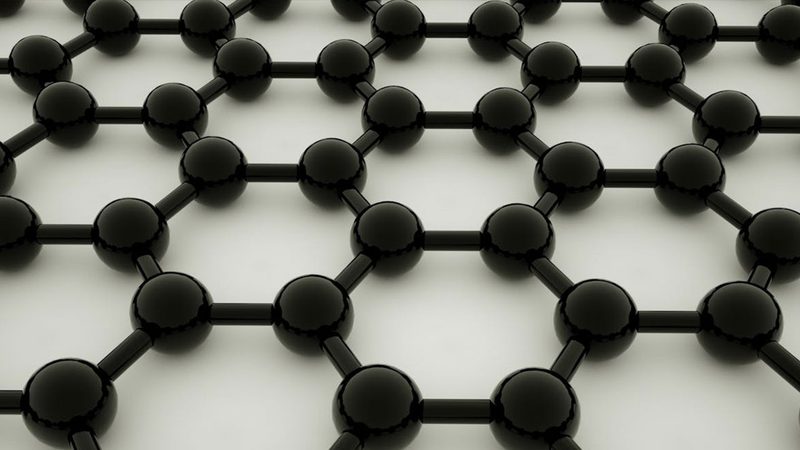
Graphene’s magic comes from its structure: carbon atoms arranged in a honeycomb lattice one atom thick, each bonded to three neighbours in the strongest chemical bond known. That geometry gives it a tensile strength of 130 gigapascals, about 200 times steel’s, while remaining flexible enough to be folded. Its electrons behave as if they have no mass, zipping through the lattice at a fraction of light speed, which yields electrical conductivity exceeding copper’s and thermal conductivity better than diamond’s. Yet it absorbs only 2.3 per cent of light, making it essentially transparent, and despite being the thinnest material possible, it is impermeable to gases, even helium cannot squeeze through its tight electron cloud. These are not incremental improvements but records: graphene simultaneously holds the titles for strongest, most conductive and thinnest material ever measured. The physics gets stranger still: stacked and twisted, graphene layers exhibit superconductivity and exotic quantum states, a playground that has spawned the field of twistronics.
From Nobel to marketplace
The path from laboratory marvel to product has been slower than the hype promised, for a simple reason: making perfect graphene is hard, and making it cheaply at scale is harder. The tape method produces pristine flakes too small for industry; chemical vapour deposition grows large sheets but with defects and at high cost. Still, graphene has found real niches. It strengthens composites: graphene-enhanced concrete, tennis rackets, helmets and car parts are on the market. It improves batteries and supercapacitors, boosting conductivity and lifespan; several manufacturers sell graphene-enhanced lithium batteries. It makes superb sensors, membranes for water desalination that pass water but block salt, and anti-corrosion coatings. Flexible transparent conductors for foldable displays are in development. The market, measured in hundreds of millions of dollars and growing fast, is real but modest compared with the trillion-dollar prophecies. The lesson is a familiar one in materials science: the gap between a miraculous property and a manufacturable product is where revolutions go to wait, sometimes for decades.
Beyond graphene: the 2D universe
Perhaps graphene’s greatest legacy is the world it revealed: hundreds of materials can be exfoliated to single layers, each with distinct powers. Molybdenum disulfide is a semiconductor for ultra-thin transistors; hexagonal boron nitride is an insulating wonder-substrate; MXenes offer exceptional energy-storage properties; phosphorene and silicene add new electronic behaviours. Stacking these like atomic Lego, in van der Waals heterostructures, lets engineers design materials layer by layer with bespoke properties, an entirely new way of building matter. Twisted bilayer graphene, two sheets rotated by a magic angle of 1.1 degrees, becomes superconducting, a discovery that electrified condensed-matter physics. Indian researchers are active in this space, from graphene production at CSIR labs to 2D-material electronics at the IITs. The wonder material turned out to be a wonder family, and its full story, from quantum physics to desalination plants, is still being written one atomic layer at a time.
- Graphene is one atom thick yet about 200 times stronger than steel by weight.
- It conducts electricity better than copper and heat better than diamond.
- Geim and Novoselov won the 2010 Nobel Prize for isolating it with sticky tape.
- Twisted bilayer graphene at a 1.1-degree magic angle becomes superconducting.
- Graphene-enhanced concrete, batteries and composites are already commercial products.
FAQs
Is graphene toxic? Research is ongoing; pristine graphene appears relatively biocompatible, but some graphene oxide forms show toxicity in studies, so handling standards are still developing.
Why isn’t everything made of graphene yet? Manufacturing large, defect-free sheets cheaply remains difficult; most applications use graphene flakes or composites rather than perfect monolayers.
What is twistronics? The study of how stacking and twisting 2D materials at precise angles creates new electronic properties, including superconductivity.
A single layer of atoms, peeled with office tape, became the strongest material known and opened a universe of flatland physics. Graphene’s revolution is quieter than promised, but it is real, and it is only beginning.
Compiled by the Khabar 24h Editorial Desk from publicly available sources.

Khabar 24h Editorial Desk — our explainers are prepared by the Khabar 24h editorial team using AI-assisted research tools, and every piece is reviewed by a human editor before publishing. We do not claim original reporting: our work is turning complex topics into simple, accurate summaries. Spotted an error? Write to contact@khabar24h.com — our corrections policy aims for same-day review.
More from this author →