How Machine Learning Helps Astronomers Discover New Planets
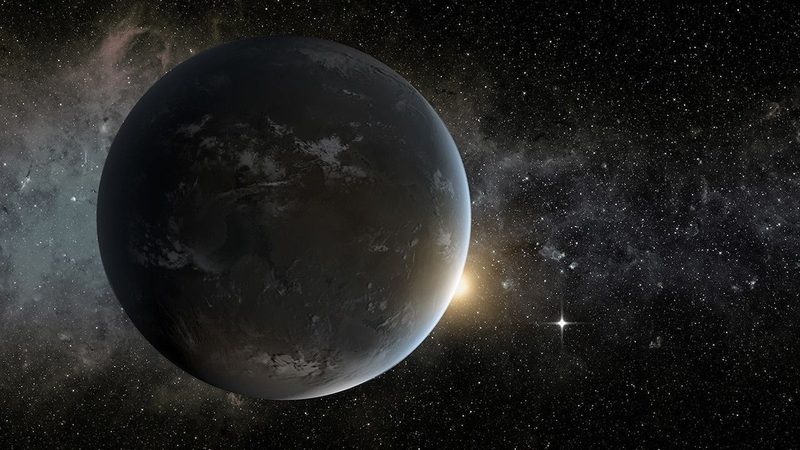
The Kepler space telescope stared at 150,000 stars for four years, recording the brightness of each every 30 minutes, generating a dataset so vast that no team of humans could examine it all. Hidden in those light curves were thousands of exoplanets, betrayed by the tiny dip in starlight when a planet crosses its star’s face. Finding them was a needle-in-a-haystack problem that traditional algorithms handled poorly, drowning in false alarms from stellar noise. Machine learning changed the game: neural networks trained on confirmed planets learned to spot the subtle signatures of transits, discovering worlds astronomers had missed, including an eighth planet in the Kepler-90 system that made it the first known system to tie our solar system’s planet count. As new surveys like TESS and the upcoming PLATO flood astronomy with petabytes, AI has become not a luxury but a necessity in the hunt for new worlds.
Finding dips in oceans of data
The transit method is conceptually simple: when a planet passes in front of its star, the star dims by a fraction of a per cent, periodically, like a miniature eclipse. In practice, stars are noisy: they pulsate, flare, and are freckled with starspots, all of which mimic or mask transits. Traditional detection pipelines used box-fitting algorithms that worked for obvious cases but missed small planets around noisy stars and generated floods of false positives requiring human vetting. Machine learning approaches the problem differently: a neural network is shown thousands of light curves labelled planet or not-planet, and learns the statistical fingerprint of a real transit, including its shape, periodicity and context. Google’s collaboration with NASA produced a model that found Kepler-90i, a scorching rocky world missed by earlier searches, and subsequent models have flagged hundreds of new candidates. The key advantage is sensitivity to the marginal: planets whose signals are too weak or oddly shaped for rigid algorithms but recognisable to a network that has internalised what real transits look like across thousands of examples.
Beyond transits: AI across astronomy
Exoplanet hunting is one front in a broader AI transformation of astronomy. Machine learning now classifies galaxies in sky surveys containing billions of objects, a task the Galaxy Zoo project once crowdsourced to hundreds of thousands of volunteers; neural networks do it faster and increasingly better. It detects gravitational lenses, the rare cosmic mirages that reveal dark matter; predicts solar flares from magnetic field images; and separates the feeble signals of distant supernovae from noise in real time, triggering follow-up telescopes within seconds. Radio astronomers use AI to sift fast radio bursts from interference, and gravitational-wave detectors use it to pull merger signals from detector noise. India’s own astronomers are joining in: researchers using the AstroSat observatory and the Giant Metrewave Radio Telescope apply machine learning to classify sources and clean data. The pattern is universal: wherever astronomy produces more data than humans can inspect, machine learning becomes the instrument that makes the data speak.
Humans still in the loop
For all its power, AI planet-hunting has limits that keep astronomers essential. Neural networks are only as good as their training data, and they can inherit its biases, performing worse on unusual planets unlike anything in the training set, which is precisely where the most interesting discoveries may hide. False positives remain a problem: stellar variability can fool even sophisticated models, so candidates still require human vetting and confirmation, ideally by independent methods like radial velocity measurements. There is also the black-box problem: a network may flag a planet without explaining why, and astronomers rightly demand physical understanding, not just statistical correlation. The most successful projects pair AI with human expertise: machines triage millions of candidates, humans investigate the most promising, and the confirmed finds retrain the machines. Kepler-90i’s discovery illustrates the partnership perfectly: the AI found what humans missed, but humans recognised the significance, confirmed the physics and told the story. In the search for new worlds, the telescope finds the light, the AI finds the pattern, and the astronomer finds the meaning.
- Kepler monitored 150,000 stars continuously for four years, producing unsearchable-by-hand data volumes.
- A Google-NASA neural network found Kepler-90i, making Kepler-90 an eight-planet system.
- Transit dips dim a star by a fraction of a per cent, buried in stellar noise.
- TESS and the upcoming PLATO mission will generate petabytes of light-curve data.
- Indian astronomers apply machine learning to AstroSat and GMRT data.
The coming data deluge
The need will only grow. The Vera Rubin Observatory’s Legacy Survey of Space and Time will photograph the entire southern sky every few nights for a decade, generating 20 terabytes nightly and cataloguing 37 billion objects. The Square Kilometre Array, with major Indian participation, will produce exabytes of radio data. PLATO will stare at a million stars for exoplanets. No conceivable army of graduate students could process these firehoses; autonomous AI pipelines are being built as core observatory infrastructure, not optional extras. The next breakthroughs, an Earth twin around a Sun-like star, the atmospheric fingerprint of a habitable world, may well be found first by an algorithm, in data no human ever looked at. Astronomy is becoming a science where discovery is a collaboration between human curiosity and machine pattern-finding, and the census of worlds grows stranger and richer with every survey.
FAQs
How many exoplanets has AI discovered? Dozens directly, plus hundreds of candidates flagged for confirmation; its bigger contribution is making large surveys searchable at all.
Can AI find life on exoplanets? Not directly, but it will help analyse atmospheric spectra from telescopes like the James Webb for biosignature gases, a far subtler pattern problem.
Will AI replace astronomers? No. It automates detection and classification, freeing astronomers for interpretation, theory and the questions machines cannot ask.
The universe is whispering in data, and machine learning has become our hearing aid. Every new world it finds is a reminder that the sky is far more crowded than we ever guessed.
Source: NASA

Khabar 24h Editorial Desk — our explainers are prepared by the Khabar 24h editorial team using AI-assisted research tools, and every piece is reviewed by a human editor before publishing. We do not claim original reporting: our work is turning complex topics into simple, accurate summaries. Spotted an error? Write to contact@khabar24h.com — our corrections policy aims for same-day review.
More from this author →