How Smartwatches Track Your Health: Heart Rate, Sleep and SpO2 Sensors Explained
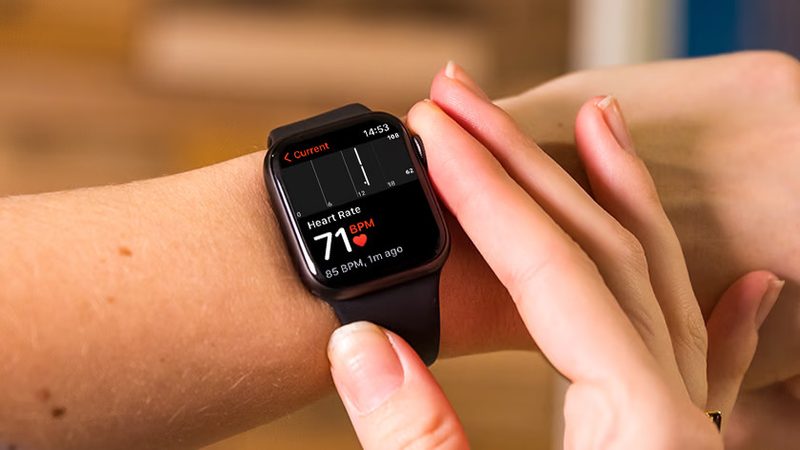
A device smaller than a matchbox, strapped to your wrist, now tracks your heartbeat around the clock, grades your sleep, estimates your blood oxygen and can even take an ECG. Smartwatches have become the most popular health gadgets in India, with options from a few thousand rupees to premium flagships. But how does a watch measure your pulse through skin? This guide explains the sensors inside smartwatches, what each health metric really means, and how much to trust the numbers.
How optical heart-rate sensing works
The workhorse sensor is the photoplethysmography, or PPG, array on the watch’s underside: green LEDs shine light into your wrist while photodiodes measure the reflected light. Blood absorbs green light, so each heartbeat, which surges blood through the capillaries, changes the reflection in a detectable pulse. The watch counts these pulses to derive your heart rate, sampling continuously during workouts and periodically at rest. Green light works best because blood absorbs it strongly, though some watches add infrared for deeper readings. Motion is the enemy: a loose strap or vigorous arm movement corrupts the signal, which is why readings wobble during burpees but stay steady on a run with a snug fit.
Sleep tracking: movement plus heart rate
No watch can read brain waves like a clinical sleep lab, so sleep tracking is sophisticated estimation. The accelerometer detects movement, or its absence, while the PPG sensor watches heart-rate patterns that characterise sleep stages: heart rate typically drops and steadies in deep sleep and becomes variable in REM. Algorithms combine these signals with your historical patterns to divide the night into awake, light, deep and REM phases, and to score sleep quality. The staging is approximate, studies show consumer watches get it roughly right in aggregate but misclassify individual minutes, while the fundamentals, total sleep time and consistency, are measured well. Treat the sleep score as a trend indicator, not a medical verdict.
SpO2, ECG and the advanced sensors
Blood oxygen, SpO2, uses red and infrared LEDs: oxygenated and deoxygenated blood absorb these wavelengths differently, and the ratio reveals saturation. It is useful for spotting trends, such as dips during sleep that might suggest apnea, but wrist SpO2 is less accurate than a fingertip pulse oximeter and not a diagnostic tool. ECG on premium watches works differently: you touch the crown with a finger from the opposite hand, completing an electrical circuit across your chest, and electrodes measure the heart’s electrical signal for about thirty seconds, enough to detect atrial fibrillation in many cases. Skin-temperature sensors track deviations that can flag illness or, for some users, fertility windows. Each sensor adds a genuinely useful signal alongside genuine limits.
How accurate are smartwatches really
The honest answer varies by metric.
- Resting heart rate: very good, usually within a few beats of clinical devices.
- Exercise heart rate: good for steady cardio, weaker for interval training with rapid changes.
- Step counts: decent estimates, though arm movements can fool them.
- Calorie burn: the weakest metric, often off by large margins; treat as relative, not absolute.
- Sleep duration: good; sleep staging: approximate.
- ECG and irregular-rhythm alerts: clinically validated on major brands, but screening tools, not diagnoses.
The pattern: excellent for trends and resting measures, approximate for absolute values and staging. For fitness motivation and early warnings, that is exactly what you need.
Getting the most from your watch
Accuracy and usefulness both improve with good habits. Wear the watch snugly, about a finger’s width above the wrist bone, tighter during workouts. Keep the sensor clean; sweat and sunscreen film degrades readings. Wear it consistently, including sleep, since trends beat snapshots. Review weekly trends rather than obsessing over single readings. Share relevant data with your doctor during checkups; several physicians now find patient-generated heart data genuinely useful. And remember the watch is a wellness device, not a medical device: use its alerts as prompts to seek professional evaluation, never as diagnoses. The best health feature of any smartwatch remains the one that gets you moving more.
FAQs
Can a smartwatch detect heart problems? It can flag irregular rhythms and unusual resting rates that warrant medical investigation, and ECG models have regulatory clearances as screening tools. It cannot diagnose conditions.
Why does my watch show different SpO2 than a pulse oximeter? Wrist measurement is inherently less precise than fingertip transmission measurement. Trust the oximeter for spot checks and the watch for trends.
Do I need a premium watch for good tracking? Budget watches now track heart rate and sleep competently. Premium models add ECG, better accuracy, and advanced metrics; buy for the features you will actually use.
Smartwatches turned the wrist into a health observatory: imperfect instruments, honestly understood, that nudge millions toward better sleep, more movement and earlier medical attention. That is a remarkable achievement for a gadget that also tells the time.
Source: American Heart Association

Khabar 24h Editorial Desk — our explainers are prepared by the Khabar 24h editorial team using AI-assisted research tools, and every piece is reviewed by a human editor before publishing. We do not claim original reporting: our work is turning complex topics into simple, accurate summaries. Spotted an error? Write to contact@khabar24h.com — our corrections policy aims for same-day review.
More from this author →