Why We Sleep: The Neuroscience of Dreams and Memory
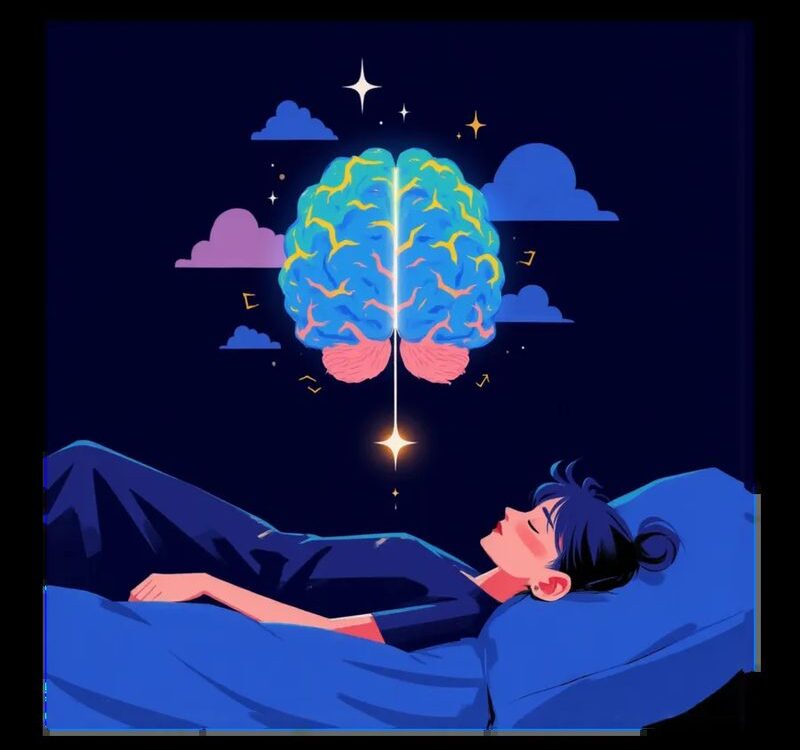
Every human, in every culture, spends roughly a third of life doing something that looks like nothing: lying still, unconscious, vulnerable to predators, dreaming vivid hallucinations. From an evolutionary perspective, sleep is bizarrely costly, and the fact that every animal with a brain does it suggests it must be doing something vital. Modern neuroscience has begun to reveal what: sleep is not the brain switching off but switching tasks, replaying memories, clearing metabolic waste, recalibrating emotions and rehearsing the future in dreams. Sleep deprivation, meanwhile, degrades nearly every system, from immunity to judgement, which is why the World Health Organization classifies night-shift work as a probable carcinogen. The science of sleep is the story of what the brain does when you are not watching.
The architecture of a night’s sleep
Sleep is not uniform; it cycles through distinct stages roughly every 90 minutes. Light sleep gives way to deep slow-wave sleep, dominated by large, synchronised brain waves, during which the body repairs tissue, releases growth hormone and consolidates factual memories. Then comes REM sleep, rapid eye movement sleep, when the brain becomes almost as active as in waking, the body is paralysed to prevent acting out dreams, and the most vivid dreaming occurs. Early in the night, deep sleep dominates; toward morning, REM periods lengthen, which is why the most memorable dreams come just before waking. This architecture changes across life: newborns spend half their sleep in REM, possibly wiring their developing brains, while the elderly get less deep sleep, which may contribute to memory decline. Disrupting the cycle matters: alcohol may hasten sleep onset but fragments REM, and smartphones’ blue light delays the melatonin signal that opens the gates of sleep.
What sleep does for memory and learning
The most celebrated function of sleep is memory consolidation. During deep sleep, the hippocampus, the brain’s temporary memory buffer, replays the day’s experiences in fast-forward, gradually transferring them to the cortex for long-term storage; researchers can literally detect these replays in sleeping rats navigating mazes learned while awake. REM sleep seems to handle emotional memories, stripping away their painful charge while keeping the lesson, which is why a night’s sleep can make yesterday’s crisis feel manageable. Sleep also powers creativity: studies show that after sleep, people are far more likely to discover hidden patterns and shortcuts in problems, as if the sleeping brain continues working offline. Students who sleep after studying retain far more than those who cram through the night; all-nighters are among the least effective study strategies known to science. For India’s millions of exam-preparing students, the evidence is unambiguous: sleep is not time stolen from study but the process that makes study stick.
Dreams: the brain’s night theatre
Dreams remain the most mysterious product of sleep. The leading theories treat dreaming as functional: the threat-simulation theory holds that dreams rehearse responses to danger, which fits their often anxious content; the emotional-regulation view sees dreams as overnight therapy, processing the day’s feelings; and the memory theories see dreams as the conscious echo of consolidation work. Lucid dreaming, in which sleepers realise they are dreaming, is a real and trainable phenomenon studied in sleep labs. What dreams are probably not is coded messages: Freud’s idea that dreams disguise forbidden wishes has little empirical support, though his broader insight that the sleeping mind processes emotion was prescient. The content of dreams draws on waking concerns, which is why exam stress produces exam dreams across cultures. Perhaps most intriguing is the discovery that the dreaming brain is not merely replaying but generating: it constructs entire worlds from memory fragments, a feat of spontaneous creativity no computer can yet match.
- Humans spend about a third of their lives asleep, roughly 25 years in an 80-year life.
- Sleep cycles through light, deep and REM stages about every 90 minutes.
- During REM sleep the brain is nearly as active as when awake, but the body is paralysed.
- The glymphatic system clears metabolic waste from the brain mainly during deep sleep.
- Chronic sleep deprivation impairs cognition as much as alcohol intoxication.
The cleaning crew and the price of skimping
A landmark discovery of the 2010s was the glymphatic system: during deep sleep, cerebrospinal fluid washes through the brain, flushing out metabolic waste including beta-amyloid, the protein that accumulates in Alzheimer’s disease. Mice deprived of sleep accumulate more amyloid; humans with poor sleep show higher Alzheimer’s risk, suggesting that chronic short sleep may literally leave the brain dirty. The costs of skimping are broad: less than six hours’ sleep impairs attention, decision-making and emotional control as much as being drunk, weakens immune responses to vaccines and infections, disrupts hunger hormones to promote weight gain, and raises the risks of diabetes, hypertension and heart disease. India, with its late-night work culture, long commutes and early school starts, sleeps less than it should; surveys suggest urban Indians average barely six and a half hours. The science delivers a simple prescription that modern life resists: seven to nine hours, regular timing, dark cool bedroom, screens off. Sleep is not laziness; it is maintenance on the most complex object in the known universe.
FAQs
How much sleep do adults really need? Most adults need 7 to 9 hours; consistently sleeping under 6 hours measurably impairs health and cognition, whatever you tell yourself.
Do we dream every night? Yes, several times, mostly in REM sleep; we simply forget most dreams unless we wake during one.
Is snoring dangerous? Loud habitual snoring can signal sleep apnoea, repeated breathing interruptions that strain the heart; it deserves medical evaluation, not just earplugs for the partner.
We sleep to remember, to feel, to clean the brain and to dream. A third of life spent unconscious turns out to be among the busiest shifts the brain ever works.
Compiled by the Khabar 24h Editorial Desk from publicly available sources.

Khabar 24h Editorial Desk — our explainers are prepared by the Khabar 24h editorial team using AI-assisted research tools, and every piece is reviewed by a human editor before publishing. We do not claim original reporting: our work is turning complex topics into simple, accurate summaries. Spotted an error? Write to contact@khabar24h.com — our corrections policy aims for same-day review.
More from this author →