Why the Arctic Is Warming Nearly Four Times Faster Than the Rest of the Planet
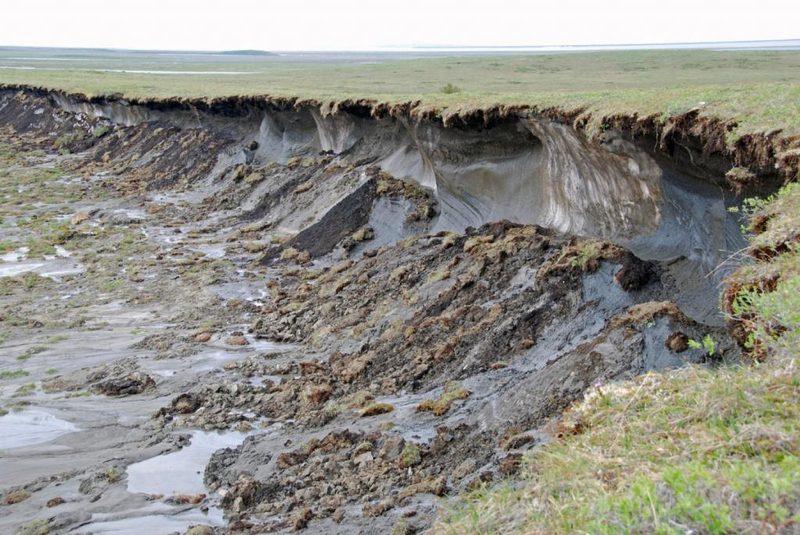
The Arctic is warming at a pace that has stunned even climate scientists: nearly four times faster than the global average, a phenomenon called Arctic amplification. While the planet as a whole has warmed about 1.2 degrees Celsius since pre-industrial times, parts of the Arctic have warmed by three or four degrees. Sea ice is retreating, permafrost is thawing, and ecosystems built for deep cold are unravelling. The Arctic is not just a victim of warming; through feedbacks that reach around the globe, it is becoming a driver of it.
The ice-albedo feedback
The most powerful amplifier is brutally simple. Bright sea ice reflects most sunlight back to space, keeping the Arctic cool. When warming melts the ice, it exposes dark ocean water, which absorbs sunlight instead of reflecting it, warming the water and melting more ice. Each summer the feedback ratchets forward: less ice, more absorption, more warming, still less ice. Satellite records show Arctic sea ice shrinking about 13 percent per decade in summer extent, and the remaining ice is younger and thinner, melting out more easily each year. The Arctic Ocean could see its first ice-free September within decades.
Why the Arctic amplifies warming
Several mechanisms stack on top of the ice feedback. The Arctic atmosphere is highly stratified, with cold dense air near the surface, so added heat stays trapped low instead of mixing upward and radiating away. Increased moisture and cloud cover trap outgoing heat. Heat transported from lower latitudes by ocean currents and weather systems dumps extra energy into the region. And as permafrost thaws, it releases carbon dioxide and methane, adding greenhouse gases that warm the Arctic further. No single cause explains the fourfold amplification; it is the pile-up of feedbacks that makes the far north so sensitive.
What is unravelling on the ground
The consequences are already visible across the region. Permafrost thaw is buckling roads, tilting buildings and releasing ancient carbon. Coastal erosion is forcing entire Indigenous villages in Alaska to relocate as the sea ice that once protected their shores disappears. Greenland’s ice sheet is losing hundreds of billions of tonnes of ice per year, contributing directly to sea-level rise. Wildlife is stressed: polar bears face longer ice-free fasting seasons, and southern species are moving north, disrupting food webs that evolved over millennia.
Why the tropics should care
Arctic change does not stay in the Arctic. Meltwater from Greenland freshens the North Atlantic, potentially slowing the ocean circulation that warms Europe. A weaker temperature contrast between the Arctic and the tropics can make the jet stream wavier, linked to stuck weather patterns and extreme cold snaps in mid-latitudes. Methane released from thawing permafrost and subsea deposits adds to global warming everywhere. And sea-level rise from Greenland’s ice threatens coastal cities from Mumbai to Miami. The Arctic is the planet’s early warning system, and its alarm is ringing.
What the future holds
How bad Arctic amplification gets depends on global emissions. Under high-emission scenarios, models project a largely ice-free Arctic summer by mid-century, with cascading effects on permafrost, ecosystems and sea level. Under strong mitigation, some ice survives and some feedbacks slow. Key uncertainties remain:
- How fast Greenland melts, which controls the pace of sea-level rise for centuries.
- How much carbon permafrost releases, potentially adding the equivalent of a major emitter nation.
- Whether ecosystems can adapt to a rate of change far faster than historical climate shifts.
FAQs
Is the Antarctic warming as fast? No. Antarctica is a high, isolated continent surrounded by ocean currents that partly shield it, though parts of it, especially the peninsula, are warming and losing ice rapidly.
Will an ice-free Arctic affect monsoons? Possibly. Arctic warming shifts atmospheric circulation patterns, and research suggests links to changes in tropical rainfall, though the details are still being worked out.
Can Arctic ice recover? Sea ice can regrow in winter if temperatures drop, but the long-term trend follows cumulative warming; only cooling the planet would restore it.
The Arctic’s fourfold warming is the clearest proof that climate change does not fall evenly. The far north is changing first and fastest, and what happens there will not stay there. Watching the Arctic is watching our own future arrive early.
Source: National Snow and Ice Data Center

Khabar 24h Editorial Desk — our explainers are prepared by the Khabar 24h editorial team using AI-assisted research tools, and every piece is reviewed by a human editor before publishing. We do not claim original reporting: our work is turning complex topics into simple, accurate summaries. Spotted an error? Write to contact@khabar24h.com — our corrections policy aims for same-day review.
More from this author →