Convergent Evolution: How Unrelated Animals Solve the Same Problems
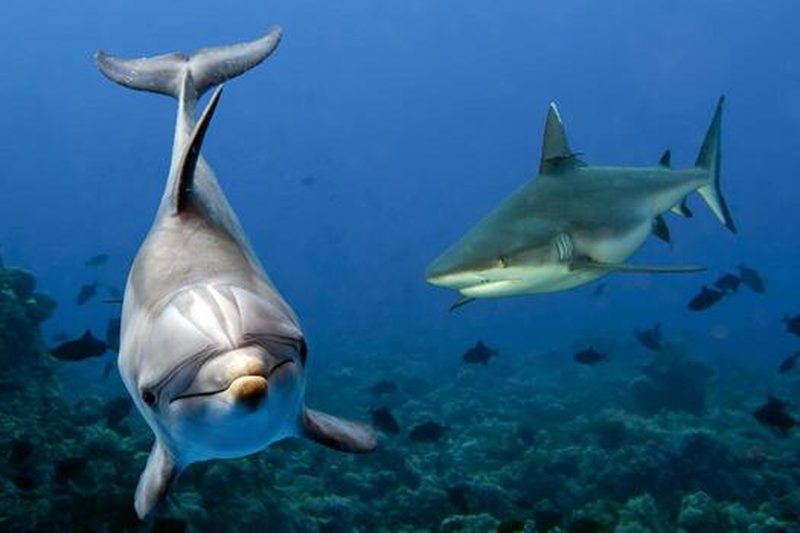
The shark and the dolphin look like variations on a theme: torpedo bodies, dorsal fins, powerful tails. Yet sharks are fish, separated from dolphins by 400 million years of evolution; dolphins are mammals, closer cousins to humans than to any fish. Their resemblance is not inheritance but convergence: independent evolution arriving at the same design because physics allows only so many good solutions to swimming fast. Convergent evolution, the repeated invention of similar traits by unrelated lineages, is among the most powerful evidence for natural selection. It shows that adaptation is not random wandering but a search process that, given similar problems, finds similar answers again and again, from the wings of bats and birds to the venom of shrews and platypuses. Nature, it turns out, is full of remakes.
The classic convergences
The examples are everywhere once you know to look. Flight evolved independently at least four times: in insects, pterosaurs, birds and bats, each with a different wing architecture solving the same aerodynamic problem. The camera eye, with its lens focusing light on a retina, evolved separately in vertebrates and cephalopods like the octopus, arriving at strikingly similar optics through entirely different developmental routes. Burrowing produced the mole’s spade-like forelimbs three times over: in placental moles, marsupial moles of Australia, and golden moles of Africa, none closely related. Ant-eating specialises bodies so predictably that the aardvark, giant anteater, pangolin and echidna, from four different mammalian orders, all evolved long snouts, sticky tongues and powerful digging claws. Plants converge too: the cacti of the Americas and the euphorbias of Africa are unrelated families that both evolved succulent water-storing stems, spines and reduced leaves in response to desert life, so similar that botanists were fooled for centuries. Each case is an independent experiment with the same result.
Why evolution repeats itself
Convergence happens because the number of workable solutions to a physical problem is limited. Water is 800 times denser than air, so any fast swimmer converges on a streamlined fusiform body; physics, not ancestry, dictates the shape. Aerodynamics similarly constrains wings, and optics constrains eyes: there are only so many ways to focus light. Developmental genetics adds a second reason: related toolkits get reused. The same ancient genes pattern limbs, eyes and body segments across animals, so evolution tinkers with shared machinery and often reaches similar endpoints. Ecologists also recognise that similar environments impose similar selective pressures: deserts demand water storage, the deep sea demands large eyes or none at all, and islands repeatedly produce flightless birds and dwarf or giant mammals. Convergence is so predictable that palaeontologists use it to reconstruct extinct animals’ lifestyles from their shapes. The deeper implication is philosophical: if evolution reran, it might produce recognisably similar solutions, suggesting that the forms of life are shaped as much by the laws of physics as by historical accident.
Convergence in molecules and minds
The most striking convergences are invisible. Echolocation evolved separately in bats and toothed whales, and both lineages independently evolved nearly identical changes in the same hearing gene, prestin, fine-tuned for ultrasonic hearing, convergence at the molecular level. Venomous shrews, solenodons and platypuses each evolved venom independently. C4 photosynthesis, a more efficient carbon-fixing system, evolved independently more than 60 times in plants, underpinning crops like maize and sugarcane. Even intelligence converges: crows, parrots, dolphins, elephants and octopuses each evolved large brains, tool use and complex social behaviour along separate paths, suggesting cognition is a broadly useful adaptation rather than a mammalian monopoly. India’s own fauna offers examples: the fishing cat and the otter converged on semi-aquatic hunting, and the unrelated vulture species of Asia and the Americas evolved nearly identical soaring scavenger lifestyles. Wherever a niche pays, evolution sends multiple applicants, and the winners look alike.
- Flight evolved independently in insects, pterosaurs, birds and bats.
- Camera eyes evolved separately in vertebrates and octopuses.
- Bats and toothed whales independently evolved identical tweaks to the prestin hearing gene.
- C4 photosynthesis evolved independently more than 60 times in plants.
- Cacti and African euphorbias are unrelated plants with near-identical desert adaptations.
What convergence tells us about life elsewhere
If physics and selection reliably produce swimmers, flyers and eyes on Earth, would they do the same on other worlds? Astrobiologists think convergence strengthens the case that alien life, if it exists in Earth-like environments, might be recognisably shaped by the same constraints: streamlined swimmers in alien oceans, winged flyers in thick atmospheres, light-sensing organs wherever there is light. It also tempers expectations: convergence shows that similar problems yield similar forms, but the underlying biochemistry could differ wildly. Back on Earth, convergence is a practical tool: engineers practising biomimicry borrow convergent solutions, like the drag-reducing skin of sharks, refined independently by dolphins, for swimsuits and ship coatings. And it offers a final lesson in humility for taxonomy: for centuries, naturalists grouped animals by appearance and were repeatedly fooled by convergence; only DNA revealed the true relationships. Looks, as evolution keeps demonstrating, can be deceiving, and that deception is itself one of science’s best clues.
FAQs
What is the difference between convergent and divergent evolution? Convergent evolution makes unrelated species similar through similar pressures; divergent evolution makes related species different as they adapt to different niches, like Darwin’s finches.
Are dolphins fish? No. Dolphins are mammals that breathe air, bear live young and nurse them; their fish-like shape is convergent evolution for fast swimming.
Can convergence happen in behaviour? Yes. Tool use, cooperative hunting and even agriculture, in ants, termites and humans, have evolved independently multiple times.
Evolution is often called a tinkerer, but convergence shows it is also a plagiarist of its own best ideas, repeating what works across 400 million years and every ocean, desert and sky.
Compiled by the Khabar 24h Editorial Desk from publicly available sources.

Khabar 24h Editorial Desk — our explainers are prepared by the Khabar 24h editorial team using AI-assisted research tools, and every piece is reviewed by a human editor before publishing. We do not claim original reporting: our work is turning complex topics into simple, accurate summaries. Spotted an error? Write to contact@khabar24h.com — our corrections policy aims for same-day review.
More from this author →