Mimicry and Camouflage: Evolution’s Masterclasses in Disguise
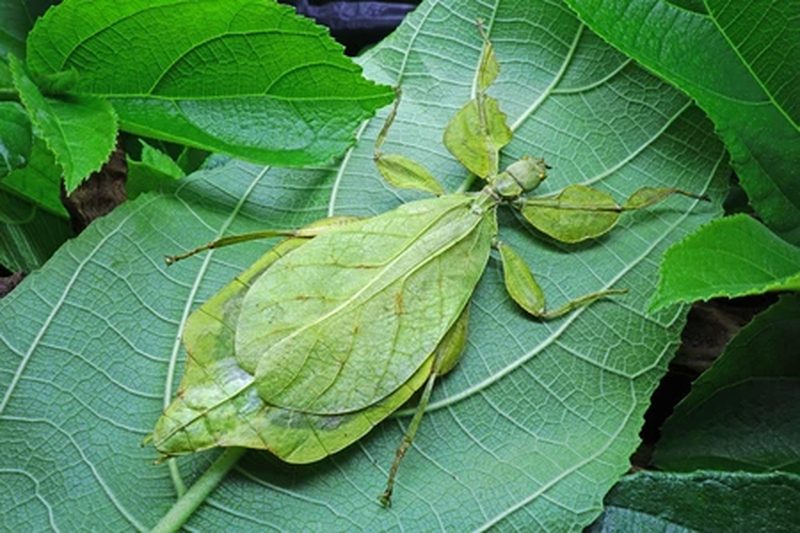
A stick insect on a twig is invisible until it moves. A hoverfly wears the yellow-and-black uniform of a wasp it cannot sting like. An octopus ripples its skin through a library of colours and textures in seconds, becoming rock, then coral, then sand. Mimicry and camouflage are among evolution’s most dazzling achievements, disguises shaped over millions of years by the life-or-death logic of being seen or not seen. They are also a window into how natural selection works: every convincing disguise is the product of countless generations in which slightly better-hidden individuals survived slightly more often, until deception became an art form.
Camouflage: the art of not being seen
Camouflage works by defeating the visual systems of predators or prey, and animals have evolved several distinct strategies. Background matching is the simplest: the Arctic hare’s white winter coat or the desert lizard’s sandy scales make the animal’s outline dissolve into its surroundings. Disruptive coloration goes further, using bold contrasting patches, like a tiger’s stripes or a cuttlefish’s mottled skin, to break up the body’s outline so the eye cannot assemble it into a recognisable shape. Countershading, seen in sharks, penguins and deer, darkens the back and lightens the belly to cancel out the shadows that would otherwise reveal a three-dimensional body. Some masters combine all three: the leaf-tailed geckos of Madagascar match bark so precisely, down to fake lichen spots and a flattened body that eliminates shadow, that even experienced researchers walk past them. Camouflage is not only visual. Moths have evolved scales that absorb bat sonar, and some insects mask their scent, because predators hunt with ears and noses too.
Mimicry: borrowing someone else’s reputation
Where camouflage hides, mimicry impersonates. The classic form, Batesian mimicry, is named after the naturalist Henry Bates, who noticed in the Amazon that harmless butterflies had evolved to look like toxic ones. The logic is simple: predators learn to avoid the dangerous model, and the harmless mimic gets protection for free. Hoverflies dressed as wasps, king snakes banded like venomous coral snakes, and moths with fake owl eyes on their wings all trade on borrowed fear. Mullerian mimicry is the honest version: several genuinely toxic or foul-tasting species converge on the same warning pattern, like the orange-and-black of monarch and viceroy butterflies, so predators learn the lesson faster and all share the benefit. Then there is aggressive mimicry, deception turned offensive: the anglerfish dangles a glowing lure to draw prey within reach of its jaws, and female fireflies of one species mimic the mating flashes of another to lure in males and eat them. In each case, the disguise works because the deceived animal’s brain takes a shortcut, and evolution exploits the shortcut ruthlessly.
How does such perfection evolve?
The puzzle that troubled even Darwin’s contemporaries was how a disguise could evolve gradually: a half-convincing leaf insect seems like no disguise at all. The answer lies in the fact that predators are not perfect judges either. A bird hunting caterpillars misses many real twigs too, so an insect that is even slightly more twig-like gains a small survival edge. Over thousands of generations, that edge compounds: slightly greener, slightly flatter, slightly more veined, until the insect is indistinguishable from a leaf. Genetic studies have begun to reveal the machinery, showing that wing patterns in butterflies are controlled by a small toolkit of genes that evolution reuses and retunes across species. Imperfect mimicry also persists because deception does not need to fool an expert, only a hungry predator making split-second decisions. A hoverfly does not need to pass a wasp inspection; it needs a bird to hesitate for half a second, and hesitation is often enough to survive.
- The mimic octopus can impersonate at least 15 different animals, including lionfish, sea snakes and flatfish.
- Peppered moths in industrial England famously evolved darker camouflage within decades as soot darkened tree bark.
- Some orchids mimic female bees so convincingly that males try to mate with the flowers, pollinating them.
- Arctic animals like the ptarmigan change camouflage seasonally, moulting between brown summer and white winter plumage.
- Cuttlefish control millions of pigment sacs in their skin and can change pattern in under a second.
Why humans are learning from nature’s disguises
Biomimicry researchers study these disguises for practical use. Military camouflage has moved from simple green blobs to digital patterns based on how animal vision actually processes edges and contrast. Materials scientists are developing adaptive camouflage surfaces inspired by cephalopod skin, with embedded sensors and colour-changing elements that could one day let vehicles or buildings blend into backgrounds. Medicine borrows the logic too: understanding how harmless organisms mimic dangerous ones helps explain how some pathogens evade the immune system by wearing molecular disguises. And conservationists use the science in reverse, designing wildlife corridors and reserves that account for how predators actually see. The deeper lesson is philosophical as much as practical. Every disguise in nature is evidence of an ancient arms race between seeing and hiding, and its perfection reminds us that evolution, given enough time and enough hungry predators, can paint masterpieces.
FAQs
What is the difference between mimicry and camouflage? Camouflage hides an animal by blending it into the background; mimicry disguises it as something else entirely, such as a toxic species, a leaf, or even a mate.
Which animal is the best at camouflage? Cuttlefish and octopuses are the champions, changing colour, pattern and even skin texture in less than a second to match their surroundings.
Do plants use mimicry too? Yes. Some orchids mimic female insects to attract pollinators, and the dead-horse arum mimics rotting flesh, in both appearance and stench, to lure flies.
From the leaf insect’s stillness to the hoverfly’s stolen stripes, nature’s disguises show natural selection at its most inventive. To study them is to watch evolution thinking in real time, one predator’s glance at a time.
Compiled by the Khabar 24h Editorial Desk from publicly available sources.

Khabar 24h Editorial Desk — our explainers are prepared by the Khabar 24h editorial team using AI-assisted research tools, and every piece is reviewed by a human editor before publishing. We do not claim original reporting: our work is turning complex topics into simple, accurate summaries. Spotted an error? Write to contact@khabar24h.com — our corrections policy aims for same-day review.
More from this author →