Women’s Kabaddi in India: Growth and the Road to Professional Leagues
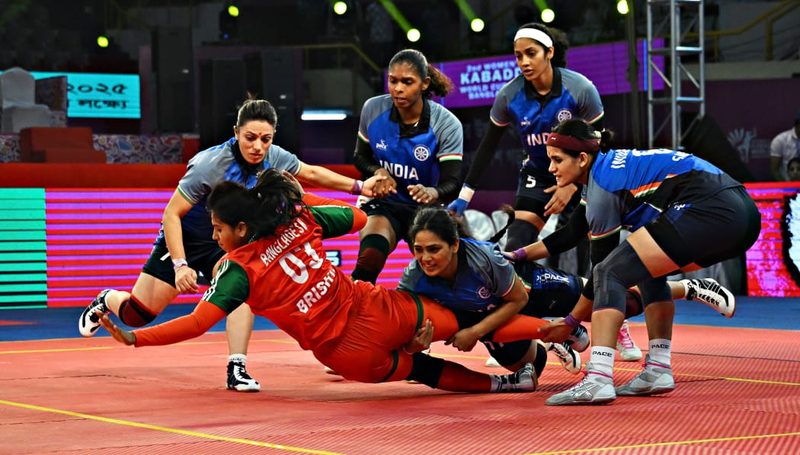
India’s women kabaddi players have won Asian Games gold medals and world titles, yet most of them remain amateurs in a sport where the men’s game has gone fully professional. Women’s kabaddi in India is a story of remarkable achievement against structural neglect: world-class talent developed with a fraction of the resources, now standing at the threshold of the professional era. This is how the women’s game grew, where it stands today, and what it will take to build a league of its own.
How did women’s kabaddi take root in India?
Women have played kabaddi in India for generations, in village tournaments, school competitions and rural akhadas where the sport needed no expensive equipment. Organised women’s kabaddi grew through the national championships and the university circuit, with states like Haryana, Maharashtra, Tamil Nadu and Himachal Pradesh producing streams of talent. The Services and Railways teams provided employment-based careers, the traditional route for Indian sportswomen. For decades the women’s game survived on this grassroots base, largely invisible to television audiences but fiercely competitive at the national level, where state rivalries are as intense as anything in the men’s game.
What has the national team achieved?
The record is outstanding. India won the women’s kabaddi gold at every Asian Games since the event’s introduction in 2010, including the 2023 Hangzhou Games, and has dominated the Kabaddi World Cup and the Asian Championships. Indian women raiders and defenders have set standards the rest of the world chases. Yet these triumphs earned a fraction of the attention given to the men’s team. Victory parades were smaller, prize money lower and media coverage thinner. The paradox of women’s kabaddi is that its athletes are the best in the world in a sport the world barely watches them play.
Why is there no women’s Pro Kabaddi League yet?
The question shadows every discussion of the women’s game. The men’s PKL has shown that kabaddi can be packaged for prime time, and administrators have periodically promised a women’s edition. Pilot initiatives have pointed the way: exhibition matches staged alongside the men’s league drew encouraging crowds and television interest, and a women’s challenger tournament demonstrated that the playing talent and the audience both exist. The obstacles are commercial rather than sporting. Broadcasters and sponsors want proof of sustained viewership, franchises want financial models that work, and the calendar needs space. Each season that passes without a league is a season in which the country’s best women players earn a fraction of what their male counterparts make.
How do women kabaddi players earn a living today?
Without a professional league, the economics of women’s kabaddi depend on the old Indian sports model: government jobs. The Railways, the armed forces, the police and public-sector banks employ leading players, providing salaries, job security and time to train. National campers receive allowances, and medal winners earn prize money from central and state governments. It is a respectable living but not a professional sporting career: there are no million-rupee auctions, no endorsement portfolios and no off-season training funded by franchises. The contrast with the men’s game, where PKL salaries transformed players’ lives, is the single biggest structural gap in Indian kabaddi.
What would a women’s league change?
A professional women’s league would change everything it changed for the men: full-time training, sports science, video analysis, media exposure and salaries that make kabaddi a career choice rather than a gamble. It would create role models visible on television every week, inspiring girls in villages and small towns to take up the sport. It would deepen the talent pool for the national team, since professional competition sharpens players faster than any camp. And it would correct a historic inequity: the world’s best women’s kabaddi nation would finally pay its champions like champions. The experience of women’s cricket’s WPL shows that when Indian administrators commit, audiences follow.
The grassroots engine keeps running
Whatever happens at the top, the base of women’s kabaddi remains formidable. School tournaments, the Khelo India programme and state academies continue to produce talent, and the physical, fearless style of young Indian raiders suggests the pipeline is healthy. Coaches report growing parental acceptance of girls playing a contact sport, a cultural shift as significant as any trophy. Social media has given players a platform to build personal followings, creating commercial value that did not exist a decade ago. The raw material for a professional league has never been stronger.
FAQs
Has India won gold in women’s kabaddi at the Asian Games? Yes. India has won the women’s kabaddi gold at every Asian Games since the event was introduced in 2010, including Hangzhou 2023.
Is there a women’s Pro Kabaddi League? Not yet as a full professional league, though exhibition matches and pilot tournaments have been staged and a launch has been long discussed.
How do women kabaddi players support themselves? Mainly through employment with the Railways, armed forces, police and public-sector organisations, plus government prize money for medals.
Women’s kabaddi in India has the medals, the talent and the audience waiting. What it needs now is the league: the professional stage that turns the world’s best players into the stars they already deserve to be.
Source: Amateur Kabaddi Federation of India

Khabar 24h Editorial Desk — our explainers are prepared by the Khabar 24h editorial team using AI-assisted research tools, and every piece is reviewed by a human editor before publishing. We do not claim original reporting: our work is turning complex topics into simple, accurate summaries. Spotted an error? Write to contact@khabar24h.com — our corrections policy aims for same-day review.
More from this author →