What Is Edge AI? Why Your Phone Runs AI Without the Internet
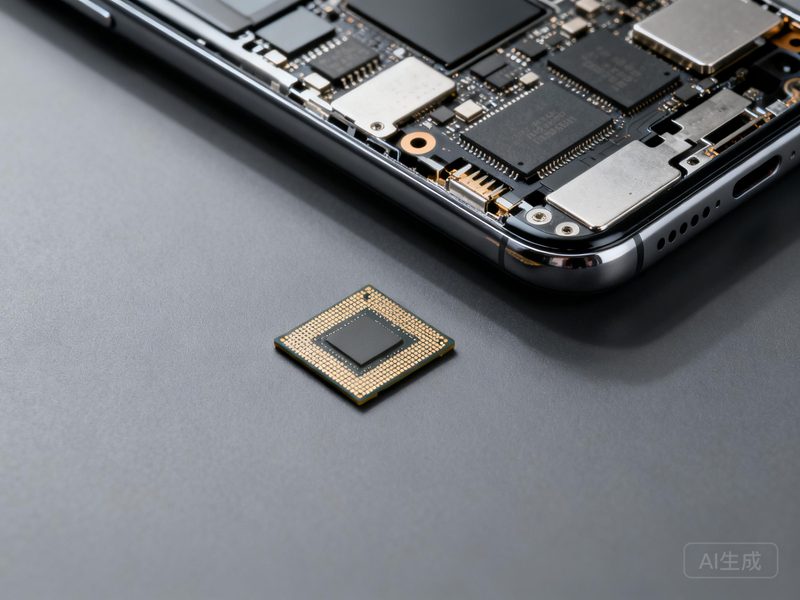
Airplane mode on, no signal, and your phone can still transcribe your voice, translate a conversation and recognise your face. That is edge AI: artificial intelligence that runs on the device itself, at the edge of the network, rather than in a distant data centre. It is the reason AI features feel instant and private, and it represents a major shift in how the industry deploys machine intelligence. This guide explains what edge AI is, how engineers squeezed neural networks onto phones, and why it matters.
What edge AI means
Traditionally, AI lived in the cloud. Your voice recording travelled to a server farm, a giant model processed it, and the answer travelled back. Edge AI flips this: the model runs locally on your phone, laptop, car, camera or smart speaker. The edge in the name refers to the edge of the network, the devices closest to you, as opposed to the centralised cloud. The benefits are immediate. Latency collapses from hundreds of milliseconds to near zero, because there is no round trip. Privacy improves dramatically, because your data never leaves the device. Features keep working offline, in tunnels, on flights and in rural areas. And at scale, providers save enormous cloud computing bills. The trade-off is that the device must do the heavy lifting with limited memory, battery and processing power.
How giant models got shrunk to fit
Fitting AI onto a phone required a toolbox of compression techniques. Quantisation reduces the numerical precision of a model’s parameters, from 32-bit numbers to 8-bit or even 4-bit, shrinking models several-fold with minimal accuracy loss. Pruning removes connections the network barely uses, like trimming dead branches. Knowledge distillation trains a small student model to imitate a large teacher model, capturing most of its ability at a fraction of the size. Specialised architectures are designed from the start for efficiency rather than maximum accuracy. The results are striking: models that once needed server racks now run on phone chips, and the latest smartphones ship with neural processing units, dedicated AI accelerators that run these compressed models fast while sipping battery.
The hardware making it possible
Edge AI rides on dedicated silicon. Apple’s Neural Engine, Qualcomm’s Hexagon, Google’s Tensor chips and similar accelerators from MediaTek and Samsung are built specifically for the matrix maths neural networks need, delivering trillions of operations per second at milliwatt power budgets. This hardware-software co-design is why your phone can blur your video-call background in real time or transcribe dictation instantly. The trend has a name in the industry: the AI PC and the AI phone, devices marketed on their on-device AI capability. Carmakers put similar chips in vehicles for driver assistance, and smart cameras use them to detect people and packages without streaming video to the cloud.
Where you already use edge AI
You interact with edge AI constantly without noticing.
- Photography: night mode, portrait blur and scene optimisation all run on-device neural networks.
- Voice: wake-word detection, on-device dictation and live transcription work without a connection.
- Biometrics: face and fingerprint recognition happen in a secure enclave on the device.
- Keyboards: autocorrect, smart replies and handwriting recognition are local models.
- Health: fall detection and heart-rhythm alerts on smartwatches are processed on the wrist.
- Translation: several phones now translate conversations offline using downloaded language packs.
Each of these would be slower, patchier and less private if it needed the cloud.
Edge versus cloud: the real trade-offs
Neither edge nor cloud wins outright; they split the work. The cloud still hosts the giant frontier models, the ChatGPT-class systems too large for any phone, and handles tasks needing vast knowledge or heavy reasoning. The edge handles latency-sensitive, privacy-sensitive and offline tasks with smaller, specialised models. Increasingly the two collaborate: your phone drafts with a local model and calls the cloud only for hard queries, a hybrid pattern the industry calls edge-cloud orchestration. The direction of travel is clear, though: as chips get stronger and models get more efficient, an ever-larger share of everyday AI migrates to the device in your pocket.
FAQs
Does edge AI work without the internet? Yes, that is its defining feature. Once the model is on the device, features like transcription, translation packs and photo enhancement work fully offline.
Is on-device AI more private? Generally yes. Data processed locally is never transmitted, which eliminates entire categories of interception and server-breach risk, though the device itself must still be secure.
Can my phone run ChatGPT-level models? Not yet. Phones run capable small models with billions of parameters; the largest frontier models remain hundreds of times bigger and live in data centres.
Edge AI is the quiet revolution that made artificial intelligence feel personal: instant, private and always available. As models keep shrinking and chips keep improving, the most intimate AI experiences of the next decade will happen not in the cloud but in the device already in your hand.
Compiled by the Khabar 24h Editorial Desk from publicly available sources.

Khabar 24h Editorial Desk — our explainers are prepared by the Khabar 24h editorial team using AI-assisted research tools, and every piece is reviewed by a human editor before publishing. We do not claim original reporting: our work is turning complex topics into simple, accurate summaries. Spotted an error? Write to contact@khabar24h.com — our corrections policy aims for same-day review.
More from this author →