How Rockets Reach Orbit: The Physics Behind Every Satellite Launch
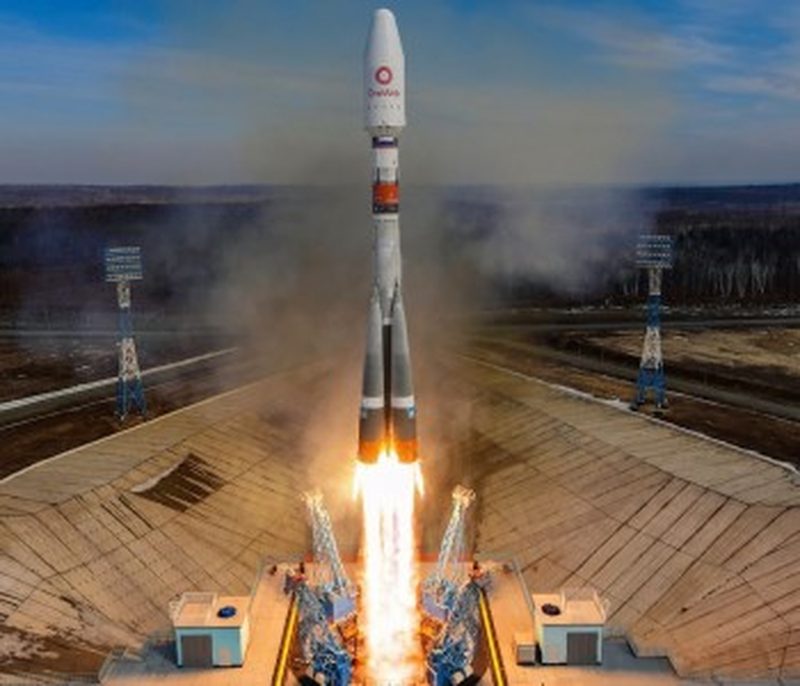
Getting a satellite into orbit looks like a battle against gravity, but the real enemy is horizontal distance. A rocket that simply flew straight up would climb, slow down and fall back to Earth. To reach orbit, a launcher must accelerate sideways to roughly 28,000 kilometres per hour, so fast that as it falls toward the planet it keeps missing the ground. That delicate balance between falling and flying is the core physics behind every satellite launch, and nearly every design decision in a rocket flows from it.
Why going up is the easy part
Most people picture a rocket climbing vertically into space, and launch vehicles do lift off that way. The vertical climb lasts only a minute or two, and its purpose is simply to get the rocket above the thickest part of the atmosphere as quickly as possible, because pushing through dense air at high speed creates enormous drag and wastes fuel. Once the air thins, the rocket begins its gravity turn, slowly tipping over until it is flying almost horizontally. From that point on, the engines are no longer lifting the rocket so much as accelerating it forward. Roughly 90 percent of a launcher’s energy goes into gaining horizontal speed, not altitude.
What orbit actually means
An orbit is a state of perpetual free fall. Think of throwing a stone: it arcs and lands. Throw it harder and it lands farther away. If you could throw it at about 7.8 kilometres per second from a high tower, the curve of its fall would exactly match the curvature of the Earth, and it would circle the planet forever. That is low Earth orbit. Higher orbits need less speed but far more energy to reach, because the rocket must first climb against gravity. Geostationary orbit, where weather and communication satellites hover over one spot, sits 35,786 kilometres up and requires a speed of just 3.07 kilometres per second, but getting there costs far more fuel than reaching a 400-kilometre orbit.
The tyranny of the rocket equation
The hardest constraint in all of spaceflight was written down by Konstantin Tsiolkovsky in 1903. His rocket equation shows that the speed a rocket can reach depends on only two things: how fast it throws exhaust out the back, and what fraction of the launch weight is propellant. Because the relationship is exponential, a rocket that wants to go twice as fast needs far more than twice the fuel. This is why a typical orbital launcher is more than 90 percent propellant by mass at liftoff. Staging is the main trick for beating this equation: dropping empty tanks and engines along the way means later stages are not wasting energy carrying dead weight.
How launch trajectories are shaped
Real trajectories are carefully choreographed compromises. The vehicle pitches downrange while throttling and steering to limit aerodynamic stress, then burns along a rising arc until the engine cuts off at exactly the planned speed and position. At that moment the payload is technically on a suborbital path that would re-enter the atmosphere; a second stage or an upper-stage engine then fires to circularise the orbit, raising the low point of the path so the satellite stays up. Mission planners also exploit Earth’s rotation, which gives a free velocity boost of up to 465 metres per second at the equator, one reason launch sites sit near the equator and rockets fly eastward.
Why some launches look different
Not every launch aims for orbit. Sounding rockets trace quick up-and-down arcs for minutes of microgravity research, while interplanetary missions use their launch energy to escape Earth entirely. Even among orbital launches, profiles vary enormously:
- Low Earth orbit missions prioritise raw payload mass and often use two stages with a direct insertion burn.
- Geostationary missions need a restartable upper stage that coasts and then fires again hours later to raise the orbit.
- Sun-synchronous missions, favoured by Earth-observation satellites, launch toward the poles into orbits that pass over each spot at the same local time.
FAQs
How fast must a rocket go to reach orbit? About 7.8 kilometres per second, or roughly 28,000 kilometres per hour, for low Earth orbit. Higher orbits are slower but harder to reach because of the extra climb.
Why do rockets drop stages? Empty tanks are dead weight. Discarding them lets the remaining stages accelerate the payload far more efficiently, as demanded by the rocket equation.
Why do most rockets launch eastward? Earth’s rotation gives a free speed boost toward the east, up to 465 metres per second at the equator, saving significant fuel.
Every satellite launch is the same physics problem solved with different hardware: climb out of the thick air, then pour energy into sideways speed until falling becomes flying. Once engineers cracked that formula, the space age began, and every new launcher, reusable or not, is just a fresh attempt to solve it more cheaply.
Source: NASA

Khabar 24h Editorial Desk — our explainers are prepared by the Khabar 24h editorial team using AI-assisted research tools, and every piece is reviewed by a human editor before publishing. We do not claim original reporting: our work is turning complex topics into simple, accurate summaries. Spotted an error? Write to contact@khabar24h.com — our corrections policy aims for same-day review.
More from this author →