What Is Antimatter, and Why Is It So Rare?
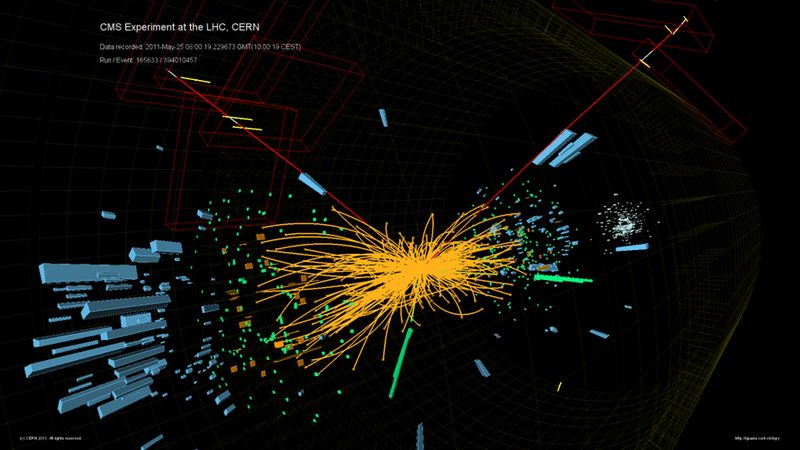
Antimatter sounds like science fiction, the stuff of starship engines and doomsday weapons, but it is entirely real. Physicists create it routinely in particle accelerators, hospitals use it every day in PET scans, and its existence was predicted by pure mathematics before it was ever observed. Every fundamental particle has an antimatter counterpart: the antiproton for the proton, the positron for the electron, the antineutron for the neutron. When matter and antimatter meet, they annihilate in a flash of pure energy, which is why antimatter cannot survive long in a universe made of matter. The deepest mystery is not that antimatter exists but that so little of it does. According to our best theories, the Big Bang should have created matter and antimatter in equal amounts, which should have annihilated completely, leaving a universe of pure light. Instead, a tiny imbalance, about one extra matter particle per billion, survived to become every star, planet and person. Explaining that imbalance is one of the great unsolved problems in physics.
What antimatter actually is
Antimatter is not exotic dark matter or some mysterious substance; it is simply matter with reversed electrical charges and quantum numbers. The positron, the antimatter version of the electron, has the same mass as an electron but a positive charge instead of a negative one. The antiproton has the same mass as a proton but negative charge. When a particle meets its antiparticle, both vanish, and their mass converts entirely into energy according to Einstein’s E equals mc squared, usually emerging as high-energy gamma rays. This total conversion is what makes antimatter so energetically potent in fiction: a single gram annihilating with a gram of matter would release roughly the energy of a small nuclear weapon. The prediction came in 1928, when Paul Dirac combined quantum mechanics with special relativity and found his equations demanded a mirror-image electron. Four years later, Carl Anderson discovered the positron in cosmic rays, confirming Dirac’s mathematics and earning both men Nobel Prizes. Antimatter atoms have since been assembled: CERN’s ALPHA experiment has trapped antihydrogen, made of an antiproton orbited by a positron, and held it long enough to study.
Why is there so little of it?
This is the billion-dollar question, literally the subject of billion-dollar experiments. The Big Bang should have been perfectly symmetric, producing equal matter and antimatter, and the Russian physicist Andrei Sakharov worked out in 1967 the three conditions needed to generate an imbalance: processes that violate the conservation of baryon number, violations of symmetry between matter and antimatter, and a departure from thermal equilibrium in the early universe. Physicists have found small asymmetries, notably in the behaviour of particles called kaons and B mesons, which decay slightly differently from their antiparticles, a phenomenon called CP violation. But the measured asymmetry is far too small to explain the universe we see; it falls short by roughly a factor of a billion. Something else must have tipped the scales in the first fractions of a second after the Big Bang. Candidates include undiscovered heavy particles, exotic neutrino behaviour, or physics beyond the Standard Model that experiments like those at CERN and in underground neutrino observatories are hunting for. Until the mechanism is found, our existence remains, in a strict scientific sense, unexplained.
Antimatter in the real world
Despite its rarity, antimatter already has practical uses. Positron emission tomography, the PET scan, is the most widespread: patients are injected with a tracer containing a positron-emitting isotope, and when the positrons annihilate with electrons in the body, the resulting gamma rays reveal tumours and brain activity in exquisite detail. Millions of PET scans are performed every year. In fundamental research, CERN’s Antiproton Decelerator slows antiprotons so experiments can compare antimatter with matter atom by atom, testing whether antimatter falls upward under gravity, a real hypothesis tested by the ALPHA-g experiment, which found that antihydrogen falls down like ordinary matter. Cosmic-ray detectors on the International Space Station have found positrons streaming through space, possibly from pulsars or possibly from annihilating dark matter, a puzzle still unresolved.
- The positron was predicted by Paul Dirac in 1928 and discovered in cosmic rays by Carl Anderson in 1932.
- CERN’s ALPHA experiment has trapped antihydrogen atoms for study, testing matter-antimatter symmetry.
- PET scans use positron annihilation to image tumours and brain activity in millions of patients yearly.
- The ALPHA-g experiment confirmed in 2023 that antimatter falls downward under gravity like normal matter.
- Producing one gram of antimatter would cost quadrillions of dollars with current technology.
Could antimatter still be hiding in the universe?
Astronomers have looked. If regions of antimatter existed, their borders with matter regions would glow with annihilation gamma rays, and decades of gamma-ray surveys have found no such glow, ruling out large antimatter galaxies or clusters. The universe, as far as we can see, is made of matter. For now, the working assumption stands: the early universe manufactured a slight excess of matter over antimatter through processes we have not yet identified, and everything we see is the leftover one part in a billion.
FAQs
Is antimatter dangerous? In the tiny quantities we can make, no. A few thousand antihydrogen atoms annihilating releases less energy than a mosquito landing. Only macroscopic amounts would be hazardous, and those are far beyond our ability to produce or store.
Can antimatter be stored? Yes, briefly, in magnetic Penning traps that hold charged antiparticles away from matter walls. Neutral antihydrogen is harder to trap, and storage times are measured in minutes to hours.
Antimatter is a reminder that the universe keeps its deepest secrets in its symmetries. We can manufacture it, trap it, and use it to see inside the human brain, yet we still cannot explain why it lost the cosmic coin toss that made everything exist.
Compiled by the Khabar 24h Editorial Desk from publicly available sources.

Khabar 24h Editorial Desk — our explainers are prepared by the Khabar 24h editorial team using AI-assisted research tools, and every piece is reviewed by a human editor before publishing. We do not claim original reporting: our work is turning complex topics into simple, accurate summaries. Spotted an error? Write to contact@khabar24h.com — our corrections policy aims for same-day review.
More from this author →