PIL Explained: How Public Interest Litigation Lets Citizens Move the Supreme Court
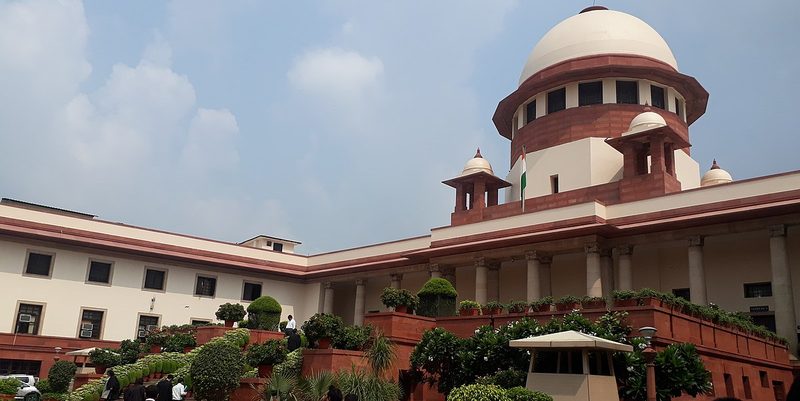
Of all the innovations in Indian law, few have travelled as far as Public Interest Litigation. Born in the late 1970s and early 1980s, PIL relaxed the traditional rule that only an aggrieved person could approach the court, allowing any public-spirited citizen to petition the Supreme Court or a High Court on behalf of those too poor, marginalised, or powerless to do so themselves. From bonded labourers to the Taj Mahal’s yellowing marble, from prison conditions to air pollution, PIL has reshaped Indian governance. It has also drawn sharp criticism for judicial overreach. This is the story of how PIL works and why it remains controversial.
How PIL was born
PIL emerged from the ferment of the post-Emergency years, when the Supreme Court, chastened by its deference to executive power during the Emergency, sought to make justice accessible to India’s poorest. The key doctrinal move came in a series of judgments in the early 1980s, notably in cases concerning undertrial prisoners and bonded labourers, where Justices P.N. Bhagwati and V.R. Krishna Iyer held that a public-spirited person could maintain a petition under Article 32, the right to constitutional remedies, on behalf of those whose fundamental rights were violated but who could not approach the court. The court went further: it accepted letters, telegrams, and newspaper reports as the basis for action, inventing the epistolary jurisdiction, where a postcard from a prisoner could become a writ petition. The procedural barriers of locus standi, court fees, and formal pleadings were swept aside in the name of reaching the unreachable.
Landmark PILs that changed India
The PIL docket reads like a history of modern India’s conscience. Early cases freed bonded labourers and improved prison conditions. The 1990s and 2000s saw PILs clean up the Ganga, order CNG conversion of Delhi’s buses, protect the Taj Mahal from industrial pollution, and mandate the right to food through orders on grain distribution. Environmental PILs, filed by activists like M.C. Mehta, created much of India’s environmental jurisprudence, from polluting industries to coastal regulation. PILs exposed scams, from fodder to 2G, when executive agencies would not act. The right-to-food litigation, running for years, turned the Supreme Court into a monitor of hunger policy. More recently, PILs have addressed everything from air pollution to electoral bonds. Whatever one’s view of the outcomes, PIL made the courts the forum of last resort for causes that had no other champion.
How a PIL actually works
A PIL is filed like a writ petition, under Article 32 in the Supreme Court or Article 226 in a High Court, but with relaxed standing: the petitioner need not be personally affected. The court first satisfies itself that the petition raises a genuine public interest and is not a publicity stunt or a private dispute in disguise; frivolous PILs are dismissed with costs. If admitted, the court has wide remedial powers: it can appoint expert committees, commissioners, and amici curiae, demand affidavits from governments, and issue continuing mandamus, keeping a case open for years while monitoring compliance through periodic orders. This supervisory model, part adjudication and part administration, is PIL’s signature: the court does not just declare rights but manages their implementation over time, as in the decades-long forest conservation cases. The informality that makes PIL accessible also makes it unpredictable.
The overreach debate
Critics argue that PIL has mutated from a tool for the voiceless into an instrument of judicial governance, with courts running administrations, framing policy, and entertaining petitions on matters better left to elected bodies. The Supreme Court itself has warned against the misuse of PIL for political or personal ends, laying down guidelines to filter out publicity-interest litigation. There are sharper critiques: that PIL is undemocratic, substituting judges’ preferences for legislative judgment; that it favours articulate urban petitioners over the genuinely marginalised; and that the court’s vast PIL docket distracts from its core function of deciding cases, contributing to pendency. Defenders reply that PIL fills a vacuum left by executive failure, that its greatest victories came precisely where politics had failed, and that the alternative to an activist court was not democratic deliberation but neglect. The truth, as usual, depends on the case.
PIL today
Four decades on, PIL is an established, if contested, part of India’s legal landscape. The Supreme Court has tried to discipline it through guidelines on maintainability, costs for frivolous filings, and a preference for High Courts as the first forum. Yet the basic impulse endures: when institutions fail, citizens turn to courts, and courts, within limits, respond. Recent PILs on electoral transparency, environmental clearances, and digital rights show the device adapting to new concerns. PIL’s legacy is double-edged: it democratised access to constitutional justice on a scale unmatched anywhere, and it blurred the line between judging and governing in ways India is still debating. Both halves of that legacy are likely to endure.
FAQs
Who can file a PIL? Any public-spirited citizen or organisation can file a PIL on behalf of those unable to approach the court themselves; the petitioner need not be personally affected.
Where are PILs filed? In the Supreme Court under Article 32 or in High Courts under Article 226 of the Constitution.
Can a letter become a PIL? Yes, the Supreme Court has historically treated letters and telegrams highlighting rights violations as writ petitions, though formal filings are now the norm.
Public Interest Litigation remains India’s most distinctive legal export: a procedural revolution that put the Constitution within reach of those it was written for. Its excesses are real, but so is the bonded labourer, the undertrial, and the river that found their voice through it.
Compiled by the Khabar 24h Editorial Desk from publicly available sources.

Khabar 24h Editorial Desk — our explainers are prepared by the Khabar 24h editorial team using AI-assisted research tools, and every piece is reviewed by a human editor before publishing. We do not claim original reporting: our work is turning complex topics into simple, accurate summaries. Spotted an error? Write to contact@khabar24h.com — our corrections policy aims for same-day review.
More from this author →