How Metro Rail Gets Built in India: Funding, Approvals, and the 1,000-km Race
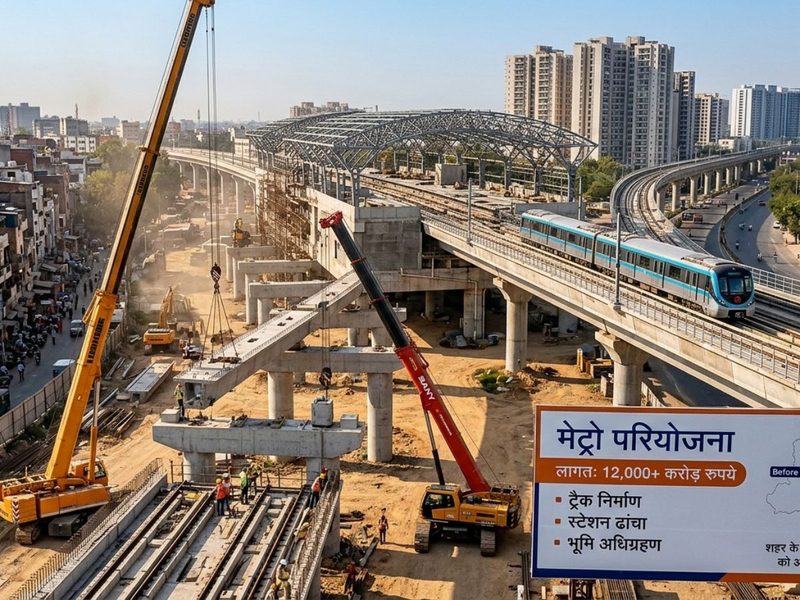
Two decades ago, Delhi’s metro was a novelty that other cities admired from afar. Today, India has the third-largest metro network in the world, with over 1,000 kilometres operational across more than 20 cities and hundreds more kilometres under construction. From the underwater stretch of Kolkata’s East-West line beneath the Hooghly to the driverless trains of Delhi’s Pink Line, metro rail has become the default answer to urban congestion. But a metro is among the most complex projects a city can attempt: it needs central approvals, massive funding, years of tunnelling and a fare model that works. This explainer traces how a metro goes from an idea to a running railway.
Who decides a city gets a metro
Metro projects begin with a Detailed Project Report prepared by the city or state, usually with consultants, which forecasts ridership, estimates costs and proposes alignments. The report goes to the Ministry of Housing and Urban Affairs, which appraises it against the Metro Rail Policy of 2017: the policy requires cities to consider cheaper alternatives first, such as bus rapid transit, and to demonstrate financial viability. Once approved by the Union Cabinet, a Special Purpose Vehicle is typically formed as a 50:50 joint venture between the centre and the state. This centralised approval gate is why some cities wait years while others move fast: political alignment between the state and centre often matters as much as the traffic data.
How the money works
A kilometre of elevated metro costs roughly 200 to 250 crore rupees; underground, the figure can triple. Funding follows a standard pattern: equity from the central and state governments, a large loan from multilateral agencies such as the Japan International Cooperation Agency, the Asian Development Bank or the European Investment Bank, and sometimes private participation. JICA loans, with their low interest rates and long tenures, have financed much of Delhi, Chennai, Bengaluru and Mumbai’s networks. Farebox revenue alone rarely covers costs, so newer projects bundle property development, advertising and station commercial space into the financing plan. The debt burden is the reason ridership forecasts are scrutinised so closely: an empty metro is a fiscal problem for decades.
How it gets built
Construction is split into civil packages awarded through competitive bidding to Indian and international contractors. Elevated viaducts go up span by span using launching gantries, a method Indian contractors have now mastered at speed. Underground sections are bored by tunnel boring machines, with cut-and-cover used near stations. Systems contracts cover tracks, signalling, power supply, rolling stock and platform screen doors. Indian firms now manufacture metro coaches domestically under Make in India requirements, with a mandated minimum of local content. A typical 30-kilometre line takes five to seven years from groundbreaking to commercial operations, though land acquisition disputes and utility shifting routinely add time.
The 1,000-km race and what’s next
Crossing 1,000 kilometres of operational metro put India behind only China and the United States in network length, a remarkable climb in two decades. Delhi remains the largest system, while Mumbai, Bengaluru, Hyderabad, Chennai, Kolkata, Ahmedabad, Pune, Kochi, Lucknow, Jaipur and others operate or extend networks. The next frontier is smaller cities: the central government has promoted lighter, cheaper options such as MetroLite and MetroNeo for cities where a full metro is unaffordable. Water metros, as in Kochi, and rapid rail, as in the Delhi-Meerut RRTS, extend the same logic to different geographies. The policy question now is prioritisation: with dozens of proposals pending, which cities get funded first?
Do metros pay off?
The honest answer is mixed. Successful systems like Delhi’s carry lakhs of daily riders and have reshaped commuting, cut pollution and anchored development along corridors. But several smaller systems struggle with low ridership because last-mile connectivity is poor, fares feel high compared to buses, or the alignment missed the real travel demand. International evidence suggests metros succeed when integrated with buses, walking and cycling networks, and when cities allow dense development near stations. The concrete is the easy part; the integration is where Indian metros most often fall short.
FAQs
Which is India’s largest metro network? The Delhi Metro, with nearly 400 km of lines, is by far the largest, followed by growing systems in Mumbai, Bengaluru and Hyderabad.
What is the difference between Metro, MetroLite and MetroNeo? They are progressively lighter and cheaper systems for smaller cities: MetroLite uses smaller coaches, while MetroNeo is essentially a bus-based system with metro-like features.
Who funds metro projects? A mix of central and state equity, multilateral loans from agencies like JICA and ADB, and non-fare revenue from property and advertising.
India’s metro boom is a bet that the country’s urban future runs on rails. The kilometres built so far are impressive; the harder work, filling the trains and connecting the last mile, is still ahead.
Compiled by the Khabar 24h Editorial Desk from publicly available sources.

Khabar 24h Editorial Desk — our explainers are prepared by the Khabar 24h editorial team using AI-assisted research tools, and every piece is reviewed by a human editor before publishing. We do not claim original reporting: our work is turning complex topics into simple, accurate summaries. Spotted an error? Write to contact@khabar24h.com — our corrections policy aims for same-day review.
More from this author →