Beti Bachao and the Sex Ratio: How India Fought Its Missing Girls Crisis
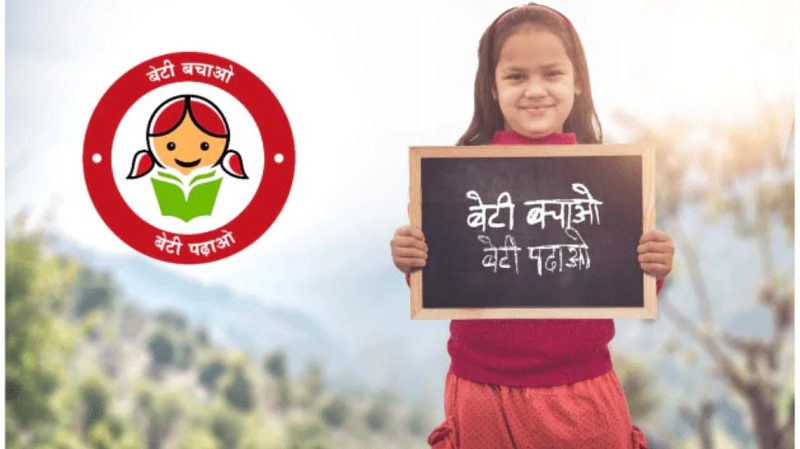
In 2011, the census revealed a chilling number: 918 girls born for every 1,000 boys, the worst child sex ratio since independence, the product of decades of sex-selective abortion enabled by ultrasound technology. Entire districts in Haryana, Punjab and western Uttar Pradesh had ratios below 850. The government responded in 2015 with Beti Bachao Beti Padhao, a programme combining strict enforcement of the anti-sex-selection law with a mass campaign celebrating the girl child. A decade on, the sex ratio at birth has improved to around 933, though lakhs of girls remain “missing” each year. This explainer looks at how India fought the crisis and what actually worked.
How the crisis built
The spread of ultrasound in the 1980s and 90s collided with strong son preference, rooted in patrilineal inheritance, dowry costs and old-age security norms, to produce mass sex selection. The Pre-Conception and Pre-Natal Diagnostic Techniques Act of 1994 banned sex determination, but enforcement was weak and the medical lobby resisted. By 2011, the census showed the damage: a generation with millions fewer girls than biology would produce. The social consequences are still unfolding: bride shortages, trafficking, and the normalisation of a technology-driven discrimination.
What Beti Bachao did
The programme worked on two tracks. Enforcement: decoy operations against clinics offering sex determination, sealing of unregistered ultrasound machines, monitoring of ultrasound centres, and fast-track prosecution. Districts with the worst ratios were put under special watch, with collectors held accountable for improvement. And persuasion: a high-visibility campaign celebrating daughters, from the Prime Minister’s Mann Ki Baat to village-level enrolment drives, plus financial incentives for the girl child through state schemes. The programme’s initial focus on 100 worst-affected districts concentrated effort where the crisis was deepest.
What the numbers show
The sex ratio at birth improved from 918 (2011 census) to around 933 in recent health survey data, with the worst districts showing the largest gains: several Haryana districts that were below 850 crossed 900. Enforcement data shows thousands of cases filed and machines sealed, though convictions remain low. Researchers attribute the improvement to a combination of enforcement pressure, changing norms as education and prosperity spread, and the campaign’s visibility. But the improvement is fragile and uneven: some districts have slipped back, and the national average still falls well short of the natural ratio of around 950.
What worked, and what didn’t
Assessments suggest enforcement, the credible threat of raids and prosecution, did the heavy lifting, while the advertising campaign’s effects are harder to isolate. The district-accountability model, making collectors answerable for the ratio, focused bureaucratic minds. What didn’t work as well: the programme’s early spending skewed heavily toward publicity over grassroots action, drawing auditor criticism; convictions under the PCPNDT Act remain rare; and the underlying economics of son preference, dowry, inheritance, inheritance law reform for daughters has helped, change slowly. Technology keeps evolving too: new methods of sex selection require constant regulatory adaptation.
The unfinished fight
The missing-girls crisis is not over: at current ratios, lakhs of female births are still being prevented each year. The frontier of the fight has shifted to sustaining gains, extending them to laggard regions, and addressing the deeper son preference through women’s education, employment and property rights. The Beti Bachao experience offers a broader lesson: social change at this scale needs the state’s coercive power and its persuasive power working together, sustained over decades. The girls who are alive today because a clinic feared a raid, or because a family saw a different future, are the programme’s true measure, and its unfinished promise to the millions of daughters still waiting to be counted as equal.
FAQs
What is Beti Bachao Beti Padhao? A 2015 central programme combining enforcement against sex-selective abortion with campaigns and incentives celebrating the girl child.
Has the sex ratio improved? Yes: the sex ratio at birth rose from 918 girls per 1,000 boys (2011) to around 933, with the worst districts improving most.
What is the PCPNDT Act? The 1994 law banning pre-natal sex determination, the legal backbone of enforcement against sex selection.
India’s missing girls are a moral emergency measured in millions. Beti Bachao showed the trend can be reversed; finishing the job means changing not just clinics’ behaviour but families’ hearts.
Compiled by the Khabar 24h Editorial Desk from publicly available sources.
Related stories
View all →
Maharashtra Declares Drought in 265 Talukas, Announces Relief
The Maharashtra government has declared drought in 265 of the state’s 358 talukas after deficient monsoon rainfall damaged Kharif crops this season.…

9 Killed as Sleeper Bus Catches Fire on Yamuna Expressway
Nine people were killed after a sleeper bus caught fire on the Yamuna Expressway near Greater Noida. CM Yogi Adityanath has taken…

Asian Games 2026: India’s Medal Tally After Day 6
India's campaign at the Asian Games 2026 crossed the Day 6 mark with medals flowing across disciplines. Here is where the tally…

Khabar 24h Editorial Desk — our explainers are prepared by the Khabar 24h editorial team using AI-assisted research tools, and every piece is reviewed by a human editor before publishing. We do not claim original reporting: our work is turning complex topics into simple, accurate summaries. Spotted an error? Write to contact@khabar24h.com — our corrections policy aims for same-day review.
More from this author →