Vatican City Explained: How the World’s Smallest State Is Governed
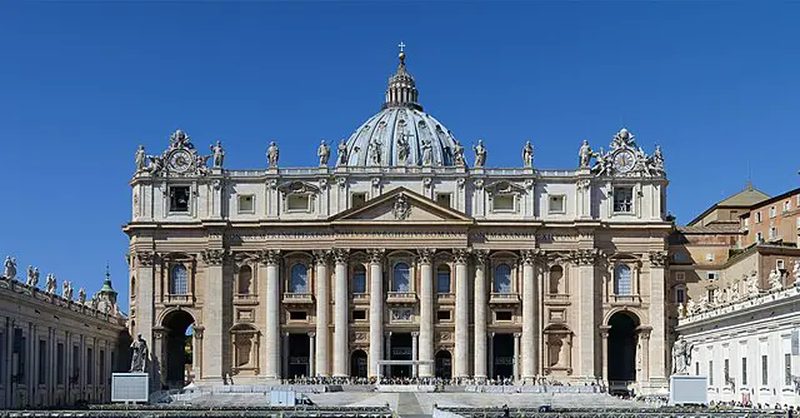
Vatican City is the smallest state on earth: about half a square kilometre, some 800 residents, and a head of state who is also the spiritual leader of 1.4 billion Catholics. It has its own post office, radio station, football team and train station, yet no taxes and no real economy beyond donations, museums and stamps. Understanding the Vatican means distinguishing two entities: Vatican City, the territory, and the Holy See, the global governing body of the Catholic Church. This explainer shows how the world’s smallest state is governed.
How Vatican City was created
The Vatican exists because of a 1929 deal. After Italian unification stripped the papacy of its territories in 1870, popes refused to leave the Vatican for nearly 60 years, calling themselves prisoners. The Lateran Treaties with Mussolini’s Italy created Vatican City as an independent state and compensated the Church for its losses. The bargain gave the Pope sovereignty over a tiny enclave in Rome in exchange for recognising Italy. That sovereignty is what allows the Holy See to conduct diplomacy, sign treaties and hold observer status at the United Nations as an independent subject of international law.
Absolute monarchy, elective style
The Pope is an absolute monarch: Vatican City’s laws describe him as holding full legislative, executive and judicial power. But he is elected, not hereditary. When a pope dies or resigns, the College of Cardinals, currently capped at 120 electors under 80, gathers in the Sistine Chapel for the conclave, voting in secret until one man wins two-thirds. The white smoke, the famous fumata bianca, announces the choice to the world. The system blends monarchy’s concentration of power with an election, producing leaders like the reformist Francis or the conservative Benedict XVI, each reshaping the Church in turn.
The Curia: the Church’s civil service
Day-to-day governance runs through the Roman Curia, the Church’s central administration: dicasteries (departments) handling doctrine, bishops, saints, charity and communications, plus courts, financial watchdogs and the Secretariat of State, which functions as a foreign ministry. Pope Francis’s 2022 constitution, Praedicate Evangelium, reformed the Curia to emphasise missionary work over bureaucracy and opened top posts to laypeople, including women. The Vatican’s finances, long notoriously opaque, have faced modernisation: a 2014 money-laundering scandal and subsequent trials pushed through financial transparency reforms, with mixed success.
- Population: around 800, of whom about 450 hold Vatican citizenship, granted by office rather than birth.
- The Swiss Guard, founded in 1506, still protects the Pope in Renaissance uniforms.
- Vatican Museums draw around 6 million visitors a year, a pillar of the tiny economy.
- The Holy See has diplomatic relations with over 180 states, more than most countries.
The Holy See’s global power
The Vatican’s real influence is not territorial but moral and diplomatic. The Holy See mediates conflicts, from brokering the 2014 US-Cuba thaw to engaging in Ukraine diplomacy, and its voice carries weight on issues from climate change to migration. Papal encyclicals move markets of ideas if not markets themselves. This soft power rests on credibility, which is why the Church’s sexual abuse scandals have been so damaging: they struck at the institution’s claim to moral authority. Francis made accountability a priority, but survivors’ groups say the reforms remain incomplete.
Can the Vatican change?
The central tension of Vatican governance is between a 2,000-year-old institution and a rapidly changing world. Debates over married priests, the role of women, LGBTQ inclusion and financial transparency divide the Church, and each conclave is effectively a referendum on direction. The absolute monarchy structure means change depends entirely on who wears the white cassock: one pope can centralise, the next can devolve. For an institution that measures time in centuries, the Vatican’s governance looks strikingly personal, and strikingly fragile, resting on the judgment of 120 old men in a sealed chapel.
FAQs
Who can be Pope? Technically any baptised Catholic man, but in practice the cardinals always elect one of their own.
Does the Vatican pay taxes? Vatican City levies no income tax; its revenue comes from museum tickets, stamps, donations like Peter’s Pence, and investments.
What is the difference between the Vatican and the Holy See? Vatican City is the territory; the Holy See is the sovereign entity governing the worldwide Catholic Church, which conducts diplomacy.
Governing 1.4 billion souls from half a square kilometre is an improbable arrangement that has lasted nearly a century as a state and two millennia as a church. The Vatican’s power was never really about territory; it is about belief, and belief, unlike land, cannot be measured on a map.
Source: Associated Press

Khabar 24h Editorial Desk — our explainers are prepared by the Khabar 24h editorial team using AI-assisted research tools, and every piece is reviewed by a human editor before publishing. We do not claim original reporting: our work is turning complex topics into simple, accurate summaries. Spotted an error? Write to contact@khabar24h.com — our corrections policy aims for same-day review.
More from this author →