What Is Generative AI? How ChatGPT, Gemini and Claude Actually Work
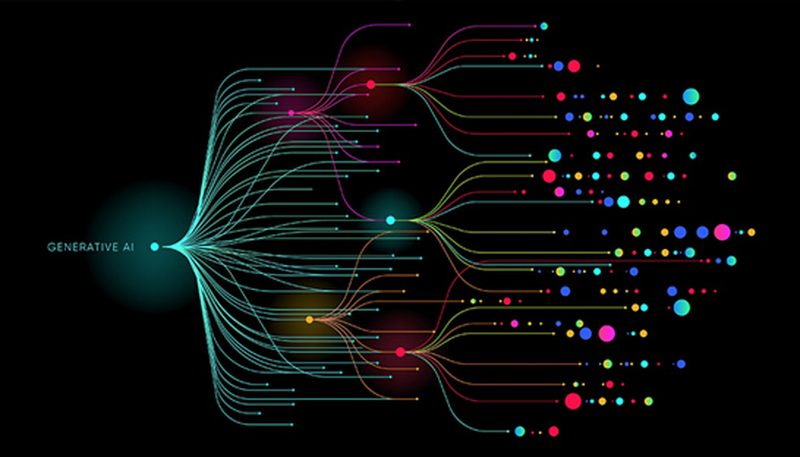
Generative AI has gone from a research curiosity to a household term in just a few years. ChatGPT, Google’s Gemini and Anthropic’s Claude can now write essays, debug computer code, draft emails, compose poetry and answer almost any question you type into a chat box. But what is generative AI, really, and how do these systems actually work under the hood? This guide explains the technology in plain English: what the models are, how they are built, why they sometimes get things wrong, and what they are genuinely good at.
What generative AI actually means
The word generative gives the game away. Earlier forms of artificial intelligence mostly classified or predicted things: is this email spam, will this customer repay a loan, what is in this photograph. Generative AI does something different. It creates new content: sentences, images, audio clips, videos and computer code that did not exist before. Under the surface, a generative model has learned the statistical patterns of its training material, whether that is billions of web pages, millions of photographs or thousands of hours of speech, and it uses those patterns to produce new material that follows the same style and structure. A chatbot is one kind of generative model. An AI image generator is another. The underlying trick is similar in both cases: learn the shape of the data, then generate something new that fits that shape.
How ChatGPT, Gemini and Claude are built
Today’s leading chatbots are all examples of large language models, and nearly all of them are built on an architecture called the transformer, introduced in a 2017 research paper. Training happens in stages. First comes pre-training: the model reads an enormous corpus of text, books, websites, encyclopaedias, forums, and learns to predict the next word in a sentence, billions of times over. This is the foundation of everything. A second stage, called instruction tuning, shows the model thousands of examples of helpful question-and-answer exchanges so it learns to follow requests rather than just continue text. A third stage, reinforcement learning from human feedback, has people rank the model’s answers so it learns which responses humans find most useful and least harmful. The result is a system that can hold a coherent conversation, but at its core it is still doing what it was always trained to do: generating one word at a time.
Why predicting the next word looks like intelligence
It sounds almost too simple. How can guessing the next word produce a fluent explanation of quantum physics or a working sorting algorithm? The answer is scale. When a model predicts the next word billions of times across trillions of words, it is forced to absorb a vast amount of implicit knowledge about grammar, facts, reasoning patterns, programming languages and even styles of humour. The internal representations the model builds up, often described as a kind of compressed map of the world described in text, let it connect distant ideas and follow multi-step arguments. Each word choice is informed by everything that came before it in the conversation. Nobody programmed the model with rules of grammar or facts about history; those emerged from the relentless pressure of the prediction task. That is why researchers are sometimes as surprised as the rest of us by what these systems can do.
What these chatbots are genuinely good at
Used well, the leading chatbots are remarkably capable assistants for everyday work.
- Drafting and editing: emails, reports, essays, cover letters and social media posts, including rewriting text in a different tone.
- Coding help: explaining error messages, writing boilerplate code, translating between programming languages and debugging snippets.
- Learning and summarising: explaining difficult concepts simply, summarising long documents and turning notes into structured outlines.
- Brainstorming: generating business names, story ideas, travel itineraries and study plans at speed.
- Everyday problem-solving: drafting polite complaints, planning budgets, writing speeches and preparing for interviews.
The common thread is language work where a fast, competent first draft is valuable and a human checks the result before it goes anywhere important.
The limits you should know about
These systems have real weaknesses, and understanding them matters more than admiring the strengths. First, they hallucinate: they can state false facts with complete confidence, because they are optimised to produce plausible-sounding text, not verified truth. Second, their knowledge has a cutoff date, so recent events may be missing or wrong. Third, they inherit biases and errors from the internet text they were trained on. Fourth, they cannot truly reason about the physical world or verify claims independently; they have no lived experience and no live access to facts unless tools like web browsing are added on top. The practical rule is simple: treat a chatbot like a brilliant but overconfident intern. Let it do the heavy lifting, but verify anything that matters.
FAQs
Is generative AI the same as a search engine? No. A search engine finds existing pages that match your query. A chatbot generates a new answer synthesised from its training, which means it can be more direct but also more wrong.
Are ChatGPT, Gemini and Claude free to use? Each offers a capable free tier, with paid subscriptions unlocking more powerful models, larger context windows and extra features such as file analysis and web browsing.
Can generative AI replace human writers? It can produce competent drafts quickly, but it lacks genuine experience, accountability and original reporting. Most professional use treats it as an assistant that accelerates human work rather than a replacement for it.
Generative AI is not magic and it is not a search engine with better manners. It is a new kind of software, trained on the patterns of human expression at a scale never before attempted, and it turns those patterns into something that can converse, create and code. The people who get the most from ChatGPT, Gemini and Claude are the ones who understand both sides of the coin: enormous capability, and a genuine need for human judgement on the other end.
Compiled by the Khabar 24h Editorial Desk from publicly available sources.

Khabar 24h Editorial Desk — our explainers are prepared by the Khabar 24h editorial team using AI-assisted research tools, and every piece is reviewed by a human editor before publishing. We do not claim original reporting: our work is turning complex topics into simple, accurate summaries. Spotted an error? Write to contact@khabar24h.com — our corrections policy aims for same-day review.
More from this author →