Christianity Explained: The World’s Largest Religion and Its Many Branches
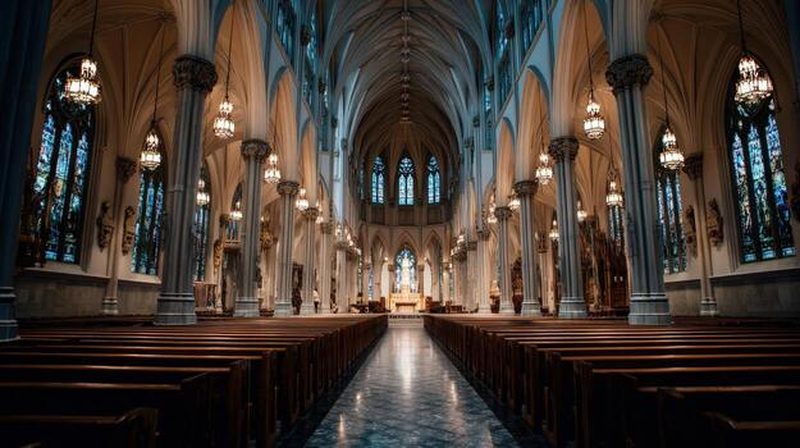
Christianity claims some 2.3 billion adherents, nearly a third of humanity, making it the world’s largest religion by a clear margin. It is the majority faith on six continents, the foundation of Western art, law and calendar, and a religion of extraordinary internal variety, from Vatican pageantry to Pentecostal revivals to silent Quaker meetings. This explainer covers what Christians believe, how the faith fractured and spread, and where it is heading.
The story at the centre
Christians believe that Jesus of Nazareth, a 1st-century Jewish preacher, was the Son of God, crucified under Roman rule and raised from the dead, and that his death and resurrection reconcile humanity with God. The Bible, comprising the Old Testament shared with Judaism and the New Testament of Jesus’s life and the early church, is the faith’s scripture, though traditions differ on its interpretation and authority. Core doctrines include the Trinity, one God in three persons, salvation through faith and grace, and the promise of eternal life. Love of God and love of neighbour are the supreme commandments.
How a sect became a world religion
Christianity began as a movement within Judaism and spread through the Roman Empire along its roads and trade routes, carried by missionaries like Paul. Persecuted for three centuries, it was legalised by Emperor Constantine in 313 CE and soon became Rome’s official religion, which gave it institutions, creeds and continent-spanning reach. Later waves carried it worldwide: Orthodox missionaries to the Slavs, Catholic orders to the Americas and Asia, Protestant missionaries to Africa. Wherever European empires went, Christianity usually followed, though it often took root in distinctively local forms.
The three great branches
The Catholic Church, with about 1.3 billion members, is the largest single Christian body, led by the Pope and centred on the sacraments, especially the Eucharist. Eastern Orthodoxy, dominant in Russia, Greece and the Balkans, split from Rome in 1054 over authority and theology, and is known for its icons, chant and mystical tradition. Protestantism erupted in the 16th-century Reformation, rejecting papal authority and emphasising scripture and faith alone; it has since diversified into thousands of denominations, from Lutherans and Anglicans to Baptists and Pentecostals. Each branch claims authentic continuity with the early church.
Worship around the world
Christian practice spans the solemn Latin Mass, the incense-thick Orthodox Divine Liturgy, gospel choirs, megachurch rock bands and silent prayer. The sacraments, baptism and communion above all, mark the faith’s rhythms, while the liturgical calendar moves from Christmas through Lent to Easter. Christianity’s cultural footprint is vast: its holidays structure the global calendar, its art fills the world’s museums, and its ethics shaped ideas of charity, hospitals and human rights. Even secular Western culture runs on Christian-inflected assumptions.
Where Christianity is growing and shrinking
The faith’s centre of gravity has moved decisively south. Europe’s churches empty while sub-Saharan Africa’s fill; Nigeria, the Democratic Republic of Congo and Brazil now anchor global Christianity. Pentecostalism is the engine of this growth, with its emotional worship and promise of transformation. China hosts one of the world’s fastest-growing Christian populations, largely underground. Meanwhile the faith faces persecution in parts of the Middle East, its ancient homeland, where Christian communities have dwindled dramatically. Christianity’s future will be written in Lagos and Sao Paulo more than in Rome or Canterbury.
Christianity’s internal debates
For all its shared story, Christianity argues with itself constantly. Catholics and Protestants still differ over authority, Mary and the sacraments. Liberals and conservatives clash over sexuality, gender and biblical interpretation, splits that have divided denominations and even created new ones. The ecumenical movement works for unity while Pentecostal growth outpaces every dialogue. These debates matter because they show a living religion negotiating modernity in real time, not a museum piece but an argument, often a loud one, about what faithfulness means now.
FAQs
What is the difference between Catholics and Protestants? Catholics recognise the Pope’s authority and seven sacraments; Protestants, born of the Reformation, emphasise the Bible’s authority and salvation by faith, with varied church structures.
What is Orthodoxy? Eastern Orthodoxy is the ancient Christianity of the Byzantine world, independent of Rome since 1054, strongest in Eastern Europe and the Middle East.
Is Christianity still growing? Yes, globally, driven by Africa and Latin America, though it is declining in Western Europe and North America.
Two thousand years after a preacher walked Galilee, his followers number nearly a third of humanity and worship in every language on Earth. Christianity’s story is one of constant reinvention, and its next chapter is being written in the global South.
Source: Pew Research Center

Khabar 24h Editorial Desk — our explainers are prepared by the Khabar 24h editorial team using AI-assisted research tools, and every piece is reviewed by a human editor before publishing. We do not claim original reporting: our work is turning complex topics into simple, accurate summaries. Spotted an error? Write to contact@khabar24h.com — our corrections policy aims for same-day review.
More from this author →