Bhutan Explained: Gross National Happiness and the Carbon-Negative Kingdom
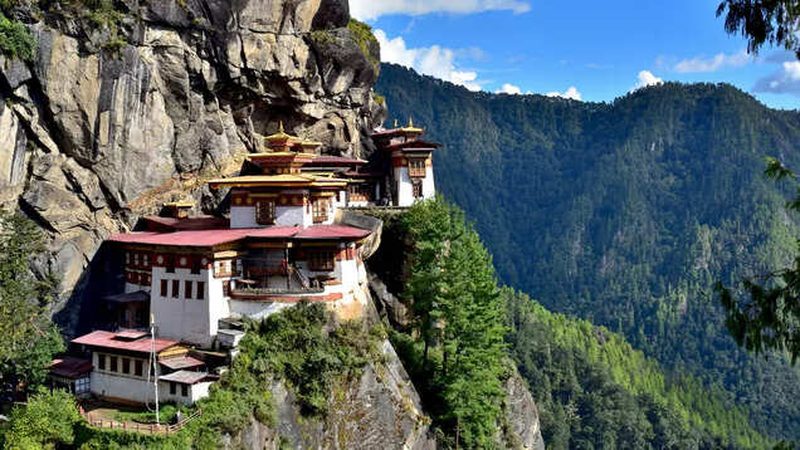
High in the Himalayas sits a kingdom that decided the world’s favourite economic yardstick was measuring the wrong thing. Bhutan, a nation of fewer than 800,000 people wedged between India and China, famously pursues Gross National Happiness instead of Gross Domestic Product, and it is the world’s only carbon-negative country, absorbing more CO2 than it emits. Part development philosophy, part branding genius, Bhutan’s model fascinates the world. This explainer looks at what Gross National Happiness actually means, how the carbon-negative kingdom pulls it off, and where the fairy tale meets reality.
What Gross National Happiness means
The concept dates to the 1970s, when the fourth king, Jigme Singye Wangchuck, declared that Gross National Happiness was more important than Gross Domestic Product. It was later formalised into four pillars: sustainable development, environmental conservation, cultural preservation and good governance. Bhutan even built a GNH Index that surveys citizens across nine domains, from psychological wellbeing and health to community vitality and ecological diversity. Policy is supposed to be screened for its happiness impact. In practice, GNH functions less as a precise planning tool and more as a national philosophy: development must not come at the cost of forests, culture or community.
How Bhutan went carbon-negative
Bhutan’s carbon-negative status rests on two facts: its forests and its rivers. The constitution mandates that at least 60 per cent of the country remain under forest cover forever; the actual figure is above 70 per cent, and those forests absorb vast amounts of carbon. Meanwhile, hydropower from Himalayan rivers provides nearly all domestic electricity and a lucrative export to India, which buys the surplus. With a tiny industrial base and a small population, Bhutan’s emissions are minimal. The result is a country that offsets several times its own carbon footprint, a remarkable position that it has leveraged into climate diplomacy far beyond its size.
A democracy with a king
Bhutan’s political story is unusual: democracy was not won by revolution but granted from above. In 2008, the king voluntarily introduced a constitution, parliamentary elections and a two-party system, stepping back from absolute rule. The Druk Gyalpo, the Dragon King, remains head of state and deeply revered; the current king, Jigme Khesar Namgyel Wangchuck, is genuinely popular. Elections are real and governments change, but politics operates within a consensus culture shaped by Buddhism and monarchy. Voter turnout is high, and the peaceful transfers of power have made Bhutan a rare democratic bright spot in South Asia.
- Population: under 800,000, making Bhutan one of the world’s smallest democracies.
- Forest cover: over 70 per cent, protected by constitutional mandate.
- Tourism is controlled through a daily fee, the Sustainable Development Fee, to keep numbers low and value high.
- Television and the internet arrived only in 1999, among the last in the world.
The cracks in the happiness story
The GNH narrative has shadows. In the 1990s, Bhutan expelled or drove out tens of thousands of ethnic Nepali Lhotshampa residents, many of whom spent decades in refugee camps in Nepal; it remains a human rights stain the happiness branding cannot wash away. Economically, the country leans heavily on hydropower revenues and Indian aid, youth unemployment is high, and many young Bhutanese are emigrating to Australia in search of opportunity. The happiness surveys themselves show real struggles with mental health and rural hardship. Critics argue GNH is partly a tourism slogan that obscures ordinary development challenges.
What the world can learn
Stripped of romance, Bhutan’s experiment offers genuine lessons. It shows that environmental protection can be written into a country’s operating system rather than treated as an afterthought. It demonstrates that a small, poor country can choose a development path that values culture and community alongside growth. And its climate record proves that carbon negativity is achievable, albeit easier for a forested microstate than an industrial giant. The UN has even taken up the idea, with Bhutan sponsoring the resolution that led to the International Day of Happiness. Bhutan will not make the world happy, but it has forced a useful question: what, exactly, is the economy for?
FAQs
Is Bhutan really carbon-negative? Yes. Its forests absorb far more CO2 than the country emits, making it the only carbon-negative country in the world.
Can anyone visit Bhutan? Yes, but tourism is regulated: visitors pay a daily Sustainable Development Fee designed to limit numbers and fund conservation and services.
How is Gross National Happiness measured? Through periodic national surveys across nine domains including health, education, culture, governance and ecology, combined into a GNH Index.
Bhutan’s wager is that a nation can be both developed and content, both modern and itself. The results are imperfect, as all human experiments are, but in a world counting carbon and chasing growth at any cost, the little kingdom in the clouds has earned its hearing.
Compiled by the Khabar 24h Editorial Desk from publicly available sources.

Khabar 24h Editorial Desk — our explainers are prepared by the Khabar 24h editorial team using AI-assisted research tools, and every piece is reviewed by a human editor before publishing. We do not claim original reporting: our work is turning complex topics into simple, accurate summaries. Spotted an error? Write to contact@khabar24h.com — our corrections policy aims for same-day review.
More from this author →