Saudi Arabia’s Vision 2030 Explained: Oil, Megaprojects and Social Change
In 2016, Saudi Arabia’s young crown prince unveiled the most ambitious economic overhaul ever attempted by an oil state. Vision 2030 promises to wean the kingdom off crude, build futuristic cities in the desert, open the country to tourists, and put millions of Saudis, including women, into private-sector jobs. A decade on, the plan has produced gleaming resorts, relaxed social rules and genuine economic diversification, alongside cost overruns, scaled-back dreams and persistent questions about human rights. This explainer breaks down the oil, the megaprojects and the social change.
Why the kingdom had to change
For decades, Saudi Arabia ran on a simple bargain: the state provided jobs, subsidies and tax-free living, funded by oil that at times supplied 90 per cent of government revenue. That model cracked as oil prices crashed in 2014-16 and the population kept growing, with most Saudis under 35. Crown Prince Mohammed bin Salman concluded the kingdom could not employ its youth on oil money forever. Vision 2030 set targets that sounded fantastical: raise non-oil government revenue, cut unemployment, grow the private sector’s share of GDP, and turn the Public Investment Fund into a trillion-dollar sovereign wealth machine.
The megaprojects
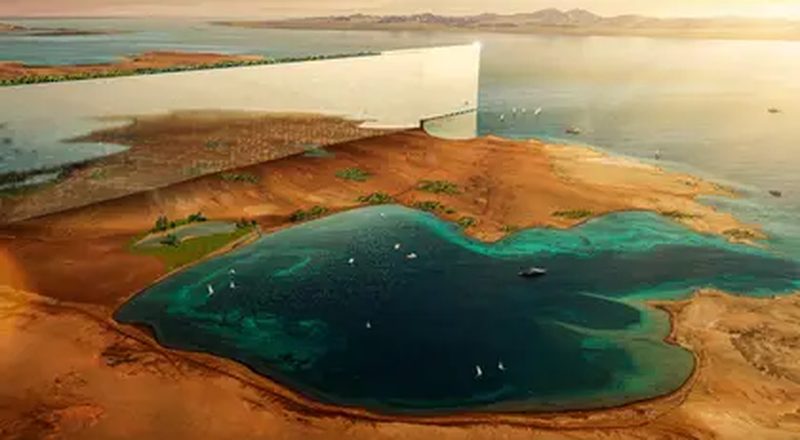
The plan’s most visible face is a string of giga-projects rising from the desert. NEOM, the 500-billion-dollar flagship, is a planned region in the northwest anchored by The Line, a 170-kilometre mirrored linear city meant to house 9 million people with no cars or streets. The Red Sea Project is building luxury resorts on pristine islands; Diriyah is restoring the kingdom’s historic capital as a cultural district; Qiddiya promises theme parks and sports venues outside Riyadh. Some projects are visibly advancing, with hotels opening and construction cranes everywhere; others, notably The Line, have been scaled back from their original renderings as costs ballooned and oil revenues fluctuated.
How is it all paid for?
The money comes from oil, channelled through the Public Investment Fund, which has grown into one of the world’s largest sovereign wealth funds. The PIF bankrolls the giga-projects, buys stakes in global companies and sports, and invests at home to create jobs. The strategy is essentially to spend oil wealth today to build a post-oil economy tomorrow. The risk is obvious: when crude prices dip, the spending spree strains public finances, and the kingdom has already delayed timelines, raised debt and sought private investors to share the burden. Economists debate whether the returns will ever justify the outlay, or whether the projects are monuments to ambition rather than economics.
- Oil still funds the majority of government revenue, though the non-oil share has risen markedly since 2016.
- Women’s labour force participation has surged past the Vision 2030 target of 30 per cent.
- Tourist visas, unthinkable a decade ago, were introduced in 2019; the kingdom now targets 150 million visitors a year.
- The PIF’s assets have grown from around 150 billion dollars to well over 900 billion.
The social transformation
For ordinary Saudis, the most dramatic changes have been social rather than economic. Women can now drive, travel without a male guardian’s permission, attend concerts and sports stadiums, and work in jobs once closed to them. Cinemas reopened after a 35-year ban, music festivals draw international stars, and the religious police have been defanged. These reforms are genuinely popular with young Saudis, who form the bulk of the population. But they coexist with continued repression of dissent: activists, journalists and even royals who criticise the crown prince face prison, and the 2018 murder of journalist Jamal Khashoggi remains a stain the kingdom has never fully answered for.
What the sceptics say
Critics make three arguments. First, the economics: many giga-projects may never earn back their costs, and diversification statistics are flattered by government spending itself. Second, the politics: liberalisation of lifestyle has not been matched by any liberalisation of power; it is reform from above, reversible at a whim. Third, the environment: building new cities in one of the world’s hottest deserts, with vast desalination and air-conditioning needs, sits uneasily with climate goals. The kingdom’s defenders reply that transformation on this scale was never going to be tidy, and that the direction of travel, from oil dependence toward a diversified, open society, is what matters.
FAQs
What is NEOM? A planned 26,500-square-kilometre development in northwest Saudi Arabia, budgeted at 500 billion dollars, whose best-known component is The Line, a proposed car-free linear city.
Has Vision 2030 reduced oil dependence? Partially. Non-oil GDP and revenues have grown substantially, but oil still dominates exports and government income, and the transition is far from complete.
Can tourists visit Saudi Arabia now? Yes. Tourist visas launched in 2019, and the kingdom is investing heavily in resorts, heritage sites and entertainment to build a tourism industry from scratch.
Vision 2030 is a gamble of historic proportions: that a conservative oil monarchy can spend its way into a diversified, socially open future before the oil age ends. A decade in, the cranes are up, the concerts are playing and the statistics are moving. Whether the bet pays off will decide not just Saudi Arabia’s future, but the template for every petrostate facing the end of oil.
Compiled by the Khabar 24h Editorial Desk from publicly available sources.

Khabar 24h Editorial Desk — our explainers are prepared by the Khabar 24h editorial team using AI-assisted research tools, and every piece is reviewed by a human editor before publishing. We do not claim original reporting: our work is turning complex topics into simple, accurate summaries. Spotted an error? Write to contact@khabar24h.com — our corrections policy aims for same-day review.
More from this author →