Buddhism Explained: The Four Noble Truths and the Path to Enlightenment
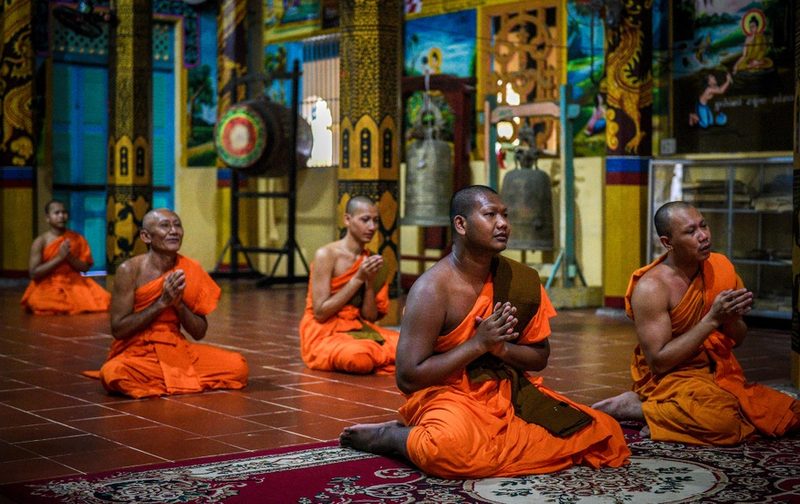
Some 2,500 years ago, a prince in ancient India abandoned his palace to seek an end to suffering, and the philosophy he founded now guides around 500 million people. Buddhism is the world’s fourth-largest religion, dominant across East and Southeast Asia and increasingly practised in the West. It is unusual among world religions: non-theistic, centred on a teacher rather than a god, and offering not salvation but awakening. This explainer sets out what the Buddha taught and how his followers live it.
The Buddha’s life and quest
Siddhartha Gautama was born around the 5th century BCE into a royal family in what is now Nepal. Sheltered from suffering, he was shaken by encounters with sickness, old age and death, and renounced his luxurious life to seek liberation. After years of extreme asceticism, he meditated beneath the Bodhi tree until, tradition holds, he awakened to the nature of reality and became the Buddha, the Awakened One. He spent the next 45 years teaching, gathering followers, and establishing a monastic community, the Sangha, that survives to this day.
The Four Noble Truths
The Buddha’s first sermon laid out his entire diagnosis. First, dukkha: life involves suffering, from pain and loss to the subtler ache that even pleasure fades. Second, the cause of suffering is craving, our clinging to desires, identities and outcomes. Third, suffering can end, when craving ends. Fourth, there is a path to that end: the Eightfold Path. The truths are framed like a medical prescription, symptom, cause, prognosis, treatment, which is why Buddhism often feels more like a psychology than a religion.
The Eightfold Path
The path to the end of suffering has eight interlocking practices: right understanding, right intention, right speech, right action, right livelihood, right effort, right mindfulness and right concentration. They divide into wisdom, ethical conduct and mental discipline, and they are practised together, not in sequence. Mindfulness, the clear non-judgmental awareness of the present moment, has become Buddhism’s most famous export, secularised into therapies and corporate programmes worldwide. The path’s goal is nirvana, the extinguishing of craving and the cycle of rebirth.
The great schools of Buddhism
Buddhism diversified as it spread. Theravada, the Way of the Elders, dominant in Sri Lanka and Southeast Asia, emphasises monastic discipline and individual liberation. Mahayana, the Great Vehicle, prevalent in China, Japan, Korea and Vietnam, introduced the bodhisattva ideal: enlightened beings who postpone nirvana to help all others awaken, along with devotion to celestial Buddhas. Vajrayana, the Tibetan Diamond Vehicle, uses esoteric rituals and meditation techniques, with the Dalai Lama as its most famous figure. Zen, born in China and refined in Japan, pursues sudden awakening through meditation and paradox.
Buddhism in the modern world
Buddhism’s modern story includes both revival and repression: it was nearly wiped out in its Indian homeland, suppressed under communism in China and Tibet, yet it thrives across Asia and grows steadily in the West. Engaged Buddhism applies the teachings to social justice and environmentalism. Mindfulness meditation has entered hospitals, schools and boardrooms, sometimes stripped of its ethical context, a trend critics call McMindfulness. Through all this, the core proposition endures: suffering has a cause, the cause can end, and ordinary people can walk the path that ends it.
Why Buddhism appeals to the modern West
Buddhism’s Western growth is no accident. It offers ethics without dogma, meditation without mandatory belief, and a psychology of suffering that resonates in an anxious age. The Dalai Lama’s global popularity gave it a beloved face, while neuroscience research on meditation gave it scientific credibility. Critics warn that stripping mindfulness from its ethical roots distorts the teaching, turning a path to liberation into a productivity hack. Yet even secularised, the core insight keeps landing: much of our suffering is optional, and attention is a skill we can train.
FAQs
Do Buddhists believe in God? Classical Buddhism is non-theistic; it focuses on human effort and awakening rather than worship of a creator god, though some traditions venerate celestial Buddhas.
What is nirvana? Literally blowing out, the end of craving, suffering and the cycle of rebirth; it is described more by what it ends than by what it is.
What is the difference between Buddhism and Hinduism? Buddhism emerged from ancient Indian thought but rejects the caste system, the authority of the Vedas and the idea of an eternal soul.
The Buddha promised no paradise, only a way to see clearly. Two and a half millennia later, his diagnosis of the human condition, that we suffer because we grasp, still reads like it was written this morning.
Compiled by the Khabar 24h Editorial Desk from publicly available sources.

Khabar 24h Editorial Desk — our explainers are prepared by the Khabar 24h editorial team using AI-assisted research tools, and every piece is reviewed by a human editor before publishing. We do not claim original reporting: our work is turning complex topics into simple, accurate summaries. Spotted an error? Write to contact@khabar24h.com — our corrections policy aims for same-day review.
More from this author →