How Francis Halzen’s IceCube Caught Ghost Particles from Space
Neutrinos are often called ghostly particles. They have almost no mass and no electric charge. They pass through stars, planets and even human bodies without changing. Billions from the sun stream through your hand every second.
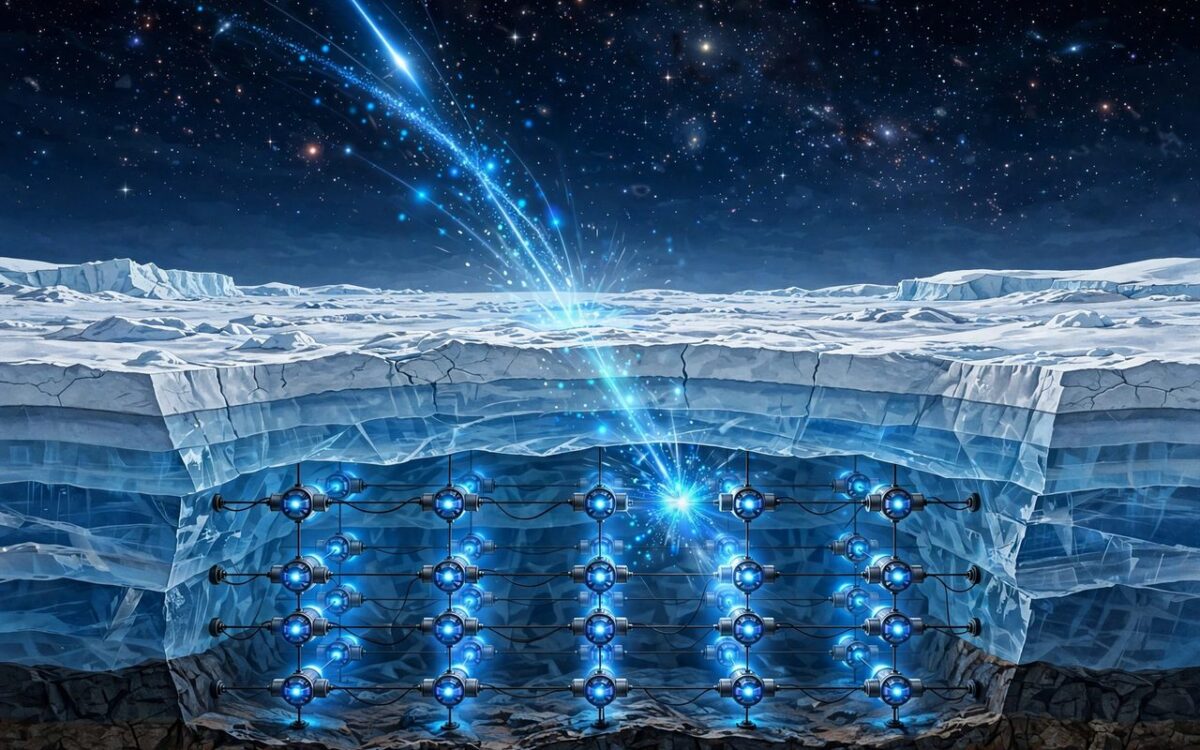
Francis Halzen wanted to catch the rarest kind, the high-energy neutrinos that come from deep space. In 1988 he proposed turning the Antarctic ice itself into a detector. Holes were drilled nearly two kilometres down using hot water. Thousands of light sensors were lowered into the clear glacial ice.
The trick uses a simple fact. When a neutrino hits an atomic nucleus, it produces a tiny flash of light. The sensors track that flash. Its path points back to where the neutrino came from in the cosmos.
The project took an international team of more than 450 people from 58 institutions in 14 countries. It worked. IceCube found high-energy neutrinos from beyond our galaxy. That gives scientists information about distant cosmic sources that no telescope can provide.
Related stories
View all →
Bitcoin’s $83,000 rebound explained
Why bitcoin bounced above $83,000: Trump's Iran statement, ETF outflows, and the key levels traders watch.
Starlink Mobile explained: SpaceX’s carrier play
How SpaceX's 800 MHz spectrum deal and 15,000 new satellites could turn Starlink Mobile into a US carrier.
El Nino explained: why Maharashtra is parched
What El Nino is, how it weakens the monsoon, and why it left Maharashtra declaring drought in 265 talukas.

Khabar 24h Editorial Desk — our explainers are prepared by the Khabar 24h editorial team using AI-assisted research tools, and every piece is reviewed by a human editor before publishing. We do not claim original reporting: our work is turning complex topics into simple, accurate summaries. Spotted an error? Write to contact@khabar24h.com — our corrections policy aims for same-day review.
More from this author →
Leave a Reply