How Wildlife Overpasses Work — and Why They Save Lives
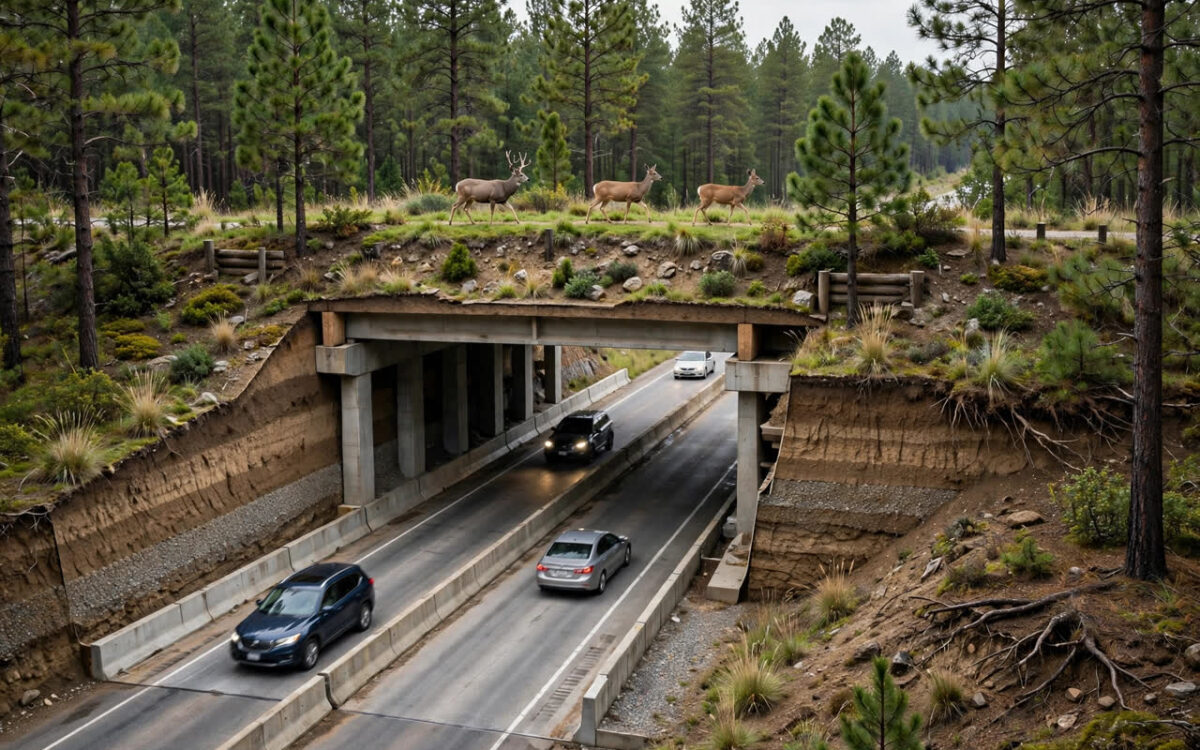
Wildlife overpasses are bridges built for animals, letting them cross highways safely while traffic flows underneath. Colorado’s Greenland overpass — North America’s largest — has cut wildlife-vehicle collisions by 91 per cent in nine months. Here’s how they work.
The idea is simple: roads slice through animal migration routes, forcing crossings that kill both animals and drivers. A crossing pairs a wide bridge or tunnel with long stretches of fencing that funnel animals toward it, so they don’t slip onto the road.
Design matters. Entrances are broad and gently sloped, and the surface is covered with soil and plants so it feels like the land itself, not a structure. Big animals like elk and pronghorn need wide, open sightlines to feel safe; smaller species prefer enclosed underpasses.
The payoff goes beyond fewer crashes. The Greenland bridge reconnected 39,000 acres of habitat, and pronghorn reached the west side of I-25 for the first time in decades. Elsewhere, studies show reductions of 80 per cent or more — proof that a bridge built for hooves can save lives on four wheels too.
Related stories
View all →
Bitcoin’s $83,000 rebound explained
Why bitcoin bounced above $83,000: Trump's Iran statement, ETF outflows, and the key levels traders watch.

Starlink Mobile explained: SpaceX’s carrier play
How SpaceX's 800 MHz spectrum deal and 15,000 new satellites could turn Starlink Mobile into a US carrier.

El Nino explained: why Maharashtra is parched
What El Nino is, how it weakens the monsoon, and why it left Maharashtra declaring drought in 265 talukas.

Khabar 24h Editorial Desk — our explainers are prepared by the Khabar 24h editorial team using AI-assisted research tools, and every piece is reviewed by a human editor before publishing. We do not claim original reporting: our work is turning complex topics into simple, accurate summaries. Spotted an error? Write to contact@khabar24h.com — our corrections policy aims for same-day review.
More from this author →
Leave a Reply