Exoplanet radio signal, explained: what astronomers actually heard
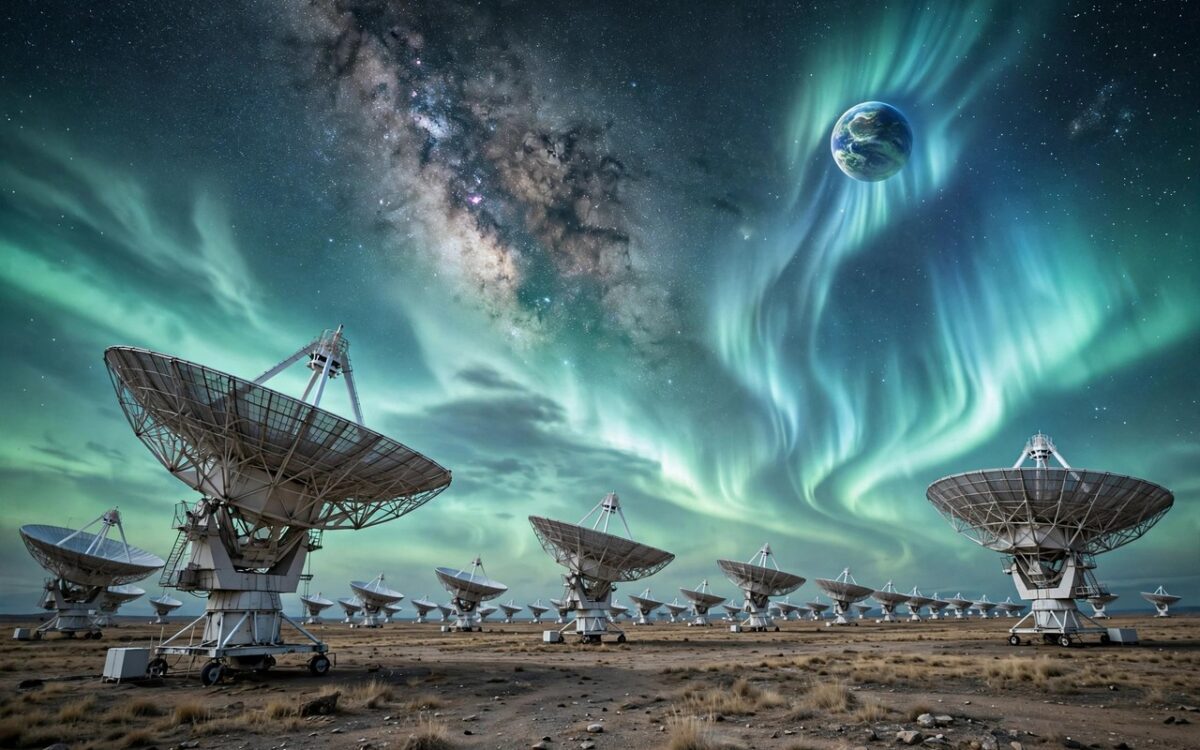
Astronomers have picked up radio waves coming directly from an exoplanet for the first time. Here is what the discovery means, and what it does not.
The signal comes from Beta Pictoris b, a gas giant about 63 light-years away with roughly 12 times the mass of Jupiter. Researchers using South Africa’s MeerKAT telescope detected rapid, repeating bursts between 0.85 and 3.5 gigahertz.
The waves most likely come from auroras paired with an exceptionally powerful magnetic field. Some of the signals were strongly circularly polarised, a classic signature of aurora-driven radio emission. This is a natural phenomenon, not a message from alien life.
The signal appeared across several observations, which let scientists separate it from the star itself. That repeatability is what makes the detection convincing.
Why it matters: magnetic fields can protect atmospheres, and radio observations give astronomers a new way to study distant planets directly. The technique could one day help assess which exoplanets might hold onto air and water. The research still awaits independent review.
Related stories
View all →
Bitcoin’s $83,000 rebound explained
Why bitcoin bounced above $83,000: Trump's Iran statement, ETF outflows, and the key levels traders watch.

Starlink Mobile explained: SpaceX’s carrier play
How SpaceX's 800 MHz spectrum deal and 15,000 new satellites could turn Starlink Mobile into a US carrier.

El Nino explained: why Maharashtra is parched
What El Nino is, how it weakens the monsoon, and why it left Maharashtra declaring drought in 265 talukas.

Khabar 24h Editorial Desk — our explainers are prepared by the Khabar 24h editorial team using AI-assisted research tools, and every piece is reviewed by a human editor before publishing. We do not claim original reporting: our work is turning complex topics into simple, accurate summaries. Spotted an error? Write to contact@khabar24h.com — our corrections policy aims for same-day review.
More from this author →
Leave a Reply