What is a white dwarf-millisecond pulsar binary, like NGC 362D?
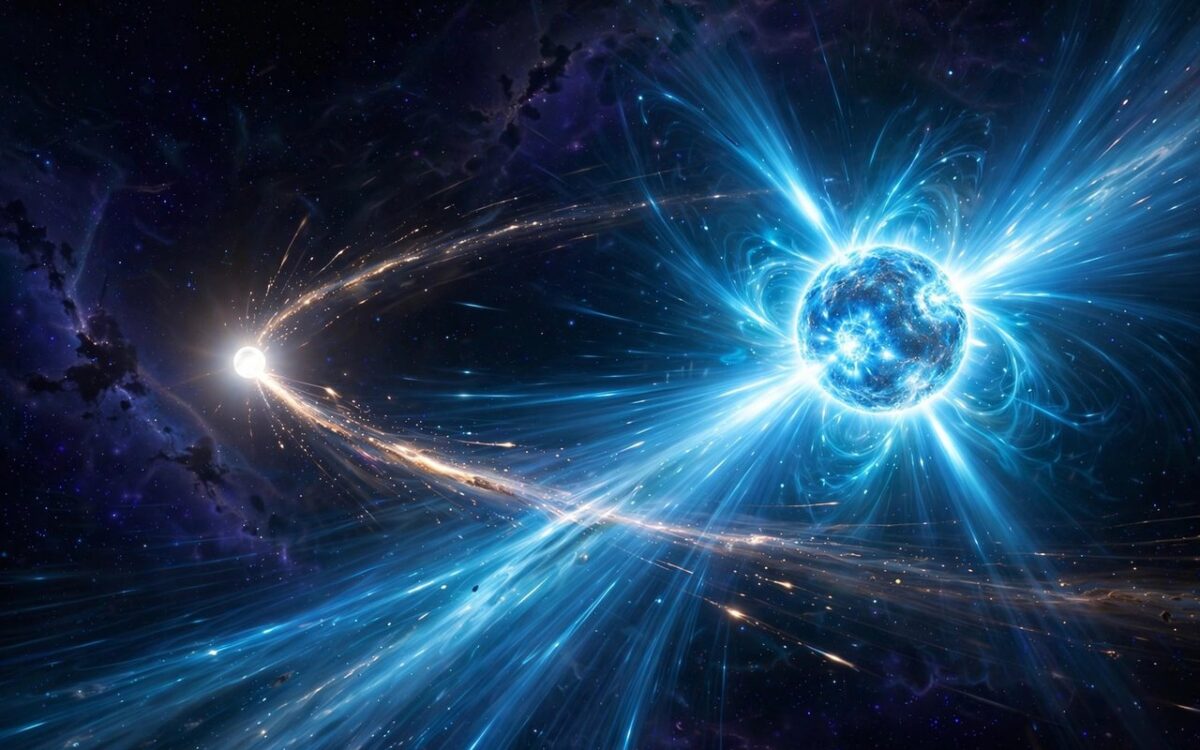
When stars die, they leave behind remnants. A white dwarf is the cooling ember of a star like our Sun. A neutron star is the collapsed core of a much bigger star, packed into a ball just kilometres wide.
Some neutron stars spin hundreds of times a second, sweeping beams of radiation across space like a lighthouse. Astronomers call these millisecond pulsars.
In a binary system, two such remnants orbit each other. The bigger story is how they interact. For millions of years, the companion star can donate material to the neutron star, spinning it up. When the donor finally exhausts its fuel, it dies into a white dwarf.
NGC 362D is special because its white dwarf is the youngest ever seen with a millisecond pulsar. It stopped feeding its partner about 600 million years ago, so astronomers can watch the earliest stage of this afterlife.
The system also emits less ultraviolet light than expected. Researchers think leftover ejected material still surrounds the white dwarf, dimming its glow like dust on a lamp.
Related stories
View all →
Bitcoin’s $83,000 rebound explained
Why bitcoin bounced above $83,000: Trump's Iran statement, ETF outflows, and the key levels traders watch.

Starlink Mobile explained: SpaceX’s carrier play
How SpaceX's 800 MHz spectrum deal and 15,000 new satellites could turn Starlink Mobile into a US carrier.

El Nino explained: why Maharashtra is parched
What El Nino is, how it weakens the monsoon, and why it left Maharashtra declaring drought in 265 talukas.

Khabar 24h Editorial Desk — our explainers are prepared by the Khabar 24h editorial team using AI-assisted research tools, and every piece is reviewed by a human editor before publishing. We do not claim original reporting: our work is turning complex topics into simple, accurate summaries. Spotted an error? Write to contact@khabar24h.com — our corrections policy aims for same-day review.
More from this author →
Leave a Reply