What is battery energy storage and why does the grid need it?
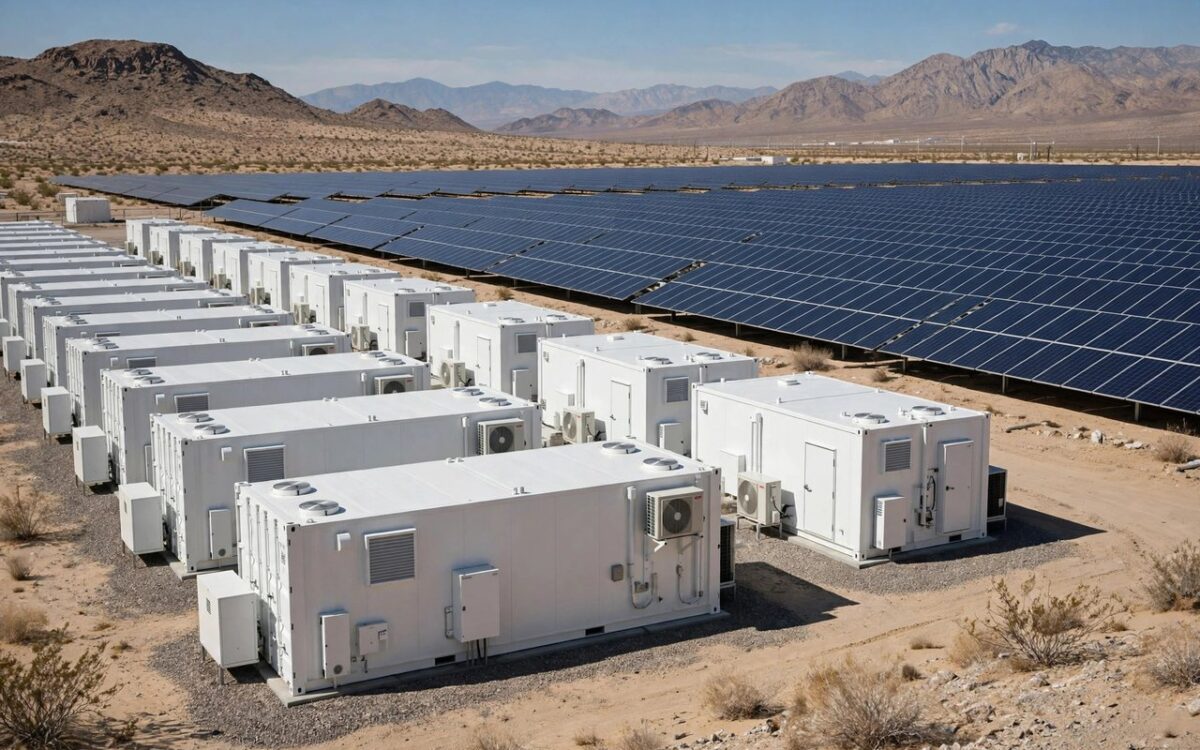
A battery energy storage system, or BESS, is a giant rechargeable battery for the power grid. It stores electricity when generation is high and releases it when demand rises.
Why does this matter? Solar panels make power only when the sun shines, and wind turbines only when the wind blows. But people use electricity after sunset too. Without storage, excess renewable power goes to waste.
A BESS charges during peak production hours and discharges during evening demand. This makes renewable power firmer and more reliable, and helps grid operators manage sudden changes.
India is scaling up fast. Adani Green Energy’s installation at Khavda in Gujarat now holds 6.63 gigawatt-hours, more than half of the country’s operational capacity of about 12.6 GWh. The company calls it the world’s largest single-location battery storage site.
That 6.63 GWh can power about two million homes for a day. It equals the batteries of over 1.5 lakh mid-sized electric vehicles, showing how storage is becoming central to clean energy plans.
Related stories
View all →
Bitcoin’s $83,000 rebound explained
Why bitcoin bounced above $83,000: Trump's Iran statement, ETF outflows, and the key levels traders watch.
Starlink Mobile explained: SpaceX’s carrier play
How SpaceX's 800 MHz spectrum deal and 15,000 new satellites could turn Starlink Mobile into a US carrier.
El Nino explained: why Maharashtra is parched
What El Nino is, how it weakens the monsoon, and why it left Maharashtra declaring drought in 265 talukas.

Khabar 24h Editorial Desk — our explainers are prepared by the Khabar 24h editorial team using AI-assisted research tools, and every piece is reviewed by a human editor before publishing. We do not claim original reporting: our work is turning complex topics into simple, accurate summaries. Spotted an error? Write to contact@khabar24h.com — our corrections policy aims for same-day review.
More from this author →
Leave a Reply