How the UK’s NHS Works: Free Healthcare for 68 Million People
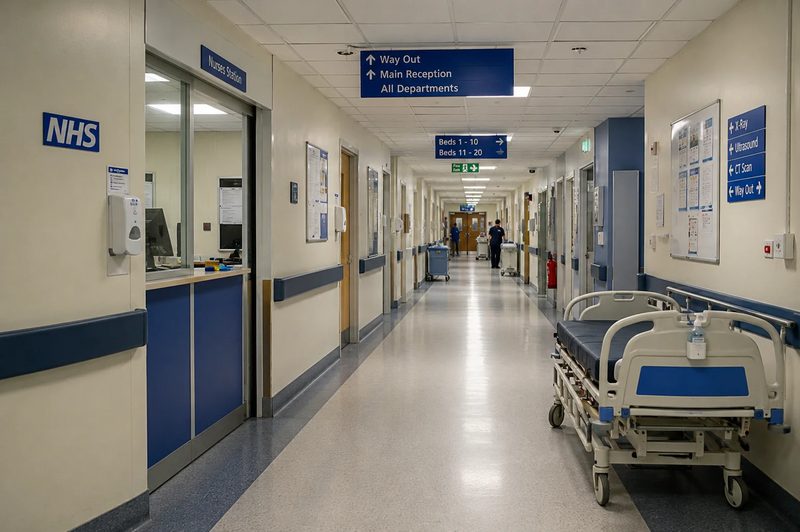
The National Health Service is Britain’s most beloved institution, a healthcare system that treats around a million patients every 24 hours and charges them nothing at the point of use. Founded in 1948 on the principle that care should be based on need, not ability to pay, the NHS is the world’s largest single-payer system and a constant political battleground. How does it actually work, what does it cost, and why does it inspire such devotion and such fury?
The founding promise
The NHS was born from the rubble of the Second World War, when Health Minister Aneurin Bevan nationalised Britain’s patchwork of hospitals and made healthcare free for all. The founding principles still define it: comprehensive care, universal access, free at the point of use, funded from general taxation. Bevan famously said he had to stuff doctors’ mouths with gold to get them to join, allowing consultants to keep private practice alongside NHS work. The deal held, and the NHS became, in Nigel Lawson’s phrase, the closest thing the English have to a religion.
How the money flows
The NHS is funded overwhelmingly from general taxation, with a smaller National Insurance contribution, costing well over 180 billion pounds a year in England alone. That sounds vast, but Britain actually spends a smaller share of GDP on health than France, Germany or the United States, while covering everyone. The money flows from the Treasury to NHS England, then to integrated care boards that commission services from hospitals, GPs and community providers. Patients never see a bill for GP visits, hospital care or emergency treatment; prescriptions carry a small flat fee in England, waived for many groups.
How care is organised
The GP is the system’s gatekeeper: everyone registers with a local practice, and referrals to specialists flow through it. Hospitals are run by NHS trusts, and emergency departments treat anyone, resident or not. Mental health, community nursing, vaccinations and screening all sit within the same tent. The model rations by waiting rather than price: non-urgent treatment queues, and waiting lists, which ballooned after the pandemic to millions, are the system’s chronic pressure valve. Private healthcare exists alongside, used by a minority to skip queues.
What the NHS does brilliantly
On equity and efficiency, the NHS shines. Nobody goes bankrupt from medical bills, a fate that befalls hundreds of thousands of Americans yearly. Its centralisation enabled triumphs like the world’s first COVID vaccination programme rollout at scale. Administrative costs are a fraction of America’s. Public health campaigns, from smoking cessation to cancer screening, reach the whole population. And the workforce, 1.5 million strong including huge numbers of immigrant staff, sustains a service of remarkable scope on comparatively modest funding.
The perpetual crisis
Yet the NHS is rarely out of crisis headlines. Demand rises inexorably as the population ages and treatments advance; funding has often grown slower than need. Staff shortages run into six figures, burnout is endemic, and social care’s collapse strands patients in hospital beds. Winter crises, ambulance delays and corridor care have become grim annual rituals. Every government promises to fix it, and every reform, internal markets, targets, reorganisations, is debated furiously. The paradox: satisfaction remains high among users even as the system strains.
Could others copy it?
Many countries admire the NHS model, and many Britons assume it is unique; in fact most developed nations achieve universal coverage through different means, often insurance-based systems like Germany’s or France’s. The NHS’s tax-funded, mostly state-provided model is distinctive but not alone; Scandinavia runs similar systems. Its lesson is that universal healthcare is a political choice affordable at many income levels, and that once a population experiences healthcare as a right, no politician dares take it away.
FAQs
Is the NHS really free? Yes at the point of use for residents: GP visits, hospital treatment and emergency care cost nothing, funded through taxes.
Can visitors use the NHS? Emergency care is free for everyone; other treatment may be charged to non-residents, though primary care is generally accessible.
Why are waiting lists so long? Demand exceeds funded capacity, worsened by pandemic backlogs, staff shortages and an ageing population needing more care.
The NHS is an idea as much as an institution: that a society can decide, collectively, that no one should be priced out of health. Battered, beloved and permanently controversial, it remains the boldest healthcare promise any nation has made to its people.
Compiled by the Khabar 24h Editorial Desk from publicly available sources.
Related stories
View all →
Trump Rejects Iran’s Hormuz Offer as Coalition Downs Houthi Drones
US President Donald Trump has rejected Iran’s seven-day proposal to reopen the Strait of Hormuz, dimming hopes of a diplomatic breakthrough. ‘They…

Jaishankar Flags India’s Russia Sanctions Concerns to Rubio
External Affairs Minister S Jaishankar raised India's concerns over Russia sanctions in talks with US Secretary of State Marco Rubio.
Pezeshkian Calls Out Trump By Name In UN Speech
Iranian President Masoud Pezeshkian directly named Donald Trump in a defiant UN address, declaring "we did not bend the knee" amid rising…

Khabar 24h Editorial Desk — our explainers are prepared by the Khabar 24h editorial team using AI-assisted research tools, and every piece is reviewed by a human editor before publishing. We do not claim original reporting: our work is turning complex topics into simple, accurate summaries. Spotted an error? Write to contact@khabar24h.com — our corrections policy aims for same-day review.
More from this author →