How Do Robot Vacuum Cleaners Work? Mapping and Navigation Explained
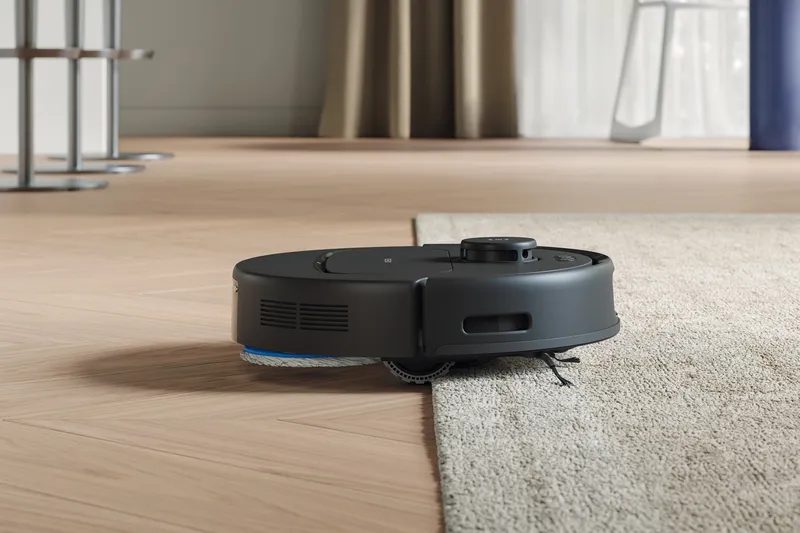
A small disc glides out from under the sofa, maps your home, vacuums every room in an efficient pattern, empties itself and returns to charge, all while you are at work. Robot vacuum cleaners have gone from novelty to genuinely useful household appliances, with capable models now affordable in India. But how does a device with no eyes navigate a cluttered home without getting stuck? This guide explains the mapping, navigation and cleaning technology inside robot vacuums, and how to choose the right one.
How robot vacuums see: LiDAR and cameras
Navigation starts with perception, and premium robots use LiDAR: a spinning laser turret on top fires invisible laser pulses in all directions, measuring return times to build a precise 360-degree map of the room, accurate to centimetres, in the dark or in daylight. It is the same core technology as self-driving cars, miniaturised. Mid-range models increasingly use cameras with visual SLAM, simultaneous localisation and mapping, recognising features in the room to track position; these work well in lit rooms but struggle in darkness. Budget models use simpler systems: gyroscopes and bump sensors that clean in semi-random patterns, eventually covering the area through persistence rather than planning. The navigation method is the single biggest determinant of cleaning efficiency and the main thing your money buys as prices rise.
Mapping your home and planning routes
Once the robot can see, it builds a persistent map. On first runs, it explores systematically, and the companion app displays the floor plan it learned, often impressively accurate. You can then divide the map into rooms, name them, and send the robot to clean just the kitchen after dinner. Virtual walls and no-go zones keep it away from pet bowls, prayer areas or tangled cables. The cleaning pattern matters: LiDAR robots vacuum in neat back-and-forth rows like mowing a lawn, covering everything once with minimal overlap, while random-navigation models bounce around until their battery fades. Multi-floor homes get multiple saved maps. This is genuine robotics: sensing, mapping, planning and acting in a loop.
How they actually clean
Navigation gets the glory, but cleaning hardware does the work. A main roller brush, rubber or bristle, agitates carpet fibres and sweeps debris toward the suction inlet; rubber rollers resist hair tangles better, a real advantage in Indian homes. Side brushes flick dust from edges and corners into the path. Suction power, measured in pascals, ranges from 2,000Pa in basic models to 8,000Pa or more in flagships; more matters on carpets, less on hard floors. Many robots now mop too, dragging a wet pad behind, with premium models lifting the mop over carpets and washing the pad at the dock. Filtration matters for allergy sufferers: HEPA-grade filters trap fine dust the vacuum would otherwise exhaust back into the room.
Sensors that prevent disasters
A robot loose in your home needs self-preservation instincts, provided by a sensor suite.
- Cliff sensors: infrared sensors underneath detect drops, stopping the robot at stair edges.
- Bump sensors: gentle collision detection for furniture and walls.
- Obstacle recognition: AI cameras on premium models identify shoes, cables, pet waste and avoid them specifically.
- Carpet detection: raises suction or lifts mops when transitioning from hard floors.
- Dust detection: some models sense dirtier areas and clean them more thoroughly.
The dreaded pet-waste incident that haunted early models is now largely solved by AI obstacle avoidance on better robots.
Self-emptying docks and maintenance
The latest convenience is the self-emptying dock: after each run, the robot docks and the base suctions debris into a large bag you empty monthly rather than after every clean. Premium docks also wash and dry mop pads and refill water tanks. Maintenance remains necessary: empty the dustbin if you lack a dock, clean the roller of hair weekly, wipe sensors and rinse filters as the app reminds you. In Indian conditions, dust loads are high, so larger dustbins and self-emptying docks earn their keep faster than in less dusty climates. Treat the robot like any appliance: a few minutes of weekly care keeps it running for years.
FAQs
Can a robot vacuum replace a regular vacuum? For maintenance cleaning, largely yes. For deep carpet cleaning and stairs, keep a traditional vacuum for occasional use.
Do they work on Indian homes with thresholds? Most climb thresholds of about 2cm. Higher door strips may need small ramps or no-go zones.
Are mopping robots worth it? For hard floors, the better ones maintain cleanliness well between manual mops, but they do not scrub like a human with a mop.
Robot vacuums are applied robotics at their most domestic: lasers, maps and algorithms in service of clean floors. Buy LiDAR navigation if you can, maintain it a little, and the daily chore quietly disappears.
Source: Consumer Reports

Khabar 24h Editorial Desk — our explainers are prepared by the Khabar 24h editorial team using AI-assisted research tools, and every piece is reviewed by a human editor before publishing. We do not claim original reporting: our work is turning complex topics into simple, accurate summaries. Spotted an error? Write to contact@khabar24h.com — our corrections policy aims for same-day review.
More from this author →