How Glass Is Made: From Sand to Smartphone Screens
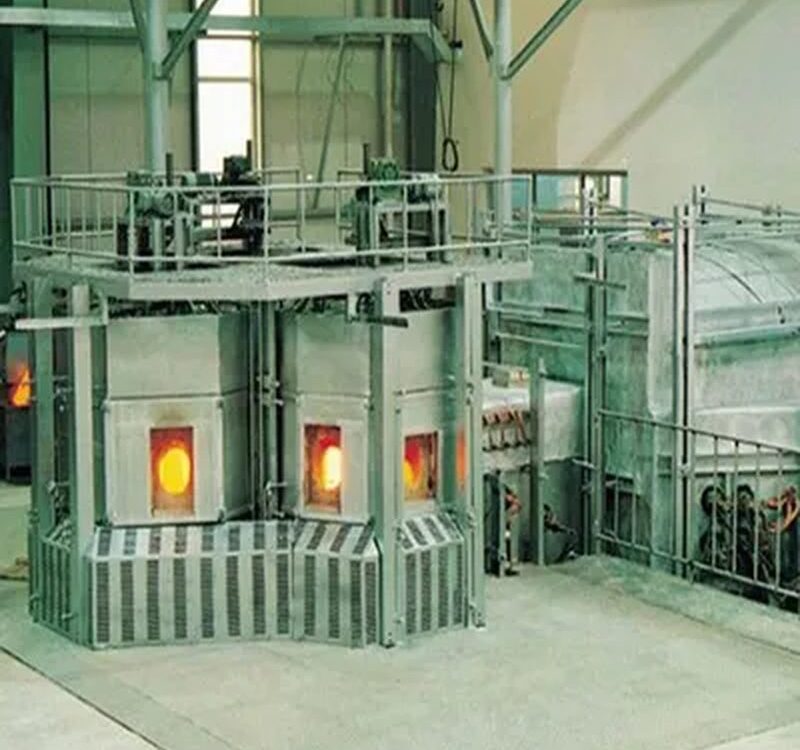
Glass is one of humanity’s oldest manufactured materials and one of its most mysterious. Make it by melting sand, and you get a substance that looks like a solid but has the disordered atomic structure of a liquid, frozen in place. It is transparent because its electrons cannot absorb visible light, brittle because its disordered bonds cannot slip like a metal’s, and endlessly recyclable because melting simply re-randomises it. From the stained glass of medieval cathedrals to the fibre-optic cables carrying this article, from laboratory beakers to the toughened screens of a billion smartphones, glass is civilisation’s invisible infrastructure. Its manufacture spans from artisanal furnaces to some of the largest and most precise industrial processes on Earth. Here is how sand becomes glass.
The chemistry of melting sand
Pure sand is silicon dioxide, which melts at a punishing 1,700 degrees Celsius. Ancient glassmakers discovered that adding soda ash, sodium carbonate, lowers the melting point dramatically, though the resulting glass dissolves in water; adding lime, calcium oxide, fixed that, creating soda-lime glass, still 90 per cent of all glass made today. The magic happens on cooling: unlike metals, which crystallise into ordered lattices, glass-forming melts become so viscous so quickly that their atoms cannot arrange into crystals, freezing instead into an amorphous solid, a liquid’s disorder with a solid’s rigidity. Whether glass is truly a solid or an ultra-slow liquid was debated for a century, fuelled by the myth that old windowpanes are thicker at the bottom from flowing; measurements show medieval glass is simply uneven from manufacture, and glass at room temperature is for all practical purposes a solid. Additives create the family: boron for heat-resistant borosilicate, lead for brilliant crystal, metal oxides for colours, cobalt for deep blue, gold for ruby red.
How the world’s glass is actually made
Modern flat glass is made by the float process, invented by Alastair Pilkington in the 1950s: molten glass pours from a furnace at 1,100 degrees onto a bath of molten tin, where it floats and spreads into a perfectly flat ribbon, polished by surface tension itself, then cools gradually in an annealing lehr to relieve stresses. A single float line produces hundreds of tonnes daily in a continuous ribbon kilometres long. Container glass for bottles is blown or pressed in moulds at similar scale; India’s glass industry, centred in Firozabad’s historic bangle cluster and modern plants, produces millions of tonnes annually. Fibre-optic glass is the purest material humans make: silica so free of impurities that light travels kilometres with minimal loss, drawn from preforms into hair-thin fibres. And smartphone glass, like Corning’s Gorilla Glass, is strengthened by ion exchange, bathing it in molten potassium so larger potassium ions jam into the surface, compressing it; the result survives drops that would shatter ordinary glass. Each variety is the same underlying material, tuned by chemistry and thermal history.
Glass, the unsung hero of science
Remove glass from history and modern science nearly vanishes. Lenses made the telescope and microscope, the two instruments that revealed the cosmos and the microbe; spectacles, among the earliest glass products, extended the working lives of scholars. Laboratory glassware, beakers, test tubes, vacuum tubes, made chemistry and electronics possible. Fibre-optic glass carries the internet: a single fibre pair can transmit terabits per second, and the global network is glass threads wrapped around the planet. Glass is also key to the energy transition: solar panels are sheathed in specialised glass, and concentrated solar plants use mirrors by the million. Even the puzzles continue: the physics of the glass transition, why some liquids form glasses and others crystallise, remains one of condensed matter’s deep unsolved problems, with a million-dollar prize once offered for its solution. From sand to smartphones to the stars, glass is proof that the most transformative materials are often the ones we look straight through.
- Soda-lime glass, made from sand, soda ash and lime, is about 90 per cent of all glass produced.
- The float process pours molten glass onto molten tin for perfect flatness.
- Fibre-optic glass is among the purest materials ever made by humans.
- Gorilla Glass is strengthened by ion exchange, jamming large ions into its surface.
- Medieval windowpanes are uneven from manufacture, not from centuries of flowing.
FAQs
Is glass a liquid or a solid? An amorphous solid: its atoms are disordered like a liquid’s, but it does not flow at room temperature on any meaningful timescale.
Why is glass transparent? Its electrons are bound in ways that cannot absorb visible-light photons, so light passes through instead of being absorbed or reflected.
Is glass recyclable? Infinitely. Melted cullet, recycled glass, becomes new glass with no quality loss, and every 10 per cent of cullet cuts furnace energy by about 3 per cent.
Sand, soda, lime and fire: four ingredients that gave us windows, lenses, bottles, fibres and screens. Glass is the material we see through, in every sense.
Compiled by the Khabar 24h Editorial Desk from publicly available sources.

Khabar 24h Editorial Desk — our explainers are prepared by the Khabar 24h editorial team using AI-assisted research tools, and every piece is reviewed by a human editor before publishing. We do not claim original reporting: our work is turning complex topics into simple, accurate summaries. Spotted an error? Write to contact@khabar24h.com — our corrections policy aims for same-day review.
More from this author →