What Is the Offside Rule in Football? A Simple Explainer
No law in football causes more confusion, more arguments and more overturned celebrations than offside. It is the rule that makes strikers time their runs to perfection and defenders hold their line with military discipline. It is also the rule that most fans misunderstand, confidently explaining it wrongly in pubs and living rooms across the world. This simple explainer breaks down what offside actually is, how it is judged, and why it remains so controversial.
The basic rule, simply stated
A player is in an offside position if, when the ball is played by a teammate, they are nearer to the opponent’s goal line than both the ball and the second-last opponent, usually the last defender, since the goalkeeper is typically the last. Being in an offside position is not itself an offence. The offence occurs only if the player then becomes involved in active play: interfering with play by touching the ball, interfering with an opponent by blocking their line of sight or challenging them, or gaining an advantage from a rebound off the woodwork or an opponent. The assistant referee judges the critical moment, the instant the ball is played, not when it is received, which is why perfectly timed runs look level in real time and offside only in freeze-frame.
The exceptions everyone forgets
Several situations exempt players from offside entirely, and these are where most confusion lives. There is no offside from a goal kick, a throw-in or a corner kick, which is why attackers can lurk by the goalpost at corners. A player cannot be offside in their own half, no matter how far forward they are when the ball is played. And crucially, a player level with the second-last opponent is onside; the benefit of the doubt, historically given to attackers, is now measured in millimetres by technology. Another misunderstood point: offside is judged when the ball is played, not received, so a player who starts onside and runs beyond the defence to collect a through ball is perfectly legal, while one who starts beyond the last defender cannot become onside by letting the ball run past them.
Why offside exists
The rule’s purpose is gloriously simple: to stop goal-hanging. Without offside, attackers would camp by the opposition goal, defenders would be forced to stay back with them, and football would degenerate into long-ball tennis. Offside creates the game’s essential spatial contest: it gives defenders a tool, the high line and the offside trap, to compress the pitch, and it forces attackers to time runs, bend their sprints and play on the shoulder of the last defender. This cat-and-mouse game is one of football’s great tactical battles. The law has been tuned over the decades to favour attacking football, from the change requiring two defenders rather than three, to the modern interpretation of interfering with play, each adjustment nudging the balance toward goals.
Offside in the VAR era
Technology has transformed offside from a human judgement into a forensic measurement. VAR reviews goals and key incidents, drawing calibrated lines to determine whether an attacker was beyond the defender, sometimes by centimetres, a toe, an armpit. These marginal decisions, celebrated goals disallowed because a shoulder was millimetres ahead, have made offside the most controversial aspect of video review. Defenders of the system argue that the law is binary, you are either offside or not, and precision is fairness. Critics counter that the technology’s margin of error exceeds the margins it judges, and that disallowing goals for invisible infractions damages the spectacle. Reforms have been proposed, from thicker tolerance lines to judging only the feet, but the fundamental tension remains: a law designed for the human eye, now enforced by machines.
- Offside position: ahead of the ball and the second-last opponent when the ball is played by a teammate.
- Offence requires active involvement: interfering with play, an opponent, or gaining an advantage.
- No offside from goal kicks, throw-ins or corners, or in your own half.
- VAR measures offside to millimetre precision, creating the era’s most debated decisions.
FAQs
Can you be offside from a throw-in? No. Throw-ins, goal kicks and corners are all exempt from the offside law.
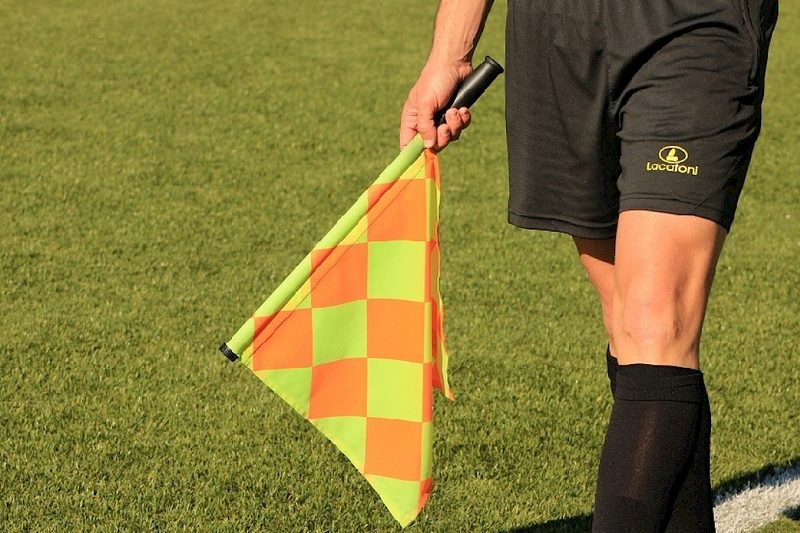
What does the assistant referee watch? The instant the ball is played by the attacker, checking the positions of the forwards against the second-last defender.
Why are toenail offsides so controversial? Because VAR’s precision disallows goals for margins invisible in real time, which many feel violates the spirit of the law.
Offside is football’s beautiful complication: the rule that creates space, demands timing, and guarantees arguments. Understand it, and you understand the game’s deepest tactical duel.
Compiled by the Khabar 24h Editorial Desk from publicly available sources.

Khabar 24h Editorial Desk — our explainers are prepared by the Khabar 24h editorial team using AI-assisted research tools, and every piece is reviewed by a human editor before publishing. We do not claim original reporting: our work is turning complex topics into simple, accurate summaries. Spotted an error? Write to contact@khabar24h.com — our corrections policy aims for same-day review.
More from this author →