Google to send AI chips into orbit on Project Suncatcher test
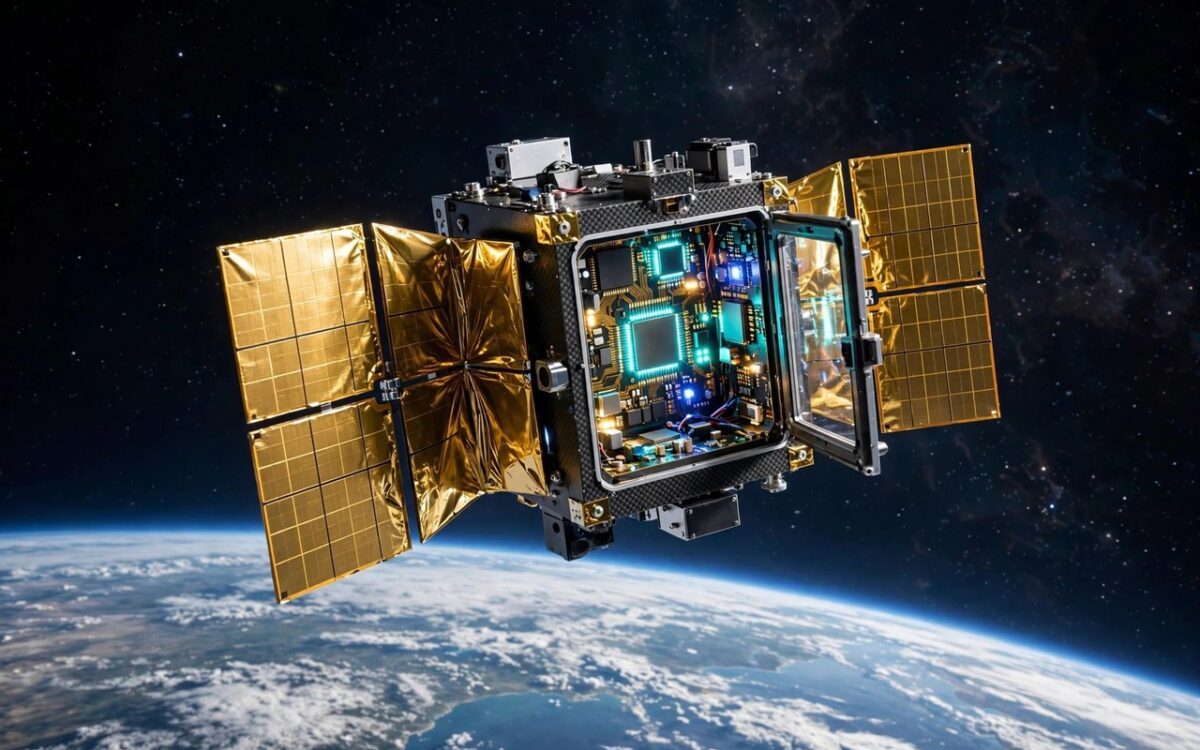
Google plans to send its AI chips into low Earth orbit on October 1 as part of Project Suncatcher, a research mission testing whether powerful AI hardware can operate in space.
A prototype satellite carrying Google’s Tensor Processing Units (TPUs) will ride on SpaceX’s Transporter-18 rideshare launch from California. Planet Labs is partnering with Google on the spacecraft effort, according to reports.
The mission will test how the chips handle launch stress, radiation and extreme temperatures. Cosmic rays and solar activity can disrupt electronics and create errors known as bit flips. Google already tested its Trillium TPUs using proton beams at UC Davis, running AI workloads while researchers tracked radiation-related errors.
Rocket launches can expose components to forces of 50 to 100 times gravity, so engineers ran vibration tests across all three satellite axes before flight, and the hardware held up.
Cooling is the biggest hurdle. With no air in space, fans cannot move heat, so Google will use heat pipes and radiators — a setup already tested in thermal vacuum chambers. The project explores whether orbit could one day host large-scale AI computing and ease the load on ground data centers.
Related stories
View all →
Instinct raises $1B at $10B valuation for personal AI agent
Instinct raises $1B at a $10B valuation from Sequoia, Benchmark and Coatue for its personal AI agent that texts, calls and books…

EliseAI raises $350M at $4B to automate housing, healthcare
EliseAI raises $350M at a $4B valuation co-led by a16z and Bessemer; its AI platform serves one in six US apartments and…

Nvidia-backed CScale exits stealth with $145M for AI networks
CScale exits stealth with a $145M Series C co-led by Atreides, Valor and Premji Invest, with Nvidia and Intel Capital as strategic…

Khabar 24h Editorial Desk — our explainers are prepared by the Khabar 24h editorial team using AI-assisted research tools, and every piece is reviewed by a human editor before publishing. We do not claim original reporting: our work is turning complex topics into simple, accurate summaries. Spotted an error? Write to contact@khabar24h.com — our corrections policy aims for same-day review.
More from this author →
Leave a Reply