India’s Hockey Golden Era: Eight Olympic Golds and the Dhyan Chand Years
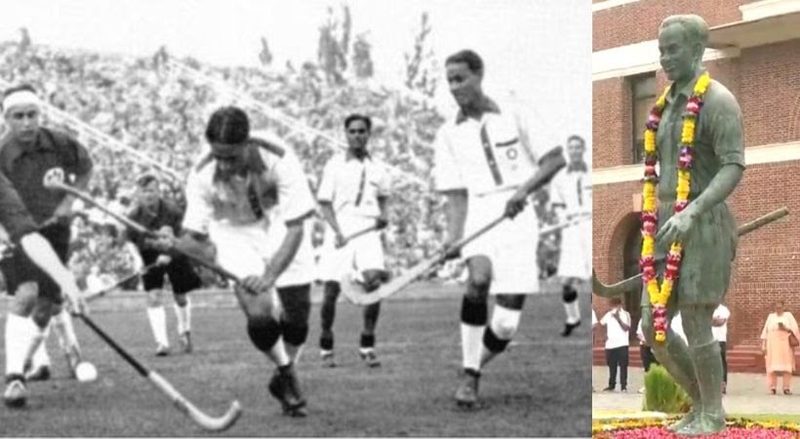
No nation has dominated an Olympic sport the way India dominated field hockey in the 20th century. Between 1928 and 1980, India won eight Olympic gold medals, a record that still stands, playing a brand of skilful, artistic hockey that earned the team the nickname the wizards. At the heart of the legend stands Dhyan Chand, the most revered figure in Indian sport, whose stickwork became the stuff of mythology. This is the story of the golden era: the triumphs, the heroes and the legacy.
1928-1936: the birth of a dynasty
India’s Olympic hockey story began at Amsterdam 1928, where the team won gold in its debut appearance, announcing itself with dazzling skill. The 1932 Los Angeles Games brought another gold, including a famous 24-1 victory that remains an Olympic record. But it was Berlin 1936 that cemented the legend: India won gold again, defeating Germany in the final in front of a home crowd, with Dhyan Chand at his sublime best. These early triumphs were achieved with a style that mesmerised the world: close control, bewildering dribbling, and an almost telepathic understanding between forwards. The team played hockey as art, and the gold medals, three in a row, established India as the sport’s undisputed superpower.
Dhyan Chand: the wizard
Dhyan Chand is to hockey what Pele is to football or Bradman to cricket: the name that defines the sport’s possibilities. His ball control was so extraordinary that legends grew around it, stories of sticks checked for magnets and of opponents simply stopping to watch. He scored hundreds of international goals across three Olympic golds, and his performances, including a celebrated final in Berlin, made him a global sporting icon. His birthday is celebrated as National Sports Day in India, and the country’s highest sporting honour was long associated with his name. What made Chand transcendent was not just skill but grace: he played with a joy and humility that made him beloved far beyond India’s borders. Generations of Indian hockey players have grown up on his legend, and his shadow still falls across every discussion of the sport’s greatest.
1948-1980: independence golds and the later triumphs
Independence gave the golden era its most emotional chapter. At London 1948, barely a year after partition, independent India’s first Olympic gold came in hockey, won against Britain at Wembley, a victory freighted with symbolism. Golds followed at Helsinki 1952 and Melbourne 1956, extending the dominance, before Pakistan finally broke the streak in the 1960 final. India reclaimed gold at Tokyo 1964 in a sweet revenge, and after bronze medals in the intervening Games, the eighth and most recent gold came at Moscow 1980. Each triumph had its heroes: the great centre-forwards, the rock-solid defenders, the goalkeepers who stood tall in finals. The later golds were won in a changing sport, with new rivals and evolving tactics, but the thread connecting them was the Indian school of skill that the golden era had created.
Why the era ended and what it left behind
The decline had structural causes. The introduction of artificial turf in the 1970s transformed hockey into a faster, more physical, European-style game that blunted India’s skill advantage. Pakistan and then European and Australian teams professionalised, while Indian hockey struggled with administration, funding and the shift from grass to turf. The golds stopped, and a long medal drought followed. But the golden era’s legacy is indelible: eight Olympic golds, a record unlikely ever to be broken; a style of play that remains hockey’s aesthetic ideal; and Dhyan Chand, whose name is synonymous with sporting genius. The modern revival of Indian hockey, with recent Olympic medals, is consciously framed as a return to that heritage, proof that the golden era still inspires.
- Eight Olympic gold medals: 1928, 1932, 1936, 1948, 1952, 1956, 1964, 1980, a record.
- Dhyan Chand won three golds; his birthday is India’s National Sports Day.
- The 1948 gold, won against Britain a year after independence, is the most symbolic.
- Artificial turf’s arrival in the 1970s ended India’s era of dominance.
FAQs
How many Olympic golds has India won in hockey? Eight, the most by any nation, won between 1928 and 1980.
Who is Dhyan Chand? India’s greatest hockey player, a three-time Olympic champion famed for supernatural ball control.
Why did India stop winning golds? Artificial turf changed the game toward power and pace, while rivals professionalised and Indian hockey stagnated administratively.
The golden era made India the Brazil of hockey: the standard against which all artistry is measured. Eight golds, one wizard, and a legacy that will never fade.
Compiled by the Khabar 24h Editorial Desk from publicly available sources.

Khabar 24h Editorial Desk — our explainers are prepared by the Khabar 24h editorial team using AI-assisted research tools, and every piece is reviewed by a human editor before publishing. We do not claim original reporting: our work is turning complex topics into simple, accurate summaries. Spotted an error? Write to contact@khabar24h.com — our corrections policy aims for same-day review.
More from this author →