Indian Women Athletes Who Changed the Game: A History
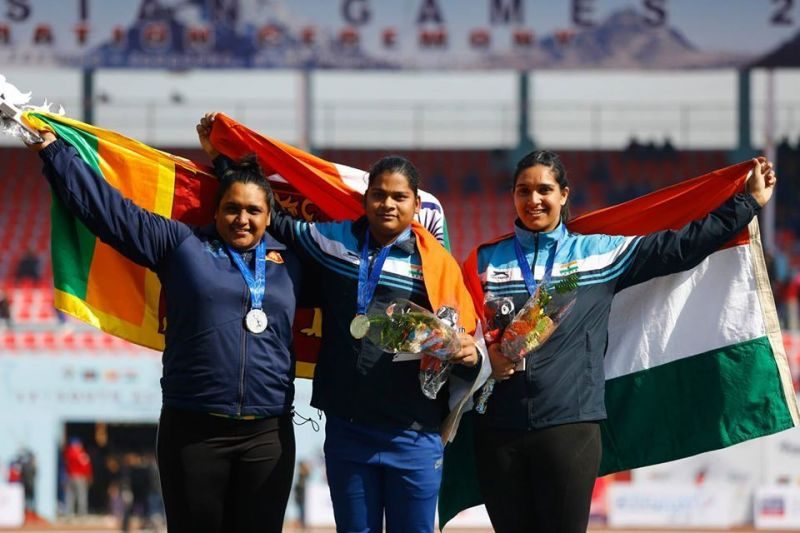
Every generation of Indian sportswomen has had to win twice: once against opponents, once against the assumption that they did not belong. The pioneers who broke through did more than collect medals; they changed what Indian families believed daughters could do. This is the history of the Indian women athletes who changed the game.
Who were the first trailblazers?
The earliest pioneers competed when women’s sport barely existed in India. Swimmer Bula Choudhury and athlete Shiny Wilson carried the flag in the 1980s and 1990s with little support or recognition. But the first to capture the national imagination was PT Usha, the Payyoli Express, whose Asian dominance and fourth place at the 1984 Los Angeles Olympics made her India’s first female sporting superstar. Usha proved that an Indian woman could be the fastest in Asia, and her grace under the cruellest of near misses won her a permanent place in the nation’s heart. She ran so that others could follow.
How did Karnam Malleswari break the Olympic barrier?
At Sydney 2000, weightlifter Karnam Malleswari won bronze, becoming the first Indian woman to win an Olympic medal. The achievement is hard to overstate: in a country where women’s weightlifting was virtually unknown, Malleswari lifted her way onto the Olympic podium and into history. Her medal ended the argument about whether Indian women could compete at the highest level; they could, and she had the bronze to prove it. Coming from a modest background in Andhra Pradesh, her triumph also demonstrated sport’s power as a vehicle of social mobility for women, a theme that would repeat with every subsequent champion.
Who carried the torch in the 2000s?
The 2000s belonged to fighters, literally. MC Mary Kom, the Manipuri boxer, won five world championships and an Olympic bronze at London 2012, becoming a national icon and later a parliamentarian; her story of a mother of four conquering world boxing inspired a film and a generation. Saina Nehwal broke badminton’s barriers with Olympic bronze at London 2012 and the world number one ranking in 2015, proving Indian women could dominate a global racquet sport. Sania Mirza conquered tennis’s doubles world, reaching number one and winning six Grand Slam titles, in a sport where no Indian woman had previously mattered. Each conquered a different frontier; together, they normalised female sporting excellence.
How did PV Sindhu become India’s greatest Olympian?
PV Sindhu’s achievements stand alone in Indian sport. Silver at Rio 2016, bronze at Tokyo 2020: the first Indian woman to win two Olympic medals, and then World Championship gold in 2019 to complete the set. Sindhu’s success was built at Gopichand’s Hyderabad academy through legendary training discipline, and her 6-foot frame and attacking game overwhelmed the world’s best. Beyond medals, Sindhu became Indian sport’s most marketable woman athlete, her endorsements and fame proving the commercial viability of women’s sport. She showed that an Indian woman could be not just a champion but a superstar.
Who leads the new generation?
- Manu Bhaker: two shooting bronzes at Paris 2024, the first Indian to win two medals at a single Olympics since independence.
- Mirabai Chanu: weightlifting silver at Tokyo 2020, continuing Malleswari’s legacy.
- Lovlina Borgohain: boxing bronze at Tokyo 2020, Assam’s Olympic hero.
- Smriti Mandhana and Harmanpreet Kaur: leaders of the cricket revolution and the WPL era.
- Avani Lekhara: Paralympic shooting golds at Tokyo and Paris, a trailblazer for para sport.
The pipeline now runs deep: in wrestling, badminton, shooting, boxing and athletics, Indian women expect to contend, not just compete.
What did they change beyond medals?
Their legacy is measured in changed minds. Each champion made it easier for the next girl to ask her parents for permission to play: Usha made speed imaginable, Malleswari made strength respectable, Mary Kom made fighting glorious, Sindhu made superstardom achievable. They forced federations to invest in women’s programmes, sponsors to value women athletes, and media to cover them. They entered politics, administration and coaching, shaping the system they once fought. The deepest change is demographic: millions of Indian girls now grow up with sporting heroines who look like them, and that changes everything.
FAQs
Who was the first Indian woman Olympic medallist? Karnam Malleswari, who won weightlifting bronze at Sydney 2000.
Who is India’s most successful woman Olympian? PV Sindhu, with Olympic silver and bronze plus a World Championship gold in badminton.
Which Indian woman won five world boxing titles? MC Mary Kom, who also won Olympic bronze at London 2012.
From Usha’s track to Sindhu’s court, these athletes won their medals twice over: against the world’s best, and against the world’s assumptions. The game they changed was never just sport.
Source: Sports Authority of India archives

Khabar 24h Editorial Desk — our explainers are prepared by the Khabar 24h editorial team using AI-assisted research tools, and every piece is reviewed by a human editor before publishing. We do not claim original reporting: our work is turning complex topics into simple, accurate summaries. Spotted an error? Write to contact@khabar24h.com — our corrections policy aims for same-day review.
More from this author →