The South China Sea Dispute Explained: Claims, Rulings and the Standoff
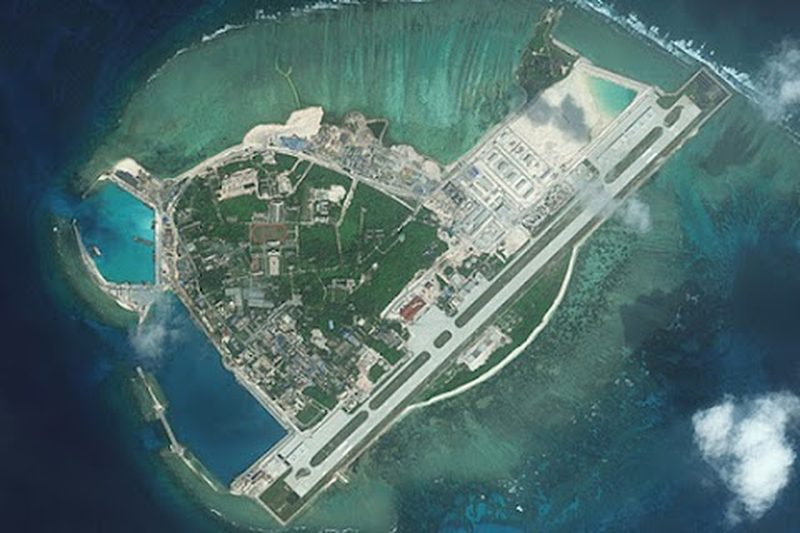
The South China Sea — a 3.5-million-square-kilometre stretch of water carrying a third of global shipping — is claimed in whole or part by China, Taiwan, Vietnam, the Philippines, Malaysia and Brunei. China asserts nearly the entire sea through its nine-dash line, has built militarised artificial islands on reefs, and confronts rival claimants with coastguard vessels and maritime militia. A 2016 international tribunal ruled China’s claims illegal; Beijing ignored it. This is the anatomy of Asia’s most intractable maritime dispute.
What does each side claim?
China’s nine-dash line, inherited from 1940s Nationalist maps, loops around roughly 90 per cent of the sea, encompassing the Paracel and Spratly island groups. Vietnam claims the Paracels (which China seized in 1974) and parts of the Spratlys; the Philippines claims waters within its exclusive economic zone, including Scarborough Shoal, seized by China in 2012; Malaysia and Brunei claim smaller portions; Taiwan mirrors China’s line. The stakes are concrete: rich fishing grounds, suspected oil and gas reserves, and control of sea lanes through which trillions in trade pass annually.
What did the 2016 ruling decide?
The Philippines brought China before an arbitral tribunal under the UN Convention on the Law of the Sea, and in July 2016 the tribunal ruled comprehensively against Beijing: the nine-dash line has no legal basis, none of the Spratly features generate 200-mile exclusive zones, and China violated Philippine sovereign rights. It was a total legal victory for Manila — and changed nothing on the water. China declared the ruling null and void, continued militarising its artificial islands with runways and missile systems, and faced no enforcement mechanism. The episode became the textbook case of international law’s limits against great power.
How does the standoff play out day to day?
The confrontation is waged in the grey zone — coercion below the threshold of war. China’s coastguard, backed by a maritime militia of fishing vessels, harasses Philippine resupply missions to the grounded BRP Sierra Madre at Second Thomas Shoal with water cannon and ramming. Chinese survey ships intrude into Vietnamese and Malaysian waters. Claimants respond asymmetrically: the Philippines publicises every incident, Vietnam quietly fortifies its own holdings, and the United States and allies conduct freedom-of-navigation operations sailing warships through claimed waters. Each encounter risks miscalculation.
Can ASEAN negotiate a solution?
For two decades ASEAN and China have negotiated a Code of Conduct for the sea, with little to show. The fundamental obstacle is asymmetry of interest: time favours China, which consolidates control while talking. A binding code constraining Chinese behaviour is precisely what Beijing will not accept; a weak code legitimises the status quo. Meanwhile the dispute internationalises: the Quad discusses maritime security, AUKUS adds submarines to the equation, and European navies periodically sail through.
- Legal reality: international law clearly favours the smaller claimants; power favours China.
- US role: Washington takes no position on sovereignty but insists on freedom of navigation — and backs the Philippines through a mutual defence treaty.
- Escalation risk: a collision or sinking could trigger alliance commitments nobody wants to test.
- Economic logic: all sides need the sea lanes open, which paradoxically restrains everyone from war.
The South China Sea is where the rules-based order meets its hardest test: a rising power rewriting maritime geography while the law says otherwise. How the standoff ends — by negotiation, deterrence or miscalculation — will shape Asia’s security for decades.
Why India watches closely
India is not a South China Sea claimant, but it has vital stakes: nearly half its trade passes through the sea, ONGC Videsh holds Vietnamese oil blocks that China contests, and Chinese naval forays into the Indian Ocean mirror the coercion Southeast Asia faces. New Delhi consistently backs freedom of navigation and the 2016 ruling’s principles while avoiding direct confrontation. The South China Sea is where India’s Act East policy meets hard security — a reminder that the Indo-Pacific is one connected theatre, not two separate oceans.
FAQs
What is the nine-dash line?
China’s claimed boundary looping around about 90 per cent of the South China Sea, based on 1940s maps and ruled without legal basis by the 2016 tribunal.
Did the 2016 ruling change anything?
Legally it was a sweeping Philippine victory, but China rejected it and continued militarising reefs; with no enforcement mechanism, facts on the water prevailed.
Could the dispute cause war?
Full war is unlikely since all sides need open sea lanes, but grey-zone clashes carry real miscalculation risks, especially given US-Philippine defence ties.
Source: Asia Maritime Transparency Initiative

Khabar 24h Editorial Desk — our explainers are prepared by the Khabar 24h editorial team using AI-assisted research tools, and every piece is reviewed by a human editor before publishing. We do not claim original reporting: our work is turning complex topics into simple, accurate summaries. Spotted an error? Write to contact@khabar24h.com — our corrections policy aims for same-day review.
More from this author →