How NATO Works: The Alliance and Its Article 5 Security Guarantee
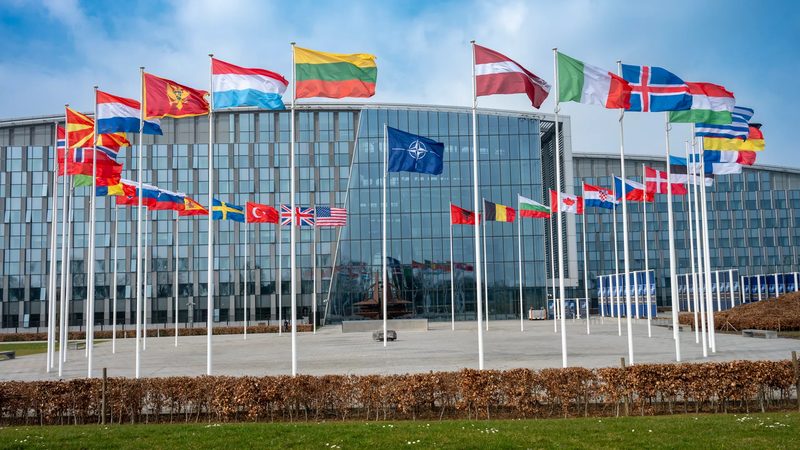
The North Atlantic Treaty Organization is the most powerful military alliance in history: 32 member states bound by a treaty whose Article 5 declares that an attack on one is an attack on all. Founded in 1949 to deter the Soviet Union, NATO survived the Cold War’s end, expanded deep into Eastern Europe, fought its only Article 5 war in Afghanistan, and was jolted back to its core mission by Russia’s 2022 invasion of Ukraine. Here is how the alliance works.
Why was NATO created?
NATO was born from the ruins of the Second World War and the onset of the Cold War. Western European states, exhausted and exposed, sought an American security guarantee against Soviet expansion; the United States, for its part, wanted to anchor itself in Europe and prevent any single power dominating the continent. The 1949 North Atlantic Treaty created a collective-defence pact that has endured for over 75 years. Its first Secretary General, Lord Ismay, quipped that NATO’s purpose was to keep the Russians out, the Americans in, and the Germans down — a formula that, updated, still captures its logic.
How does Article 5 work?
Article 5 is the treaty’s heart: an armed attack against one member in Europe or North America is considered an attack against all, and each member will take such action as it deems necessary, including the use of armed force. Crucially, the response is not automatic — each ally decides what assistance to provide — and Article 5 has been invoked only once, after the September 11 attacks, leading to NATO’s long mission in Afghanistan. The article’s power lies in deterrence: the certainty that aggression against, say, Estonia would trigger a response from the United States makes such aggression unthinkable.
How is NATO organised?
Decisions are taken by consensus in the North Atlantic Council, where all 32 members sit as equals — in theory, tiny Luxembourg can block the mighty United States. The Secretary General, currently Mark Rutte, chairs the council and speaks for the alliance. Militarily, NATO is commanded through an integrated structure headed by the Supreme Allied Commander Europe, always an American general. Members commit to spending at least 2 per cent of GDP on defence, a target many long ignored but most now meet or approach after Ukraine.
Why did NATO expand eastward?
After the Cold War, NATO grew from 16 to 32 members, absorbing former Warsaw Pact states and, in 2023-24, Finland and Sweden — the latter abandoning decades of neutrality after Russia’s invasion. New members sought the Article 5 guarantee against a resurgent Russia; Russia calls the enlargement a betrayal and a threat, citing it as a cause of the Ukraine war. The dispute is the central fault line of European security: NATO insists sovereign states choose their alliances, while Moscow treats the alliance’s approach as encirclement.
What are NATO’s biggest challenges?
The alliance faces a demanding agenda.
- Ukraine: supporting Kyiv without triggering direct NATO-Russia war — the alliance’s defining balancing act.
- Burden-sharing: American presidents from Obama to Trump have demanded Europeans spend more; the 2 per cent target is now the floor, not the ceiling.
- China: NATO’s 2022 strategy named Beijing a systemic challenge for the first time, stretching the alliance’s focus beyond the Atlantic.
- Cohesion: members disagree on Russia, China and defence priorities, and consensus decision-making magnifies every dispute.
NATO has repeatedly been declared obsolete and repeatedly proved otherwise. Its endurance rests on a simple proposition that still convinces 32 democracies: collective defence is cheaper and safer than facing threats alone.
The 2 per cent pledge and burden-sharing fights
NATO’s most persistent internal quarrel is money. The 2014 Wales pledge committed members to spend 2 per cent of GDP on defence, but for years only a handful complied, with Germany the most criticised laggard. Russia’s invasion changed the politics overnight: defence budgets surged across Europe, and by 2025 a large majority of members met the target. American presidents continue to demand more — some now float 3 per cent — and the debate has shifted from whether Europe free-rides to whether it can rearm fast enough. Burden-sharing remains the alliance’s permanent negotiation.
FAQs
Has Article 5 ever been invoked?
Only once: after the September 11, 2001 attacks on the United States, which led to NATO’s two-decade mission in Afghanistan.
Does Article 5 guarantee automatic military help?
No. Each member decides what action to take; the commitment is political and strategic, and its force comes from deterrence.
Which countries joined NATO most recently?
Finland joined in 2023 and Sweden in 2024, both abandoning long-standing neutrality after Russia’s invasion of Ukraine.
Source: NATO / Council on Foreign Relations

Khabar 24h Editorial Desk — our explainers are prepared by the Khabar 24h editorial team using AI-assisted research tools, and every piece is reviewed by a human editor before publishing. We do not claim original reporting: our work is turning complex topics into simple, accurate summaries. Spotted an error? Write to contact@khabar24h.com — our corrections policy aims for same-day review.
More from this author →