Weather vs Climate: Why a Cold Winter Does Not Disprove Global Warming
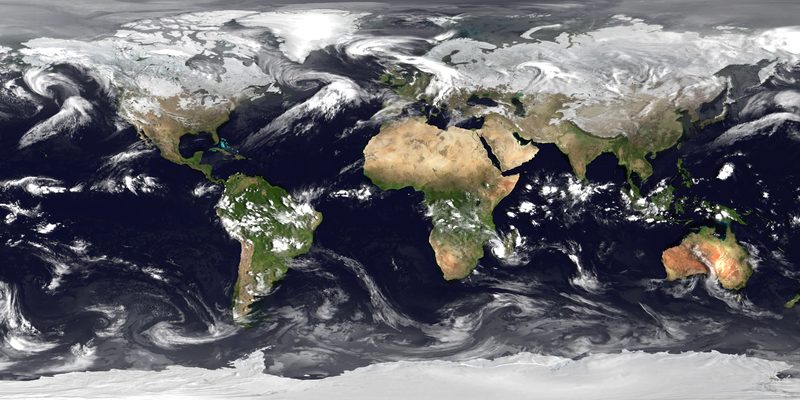
Every cold snap brings the same misleading question: if the planet is warming, why is it so cold today? The confusion comes from mixing up two different things. Weather is what happens outside your window this week: the temperature, rain and wind of a particular place at a particular moment. Climate is the long-term pattern, the statistics of weather over thirty years or more. A cold winter day no more disproves global warming than a single rainy day disproves the existence of deserts. Understanding the distinction is the key to thinking clearly about a changing planet.
Weather: chaotic and short-lived
Weather is driven by the day-to-day dance of air masses, pressure systems and jet streams. It is famously chaotic: tiny differences in today’s conditions compound into completely different forecasts two weeks out, which is why meteorologists speak in probabilities beyond a few days. A blast of Arctic air plunging south can bury Texas in snow; a heat dome can park over Delhi for a week. These are weather events, dramatic, local and temporary. No single one of them, hot or cold, tells you much about the planet’s long-term direction.
Climate: the statistics of decades
Climate is what you expect; weather is what you get. The climate of a place describes its typical seasons, average rainfall and the range of extremes it experiences, computed over decades. Global warming is a change in these statistics: average temperatures creeping upward, heatwaves becoming more frequent, rainfall patterns shifting. Detecting it requires long records and careful analysis, because the signal of a degree or two of warming hides inside the noise of daily and yearly weather swings. That is why scientists insist on thirty-year baselines: only over such spans does the climate signal emerge clearly from weather noise.
Why warming can bring colder snaps
Paradoxically, a warming Arctic can make some cold snaps more likely. The Arctic is heating far faster than the rest of the planet, which weakens the temperature contrast that drives the polar jet stream. A wavier, weaker jet stream can let frigid Arctic air spill farther south, delivering brutal cold to mid-latitude regions even as the planet as a whole warms. So a record cold week in one region can be entirely consistent with, and even partly caused by, the same warming trend. The globe warms on average; the weather gets weirder everywhere.
How scientists actually measure warming
Climate science does not rest on anyone’s memory of winters past. It rests on converging lines of evidence:
- Thermometre records from thousands of stations, ships and buoys show about 1.2 degrees of warming since the late 1800s.
- Satellites confirm the warming of the lower atmosphere and cooling of the stratosphere, the fingerprint of greenhouse gases.
- Ice and oceans tell the same story: shrinking glaciers, retreating Arctic sea ice and rising seas.
- Phenology, the timing of spring blooms and migrations, has shifted measurably worldwide.
The loaded dice analogy
Scientists often compare climate change to loading dice. Warming does not mean every roll comes up hot; it means hot extremes become more likely and cold extremes less likely. Attribution science can now quantify this: a particular heatwave might have been made several times more likely by climate change, while a cold snap might have been made slightly less likely. The dice are loaded, but any single roll can still surprise you. Judging the climate by one cold week is like judging a loaded die by a single throw.
FAQs
Wasn’t there global cooling predicted in the 1970s? A few speculative articles discussed cooling, but the majority of peer-reviewed science even then pointed to warming from greenhouse gases. There was never a scientific consensus on cooling.
Do cold records disprove warming? No. Cold records still occur, just less often than they used to, while heat records are being set far more frequently. The ratio of hot to cold records tells the real story.
Why do scientists use 30-year averages? Thirty years is long enough to average out natural cycles like El Nino and volcanic eruptions, revealing the underlying climate trend beneath the weather noise.
Weather is a mood; climate is a personality. A grumpy day does not change who someone is, and a cold week does not change where the planet is heading. Once you see the difference, the misleading question answers itself.
Source: NASA

Khabar 24h Editorial Desk — our explainers are prepared by the Khabar 24h editorial team using AI-assisted research tools, and every piece is reviewed by a human editor before publishing. We do not claim original reporting: our work is turning complex topics into simple, accurate summaries. Spotted an error? Write to contact@khabar24h.com — our corrections policy aims for same-day review.
More from this author →