How Vaccines Train Your Immune System
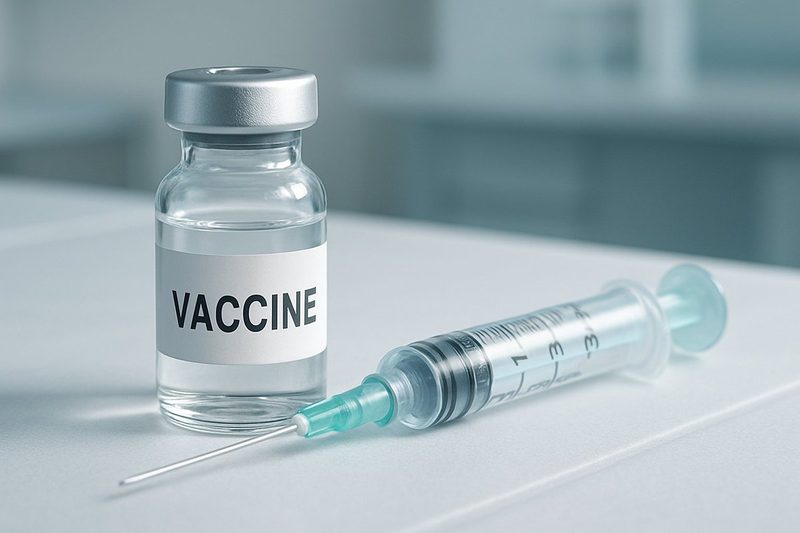
Vaccines are among the greatest achievements in human history, credited with saving hundreds of millions of lives and eradicating smallpox, a disease that killed half a billion people in the twentieth century alone. Yet their principle is beautifully simple: they give your immune system a safe rehearsal against a pathogen, so that when the real thing arrives, the defences are already trained, armed and waiting. No other medical intervention, except clean water, has saved as many lives. From the BCG shots given to Indian newborns to the COVID-19 vaccines that blunted a pandemic, the underlying immunology is the same: teach the body to recognise the enemy without suffering the disease. Here is how that training works, step by molecular step.
Your immune system’s two lines of defence
The immune system fights in two waves. Innate immunity is the rapid, generic response: skin and mucous membranes block invaders, while macrophages and neutrophils engulf anything foreign, and inflammation rallies reinforcements. It acts within minutes but has no memory. Adaptive immunity is slower but smarter: B cells produce antibodies, Y-shaped proteins custom-shaped to latch onto specific pathogen parts called antigens, while T cells kill infected cells directly or coordinate the attack. The first encounter with a new pathogen takes days to weeks to mount, which is why new diseases hit so hard. But the adaptive system remembers: after the battle, it keeps memory B and T cells on standby for years or decades, so a second encounter triggers a response in hours, crushing the invader before it causes disease. This memory is the entire basis of vaccination. A vaccine’s job is to create those memory cells safely, without the damage and risk of natural infection.
How different vaccines deliver the lesson
All vaccines present antigens to the immune system; they differ in how. Live-attenuated vaccines, like those for measles and the oral polio vaccine, use weakened pathogens that replicate mildly, producing a strong, long-lasting immunity close to natural infection, but they are unsuitable for people with weak immune systems. Inactivated vaccines, like Covaxin or the injected polio vaccine, use killed pathogens: safer, but often needing boosters. Subunit and toxoid vaccines present only key pieces, like the tetanus toxoid’s inactivated toxin or the hepatitis B surface protein. The newest platforms carry instructions instead of the antigen: mRNA vaccines, like those from Pfizer and Moderna, deliver messenger RNA that instructs your own cells to manufacture the spike protein briefly, while viral-vector vaccines like Covishield use a harmless adenovirus as a delivery truck for the spike gene. India’s COVID-19 campaign deployed nearly all these platforms simultaneously, a real-world demonstration that the training principle works regardless of delivery method. Adjuvants, added ingredients like aluminium salts, act as drill sergeants, amplifying the immune response to the lesson.
Why vaccines are so safe, and so effective
Vaccine safety is not assumed; it is measured in trials involving tens of thousands of volunteers and in surveillance of billions of doses. Serious side effects are extraordinarily rare, typically a few per million doses, while the diseases prevented kill or disable at rates thousands of times higher. The common side effects, sore arm, brief fever, fatigue, are not the vaccine harming you but your innate immune system responding energetically to the training exercise. Effectiveness varies by disease and vaccine, from measles vaccine’s 97 per cent to influenza’s modest but valuable partial protection, but at the population level the arithmetic is overwhelming: India’s Universal Immunisation Programme, one of the world’s largest, vaccinates about 26 million newborns yearly against a dozen diseases, preventing an estimated hundreds of thousands of deaths annually. Herd immunity multiplies the benefit: when enough people are immune, transmission chains break and even the unvaccinated, newborns, the immunocompromised, are shielded. Smallpox was eradicated not by vaccinating everyone but by vaccinating strategically enough to starve the virus of hosts.
- Smallpox killed around 500 million people in the 20th century before its 1980 eradication by vaccination.
- India’s Universal Immunisation Programme vaccinates about 26 million newborns each year.
- mRNA vaccines instruct your own cells to briefly manufacture a pathogen protein for immune training.
- Serious vaccine side effects occur at rates of a few per million doses.
- Herd immunity protects those who cannot be vaccinated by breaking transmission chains.
Answering the doubts honestly
Vaccine hesitancy deserves engagement, not dismissal, and the genuine questions have solid answers. Do vaccines overwhelm infant immune systems? No: babies encounter thousands of antigens daily, and the entire childhood schedule contains fewer antigens than a single natural infection. Was there a link to autism? The claim originated in a fraudulent 1998 paper, retracted, its author struck off; dozens of large studies in millions of children found no link. Are newer platforms experimental? mRNA research spans decades, and COVID-19 vaccines went through full-scale trials before emergency authorisation, with safety monitoring continuing across billions of doses. Do natural infections give better immunity? Sometimes slightly stronger, but at the cost of the disease’s risks: natural measles can cause brain damage, natural COVID killed millions. The honest framing is risk versus risk, and on every credible measure, the vaccine’s tiny risks are dwarfed by the disease’s. India’s own experience, from polio’s elimination in 2014 to the COVID-19 campaign’s two billion doses, is among the world’s largest proofs.
FAQs
How long does vaccine protection last? It varies: measles protection is effectively lifelong, tetanus needs boosters every 10 years, and COVID-19 and flu need periodic updates as the viruses evolve.
Why do vaccines need boosters? Memory cells can wane over years, and some pathogens mutate; boosters refresh the immune memory and update it against new variants.
Can vaccines give you the disease? No, except in the rarest cases with live vaccines in immunocompromised people; inactivated, subunit and mRNA vaccines contain no live pathogen.
Vaccination is education for the immune system: a safe lesson today that prevents a deadly exam tomorrow. It remains, by any measure, the most lives saved per rupee in all of medicine.
Source: World Health Organization

Khabar 24h Editorial Desk — our explainers are prepared by the Khabar 24h editorial team using AI-assisted research tools, and every piece is reviewed by a human editor before publishing. We do not claim original reporting: our work is turning complex topics into simple, accurate summaries. Spotted an error? Write to contact@khabar24h.com — our corrections policy aims for same-day review.
More from this author →