Superconductivity: The Quest for Electricity Without Resistance
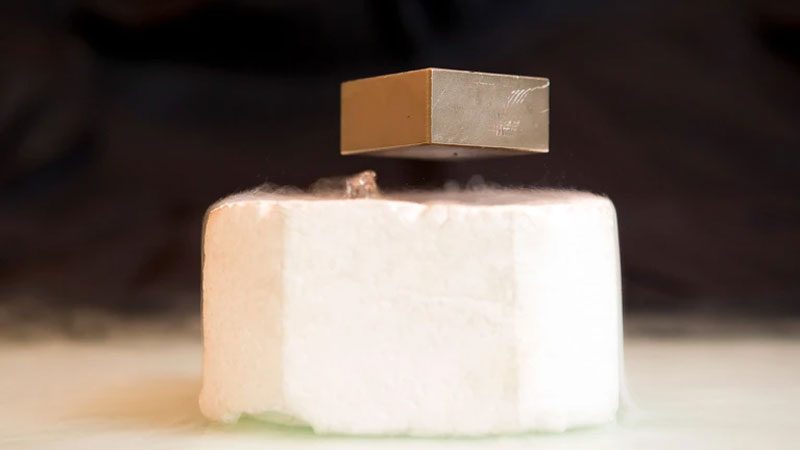
In 1911, the Dutch physicist Heike Kamerlingh Onnes cooled mercury to a few degrees above absolute zero and watched its electrical resistance vanish entirely, not merely shrink but disappear. Current set flowing in a superconducting ring will circulate for years with no measurable decay, a perpetual motion of charge that seems to defy common sense. Superconductivity has since become one of the most tantalising phenomena in physics: materials that transmit electricity with perfect efficiency, expel magnetic fields, and levitate magnets in mid-air. The catch has always been temperature. For a century, superconductors demanded extreme cold, and the hunt for one that works at room temperature has produced Nobel Prizes, billion-dollar industries and, repeatedly, spectacular claims that collapsed under scrutiny. Understanding superconductivity means understanding both a profound quantum phenomenon and one of science’s longest-running treasure hunts.
What superconductivity actually is
A superconductor has two defining traits. The first is zero electrical resistance below a critical temperature: electrons pair up into Cooper pairs and move through the atomic lattice without scattering, so no energy is lost as heat. The second is the Meissner effect, the expulsion of magnetic fields from the material’s interior, which is what makes a magnet levitate stably above a superconductor, locked in place by quantum forces. Conventional superconductors, like the mercury, lead and niobium alloys Onnes and his successors studied, are explained by BCS theory, named for Bardeen, Cooper and Schrieffer, which showed that vibrations in the atomic lattice glue electrons into pairs. These materials superconduct only below about 30 Kelvin, colder than liquid helium, which limited them to specialised uses. The 1986 discovery of cuprate ceramics that superconduct above liquid-nitrogen temperature, earning Bednorz and Muller the Nobel Prize within a year, proved that higher temperatures were possible and ignited the modern hunt. Yet BCS theory cannot explain the cuprates, and after nearly four decades their mechanism remains debated, one of the great unsolved problems in condensed matter physics.
Where superconductors already work
Despite the cold, superconductors are a mature technology hiding in plain sight. Every MRI scanner in every hospital contains superconducting magnets, usually niobium-titanium coils bathed in liquid helium, generating the intense, stable magnetic fields that align hydrogen nuclei in the body. Particle accelerators like the Large Hadron Collider use thousands of superconducting magnets to steer beams, and would be impossibly power-hungry without them. Maglev trains in Japan and China float on superconducting magnets, eliminating wheel friction and reaching 600 kilometres per hour in tests. Superconducting cables can carry five to ten times the current of copper in the same space, and pilot projects in cities like New York and Essen have buried them under streets. Quantum computers rely on superconducting circuits cooled to near absolute zero, where quantum effects can be controlled. The industry runs on refrigeration, expensive and cumbersome, which is why the prize everyone wants is a superconductor that works without any cooling at all.
The room-temperature dream, and its false dawns
A room-temperature superconductor would be revolutionary: lossless power grids, cheap MRI machines, levitating transport, and fusion reactors with affordable magnets. In recent years the most promising route has been hydrides, hydrogen-rich compounds squeezed under enormous pressure. In 2020, researchers reported superconductivity at 15 degrees Celsius in a carbon-sulphur hydride, but only under 2.6 million atmospheres of pressure, and the result could not be reproduced. Then came the LK-99 episode of 2023, when a Korean team claimed a copper-doped lead compound superconducted at room temperature and ambient pressure; laboratories worldwide rushed to replicate it, and within weeks the claim collapsed, the apparent effects traced to impurities. The pattern is instructive: extraordinary claims in this field face immediate global replication attempts, which is science working as intended. Serious researchers continue the hunt with better tools, using AI to screen candidate materials and diamond-anvil cells to probe hydrides, but the consensus is sober. Room-temperature, ambient-pressure superconductivity remains undiscovered, and each failed claim sharpens the standards of proof.
- Superconductivity was discovered in mercury at 4.2 Kelvin by Heike Kamerlingh Onnes in 1911.
- BCS theory, explaining conventional superconductors, won the Nobel Prize in 1972.
- Cuprate ceramics discovered in 1986 superconduct above liquid nitrogen temperature at 77 Kelvin.
- Every MRI scanner uses superconducting magnets cooled by liquid helium.
- The LK-99 room-temperature claim of 2023 failed worldwide replication within weeks.
Why the quest matters even without victory
The hunt has already paid for itself many times over. The refrigeration, materials science and magnet technology developed for superconductors underpin modern medicine, particle physics and quantum computing. High-temperature superconducting tapes are now manufactured commercially and are enabling a new generation of compact fusion reactors, with private companies betting that better magnets will crack fusion economics. Even the theoretical puzzles have value: understanding cuprates may unlock new quantum materials with properties we cannot yet imagine. And the sociology of the quest, the cycle of bold claim and ruthless replication, is a public demonstration of science’s immune system. Superconductivity began as a laboratory curiosity at the edge of absolute zero; a century later it images our bodies, steers particle beams and may one day carry our electricity. The perfect, room-temperature version remains the holy grail, but the journey toward it has already changed the world.
FAQs
Do superconductors really have zero resistance? Yes, below their critical temperature, resistance drops to exactly zero as far as the most sensitive instruments can measure, with currents persisting for years.
Why do superconductors need to be so cold? Heat shakes the atomic lattice and breaks the delicate electron pairing responsible for superconductivity; only at low temperatures do the pairs survive.
Was LK-99 a fraud? Investigations found no evidence of deliberate fraud; the anomalous signals appear to have come from impurities in the samples, but the claim failed every independent replication.
Superconductivity is quantum mechanics made visible: electrons dancing in lockstep, magnets floating on nothing, current flowing forever. The cold is the price of admission, and physicists are still negotiating.
Compiled by the Khabar 24h Editorial Desk from publicly available sources.

Khabar 24h Editorial Desk — our explainers are prepared by the Khabar 24h editorial team using AI-assisted research tools, and every piece is reviewed by a human editor before publishing. We do not claim original reporting: our work is turning complex topics into simple, accurate summaries. Spotted an error? Write to contact@khabar24h.com — our corrections policy aims for same-day review.
More from this author →